Guangdong Provincial Key Laboratory of Animal Nutrition Control, Institute of Subtropical Animal Nutrition and Feed, College of Animal Science, South China Agricultural University, Guangzhou, Guangdong 510642, China.
Guangdong Yihao Foodstuffs Co. Ltd., Guangzhou, Guangdong 510642, China.
Oxid Med Cell Longev. 2019 Oct 1;2019:2481592. doi: 10.1155/2019/2481592. eCollection 2019.
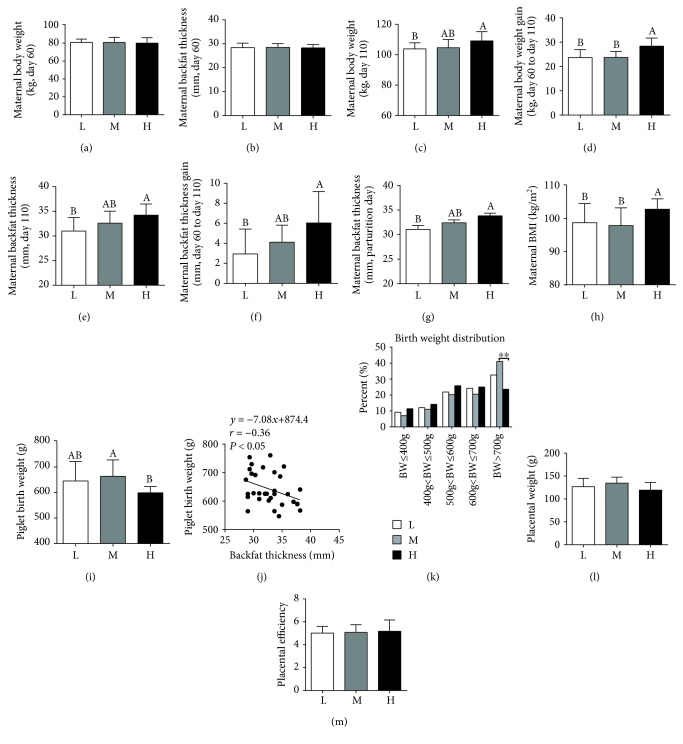
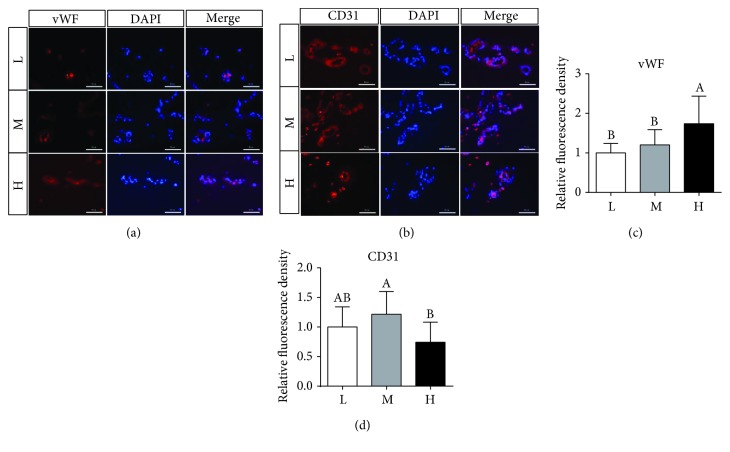
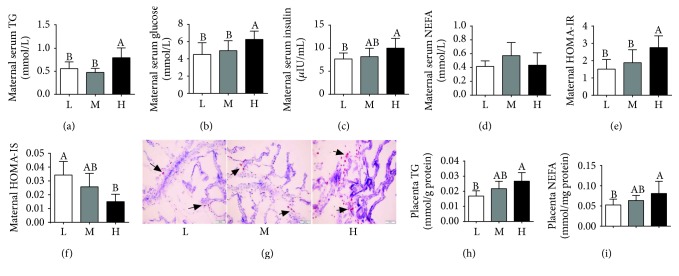
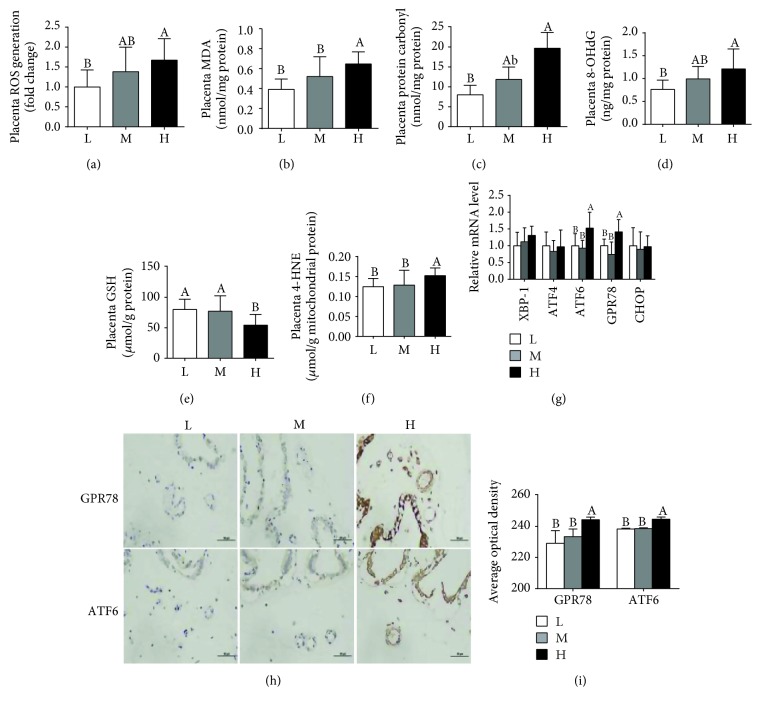
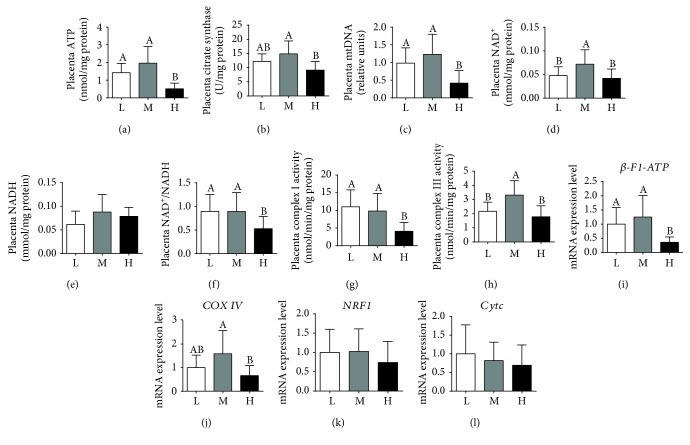
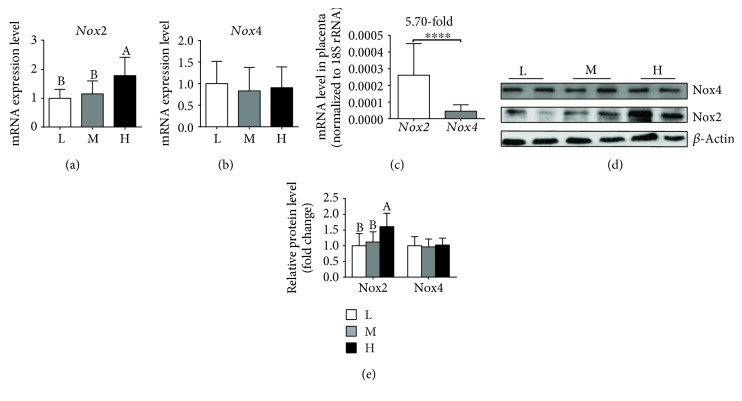
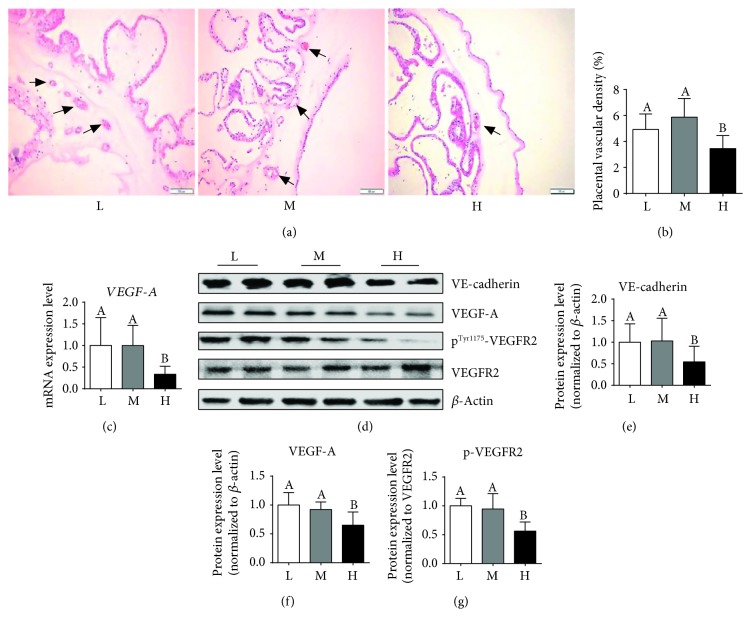
Maternal obesity is associated with placental oxidative stress. However, the mechanism underlying this association remains poorly understood. In the present study, a gilt obesity model was developed by exposure to different energy diets and used to investigate the role of NADPH oxidase 2 (Nox2) in the placenta. Specifically, 99 gilts (Guangdong Small-ear Spotted pig) at day 60 of gestation were randomly assigned to one of the following three treatments: low-energy group (L, DE = 11.50 MJ/kg), medium-energy group (M, DE = 12.41 MJ/kg), and high-energy group (H, DE = 13.42 MJ/kg), with 11 replicate pens per treatment and 3 gilts per pen. At the start of the study, maternal body weight and backfat thickness were not significantly different in the three treatments. After the study, data indicated that the H group had higher body weight and backfat thickness gain for gilts during gestation and lower piglet birth weight compared with the other two groups. Additionally, the H group showed glucolipid metabolic disorders and increased triglyceride and nonesterified fatty acid contents in the placenta of gilts. Compared with the L group, the H group exhibited lower mitochondrial biogenesis and increased oxidative damage in the placenta. Importantly, increased mRNA expression and protein abundance of Nox2 were observed for the first time in H group placentae. Furthermore, compared with the L group, the H group showed a decrease in the density of placental vessels and the protein levels of vascular endothelial cadherin (VE-cadherin), vascular endothelial growth factor A (VEGF-A), and phosphorylation of vascular endothelial growth factor receptor 2 (p-VEGFR2) as well as the immunostaining intensity of platelet endothelial cell adhesion molecule-1 (CD31). Our findings suggest that maternal high-energy diet-induced obesity increases placental oxidative stress and decreases placental angiogenesis possibly through the upregulation of Nox2.
母体肥胖与胎盘氧化应激有关。然而,这种关联的机制仍知之甚少。在本研究中,通过暴露于不同的能量饮食来建立一个母猪肥胖模型,并用于研究 NADPH 氧化酶 2(Nox2)在胎盘中的作用。具体来说,99 头妊娠 60 天的母猪(广东小耳花猪)被随机分配到以下三个处理组之一:低能量组(L,DE = 11.50 MJ/kg)、中能量组(M,DE = 12.41 MJ/kg)和高能量组(H,DE = 13.42 MJ/kg),每个处理组有 11 个重复栏,每个栏有 3 头母猪。在研究开始时,三个处理组的母猪体重和背膘厚度没有显著差异。研究结束后,数据表明,与其他两组相比,H 组母猪在妊娠期间体重和背膘厚度增加更多,仔猪出生体重更低。此外,H 组母猪表现出糖脂代谢紊乱,胎盘甘油三酯和非酯化脂肪酸含量增加。与 L 组相比,H 组胎盘的线粒体生物发生减少,氧化损伤增加。重要的是,首次在 H 组胎盘观察到 Nox2 的 mRNA 表达和蛋白丰度增加。此外,与 L 组相比,H 组胎盘血管密度降低,血管内皮钙黏蛋白(VE-cadherin)、血管内皮生长因子 A(VEGF-A)和血管内皮生长因子受体 2 磷酸化(p-VEGFR2)的蛋白水平以及血小板内皮细胞黏附分子-1(CD31)的免疫染色强度降低。我们的研究结果表明,母体高能饮食诱导的肥胖增加了胎盘氧化应激,减少了胎盘血管生成,可能是通过 Nox2 的上调。