Nazha Aziz, Sekeres Mikkael A, Bejar Rafael, Rauh Michael J, Othus Megan, Komrokji Rami S, Barnard John, Hilton Cameron B, Kerr Cassandra M, Steensma David P, DeZern Amy, Roboz Gail, Garcia-Manero Guillermo, Erba Harry, Ebert Benjamin L, Maciejewski Jaroslaw P
Cleveland Clinic, Cleveland, OH.
University of California San Diego, San Diego, CA.
JCO Precis Oncol. 2019;3. doi: 10.1200/po.19.00119. Epub 2019 Sep 20.
We developed an unbiased framework to study the association of several mutations in predicting resistance to hypomethylating agents (HMAs) in patients with myelodysplastic syndromes (MDS), analogous to consumer and commercial recommender systems in which customers who bought products A and B are likely to buy C: patients who have a mutation in gene A and gene B are likely to respond or not respond to HMAs.
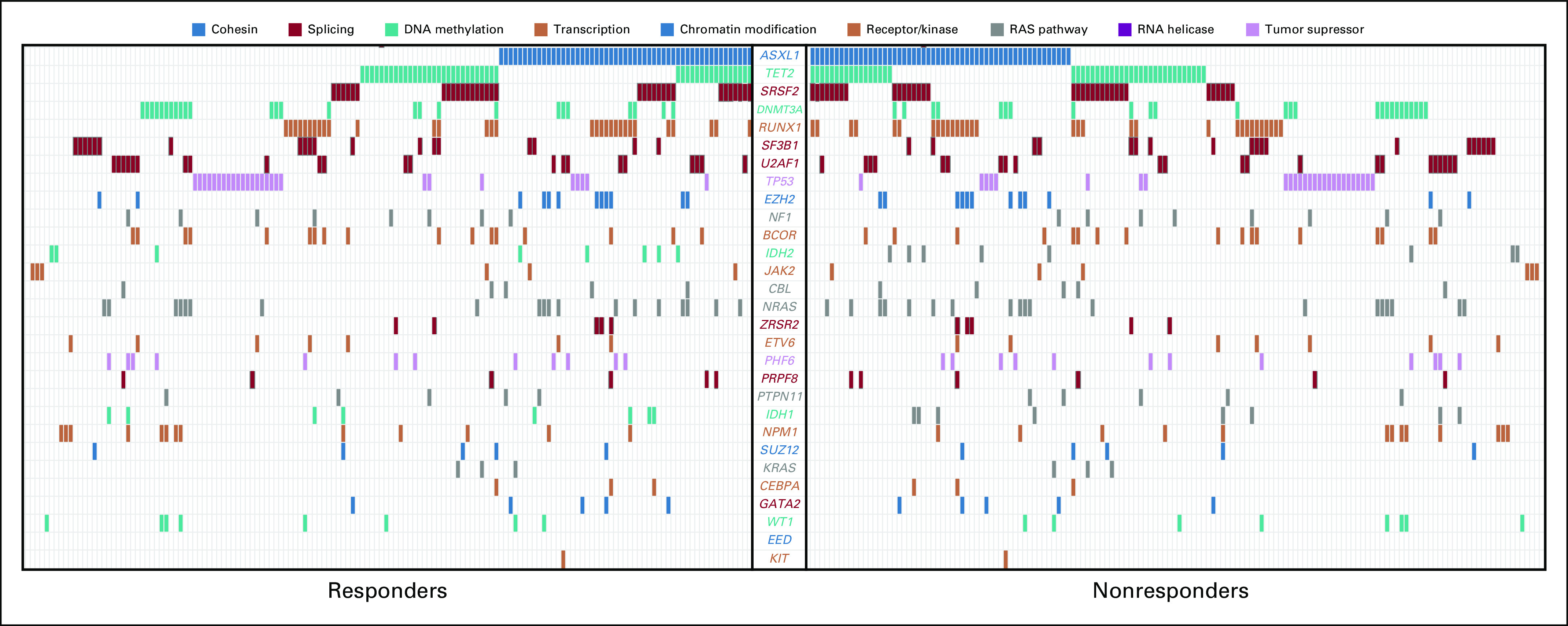
We screened a cohort of 433 patients with MDS who received HMAs for the presence of common myeloid mutations in 29 genes that were obtained before the patients started therapy. The association between mutations and response was evaluated by the Apriori market basket analysis algorithm. Rules with the highest confidence (confidence that the association exists) and the highest lift (strength of the association) were chosen. We validated our biomarkers in samples from patients enrolled in the S1117 trial.
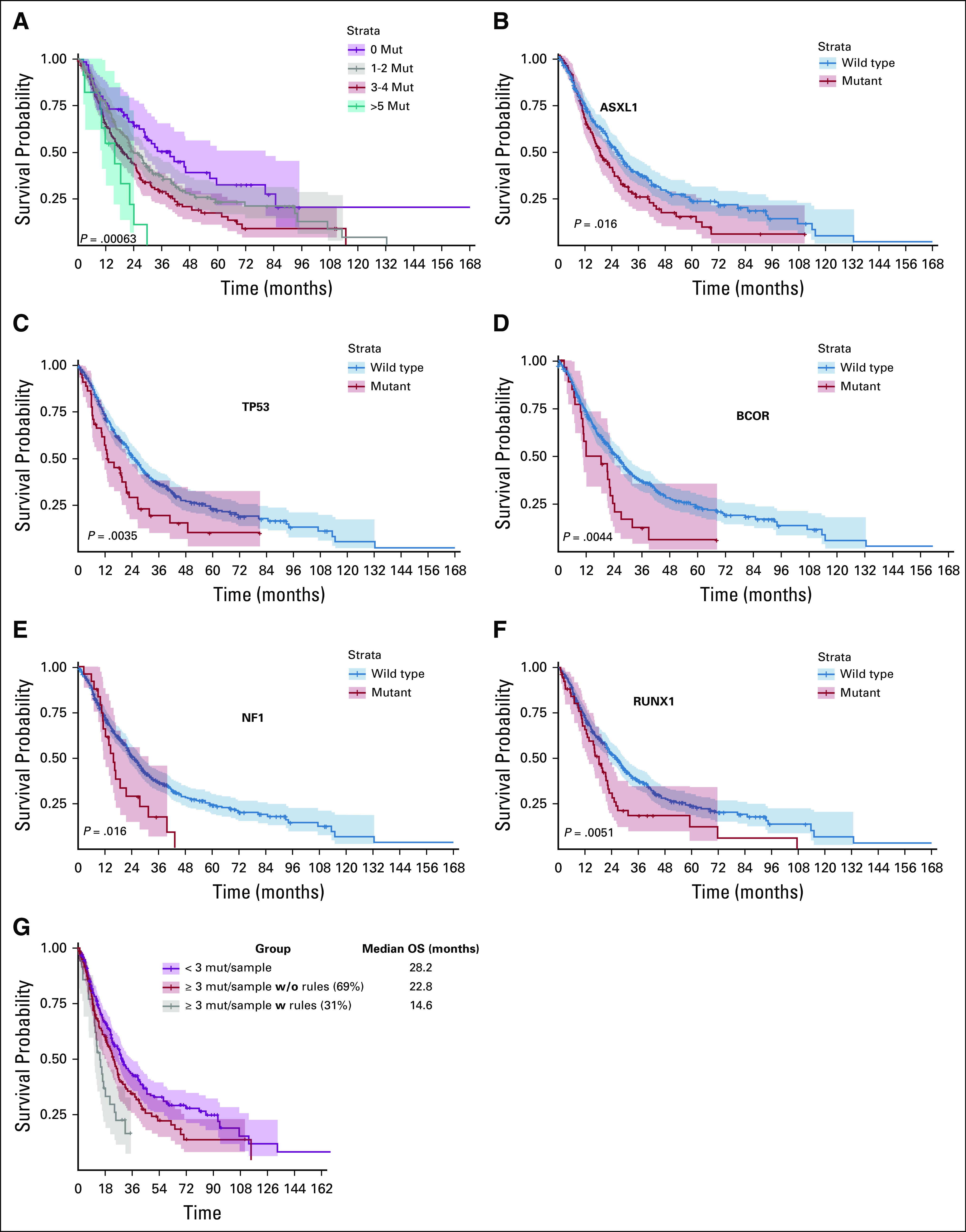
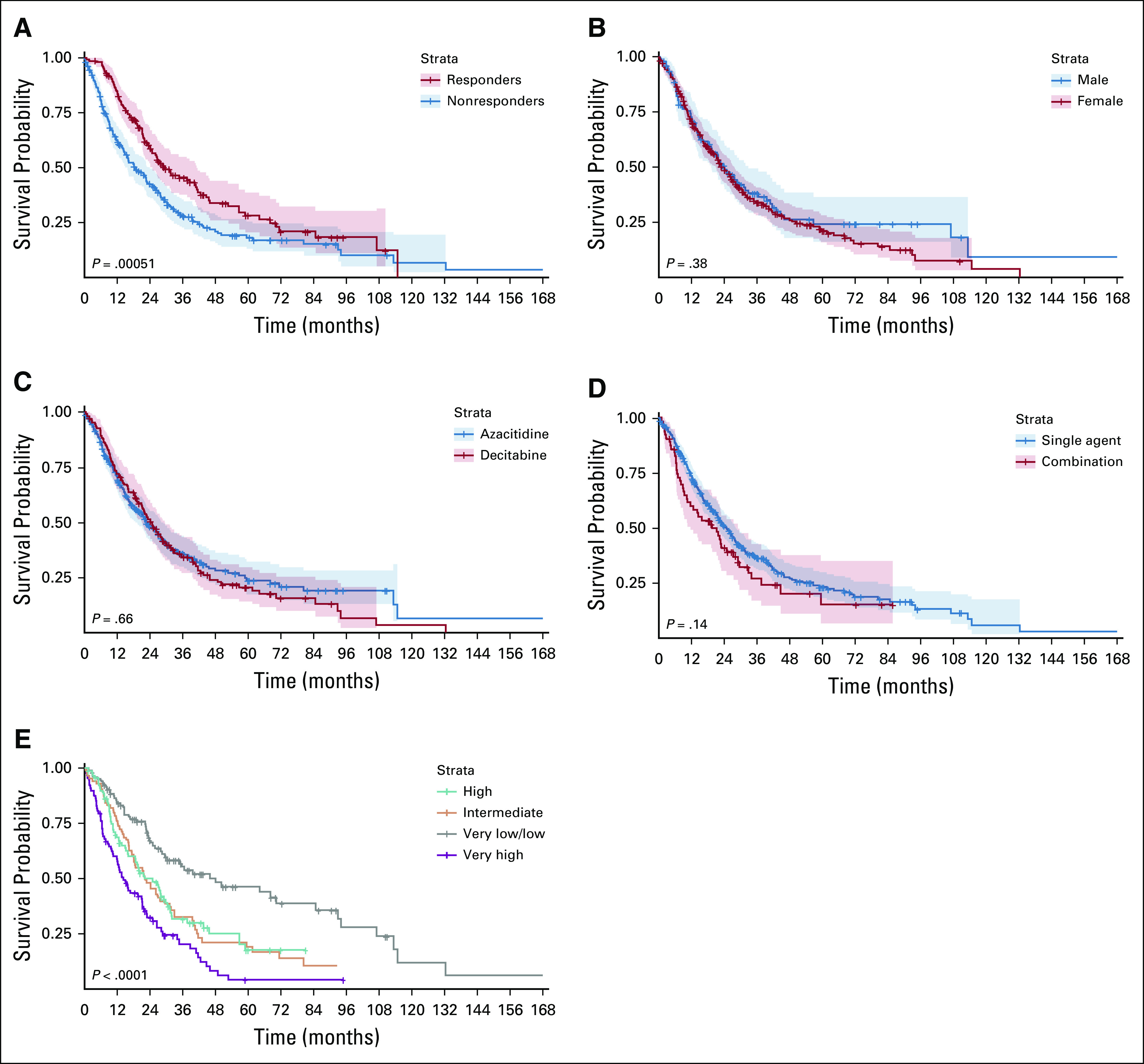
Among 433 patients, 193 (45%) received azacitidine, 176 (40%) received decitabine, and 64 (15%) received HMA alone or in combination. The median age was 70 years (range, 31 to 100 years), and 28% were female. The median number of mutations per sample was three (range, zero to nine), and 176 patients (41%) had three or more mutations per sample. Association rules identified several genomic combinations as being highly associated with no response. These molecular signatures were present in 30% of patients with three or more mutations/sample with an accuracy rate of 87% in the training cohort and 93% in the validation cohort.
Genomic biomarkers can identify, with high accuracy, approximately one third of patients with MDS who will not respond to HMAs. This study highlights the importance of machine learning technologies such as the recommender system algorithm in translating genomic data into useful clinical tools.
我们开发了一个无偏倚框架,用于研究骨髓增生异常综合征(MDS)患者中几种突变与预测对低甲基化药物(HMA)耐药性之间的关联,类似于消费者和商业推荐系统,即购买了产品A和B的客户可能会购买C:在基因A和基因B中发生突变的患者可能对HMA有反应或无反应。
我们筛查了一组433例接受HMA治疗的MDS患者,以检测其在开始治疗前获得的29个基因中常见髓系突变的存在情况。通过Apriori关联规则算法评估突变与反应之间的关联。选择具有最高置信度(关联存在的置信度)和最高提升度(关联强度)的规则。我们在参与S1117试验的患者样本中验证了我们的生物标志物。
在433例患者中,193例(45%)接受了阿扎胞苷,176例(40%)接受了地西他滨,64例(15%)单独或联合接受了HMA。中位年龄为70岁(范围31至100岁),28%为女性。每个样本的中位突变数为3个(范围0至9个),176例患者(41%)每个样本有3个或更多突变。关联规则确定了几种基因组组合与无反应高度相关。这些分子特征存在于30%每个样本有3个或更多突变的患者中,在训练队列中的准确率为87%,在验证队列中的准确率为93%。
基因组生物标志物可以高精度地识别出约三分之一对HMA无反应的MDS患者。这项研究强调了推荐系统算法等机器学习技术在将基因组数据转化为有用临床工具方面的重要性。