Shimura Tadanobu, Toden Shusuke, Kandimalla Raju, Toiyama Yuji, Okugawa Yoshinaga, Kanda Mitsuro, Baba Hideo, Kodera Yasuhiro, Kusunoki Masato, Goel Ajay
Center for Gastrointestinal Research; Center for Translational Genomics and Oncology, Baylor Scott & White Research Institute and Charles A. Sammons Cancer Center, Baylor University Medical Center, Dallas, TX.
Department of Molecular Diagnostics, Therapeutics and Translational Medicine, Beckman Research Institute of City of Hope Comprehensive Cancer Center, Duarte, CA.
Ann Surg. 2021 Nov 1;274(5):e425-e434. doi: 10.1097/SLA.0000000000003647.
This study aimed to conduct a genomewide transcriptomic profiling to develop a microRNA (miRNA)-based signature for the identification of peritoneal metastasis (PM) in patients with gastric cancer (GC).
Even though PM in patients with GC has long been recognized to associate with poor prognosis, currently there is lack of availability of molecular biomarkers for its robust diagnosis.
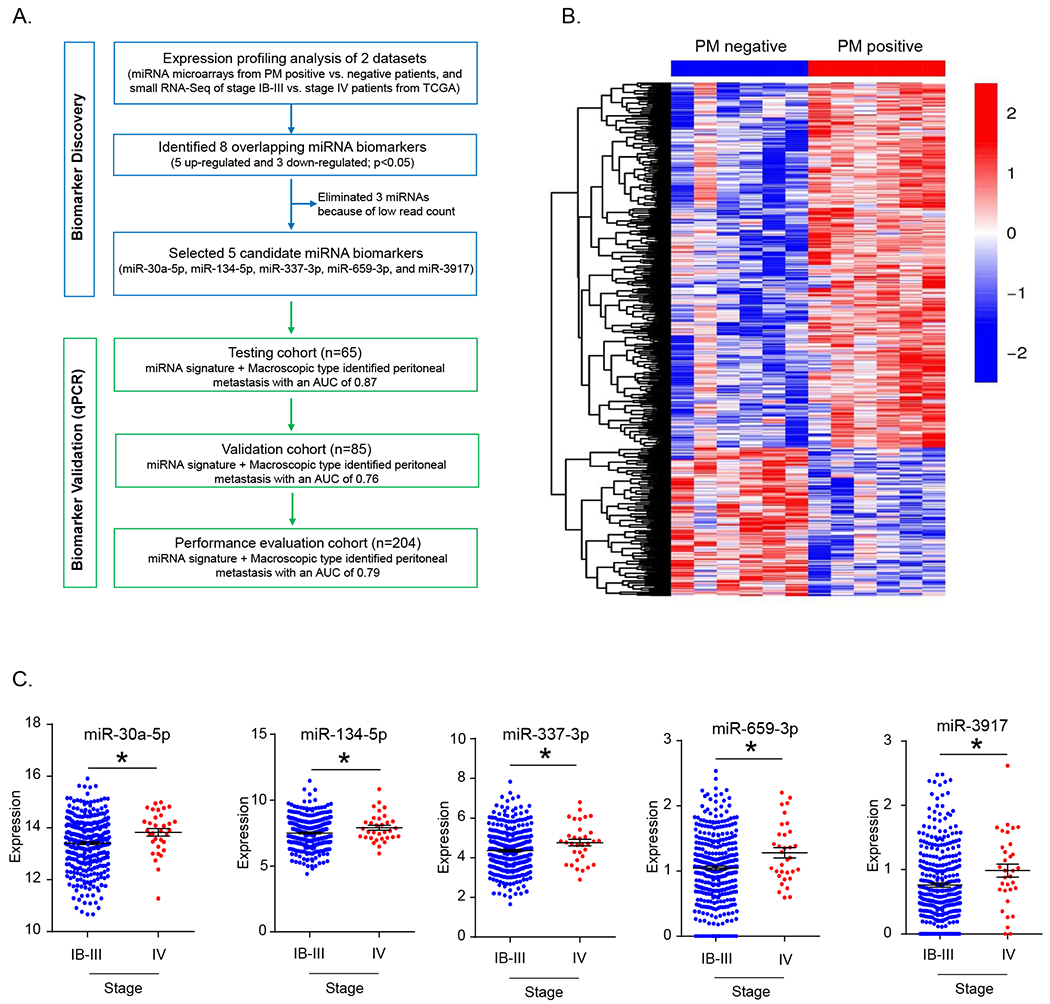
We performed a systematic biomarker discovery by analyzing miRNA expression profiles in primary tumors from GC patients with and without PM, and subsequently validated the expression of candidate miRNA biomarkers in 3 independent clinical cohorts of 354 patients with advanced GC.
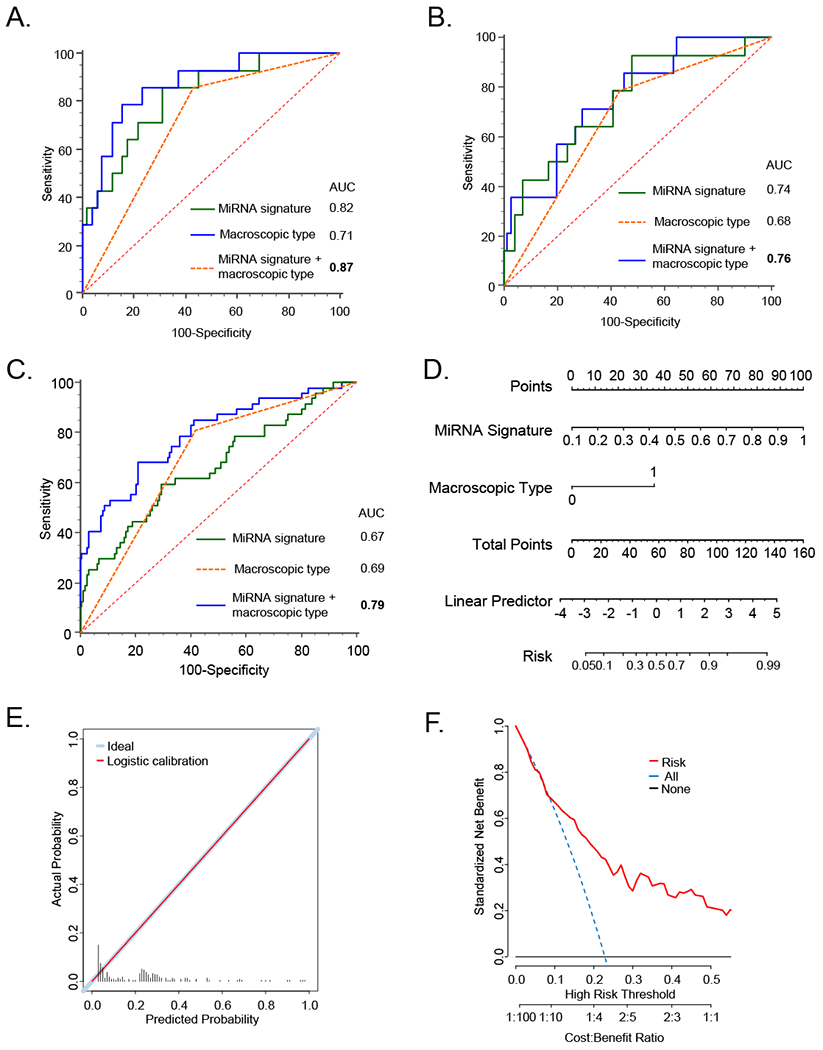
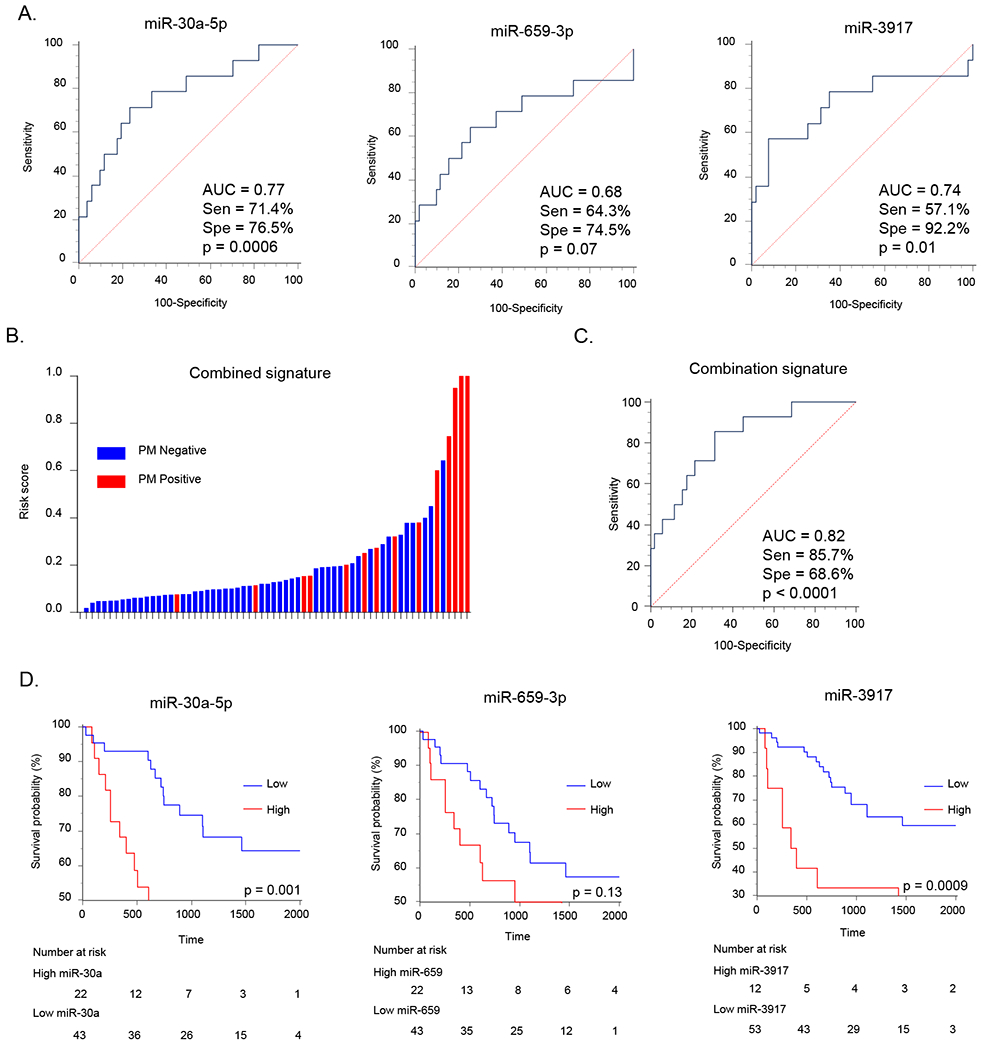
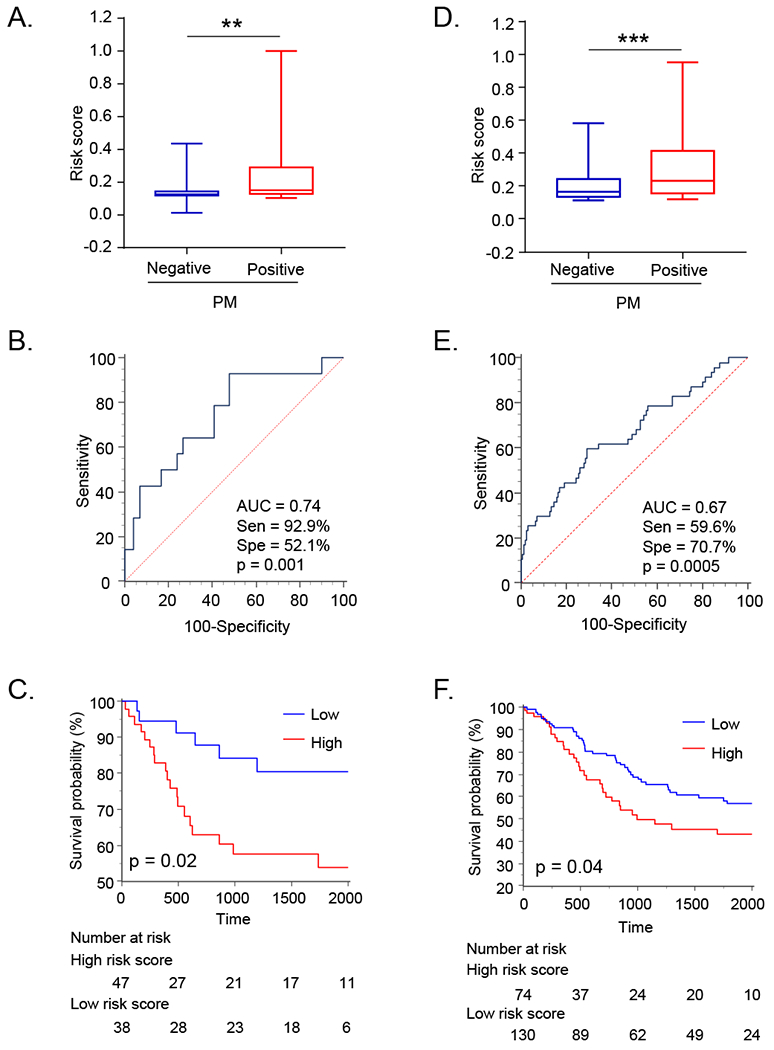
Five miRNAs (miR-30a-5p, -134-5p, -337-3p, -659-3p, and -3917) were identified during the initial discovery phase; three of which (miR-30a-5p, -659-3p, and -3917) were significantly overexpressed in the primary tumors from PM-positive patients in the testing cohort (P = 0.002, 0.04, and 0.007, respectively), and distinguished patients with versus without peritoneal metastasis with the value of area under the curve (AUC) of 0.82. Furthermore, high expression of these miRNAs also associated with poor prognosis (hazard ratio = 2.18, P = 0.04). The efficacy of the combination miRNA signature was subsequently validated in an independent validation cohort (AUC = 0.74). Finally, our miRNA signature when combined together with the macroscopic Borrmann's type score offered a much superior diagnostic in all 3 cohorts (AUC = 0.87, 0.76, and 0.79, respectively).
We have established an miRNA-based signature that have a potential to identify peritoneal metastasis in GC patients.
本研究旨在进行全基因组转录组分析,以开发一种基于微小RNA(miRNA)的标志物,用于识别胃癌(GC)患者的腹膜转移(PM)。
尽管长期以来人们都认识到GC患者的PM与预后不良相关,但目前缺乏用于其可靠诊断的分子生物标志物。
我们通过分析有和没有PM的GC患者原发性肿瘤中的miRNA表达谱,进行了系统的生物标志物发现,随后在354例晚期GC患者的3个独立临床队列中验证了候选miRNA生物标志物的表达。
在初始发现阶段鉴定出5种miRNA(miR-30a-5p、-134-5p、-337-3p、-659-3p和-3917);其中3种(miR-30a-5p、-659-3p和-3917)在测试队列中PM阳性患者的原发性肿瘤中显著过表达(分别为P = 0.002、0.04和0.007),并以曲线下面积(AUC)值0.82区分有无腹膜转移的患者。此外,这些miRNA的高表达也与预后不良相关(风险比= 2.18,P = 0.04)。随后在独立验证队列中验证了联合miRNA标志物的有效性(AUC = 0.74)。最后,我们的miRNA标志物与宏观Borrmann分型评分相结合,在所有3个队列中提供了更优的诊断效果(AUC分别为0.87、0.76和0.79)。
我们建立了一种基于miRNA的标志物,有可能识别GC患者的腹膜转移。