HaploX Biotechnology, Co., Ltd, Shenzhen, P.R. China.
Department of Gastroenterology, the Chinese PLA General Hospital, Beijing, P.R. China.
Sci Rep. 2019 Oct 31;9(1):15767. doi: 10.1038/s41598-019-52414-z.
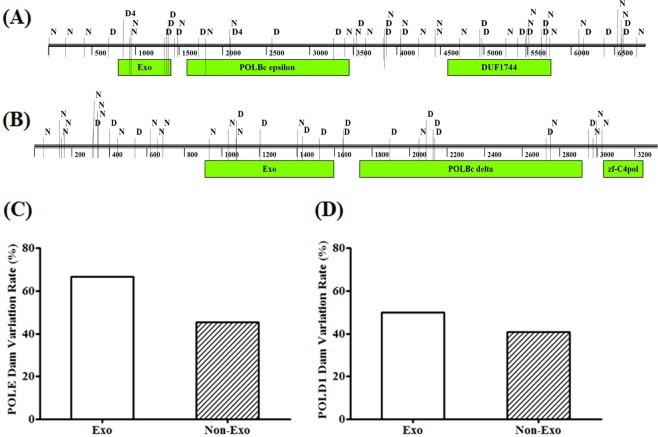
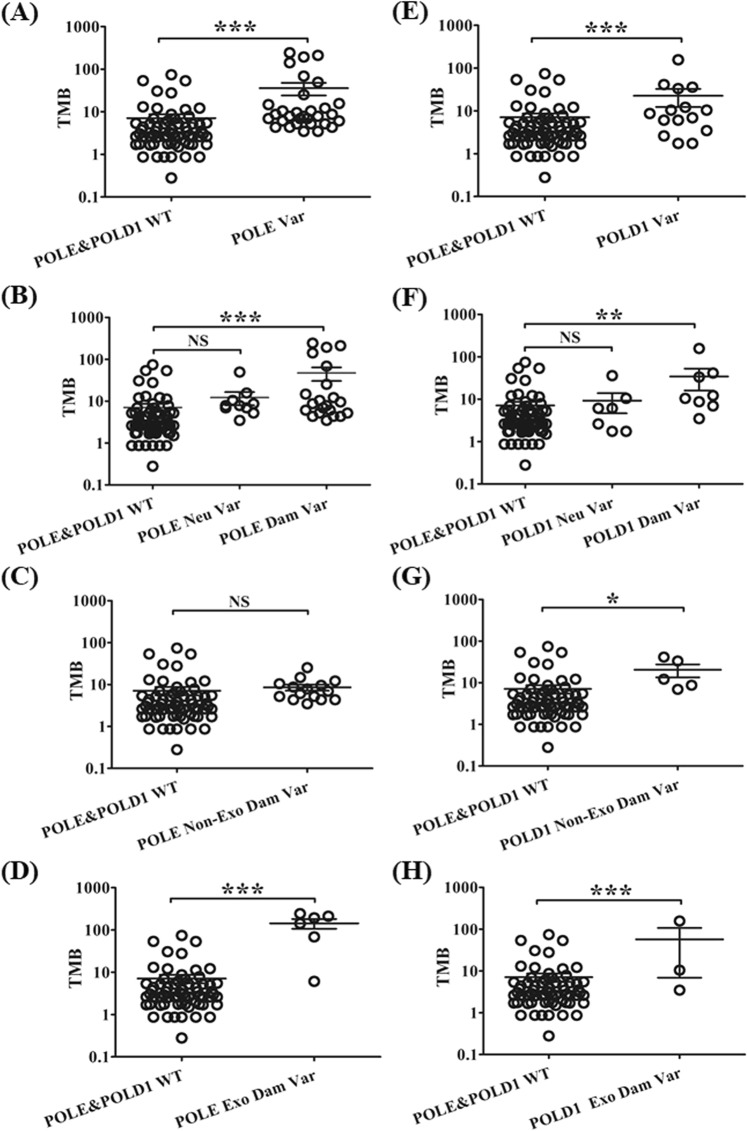
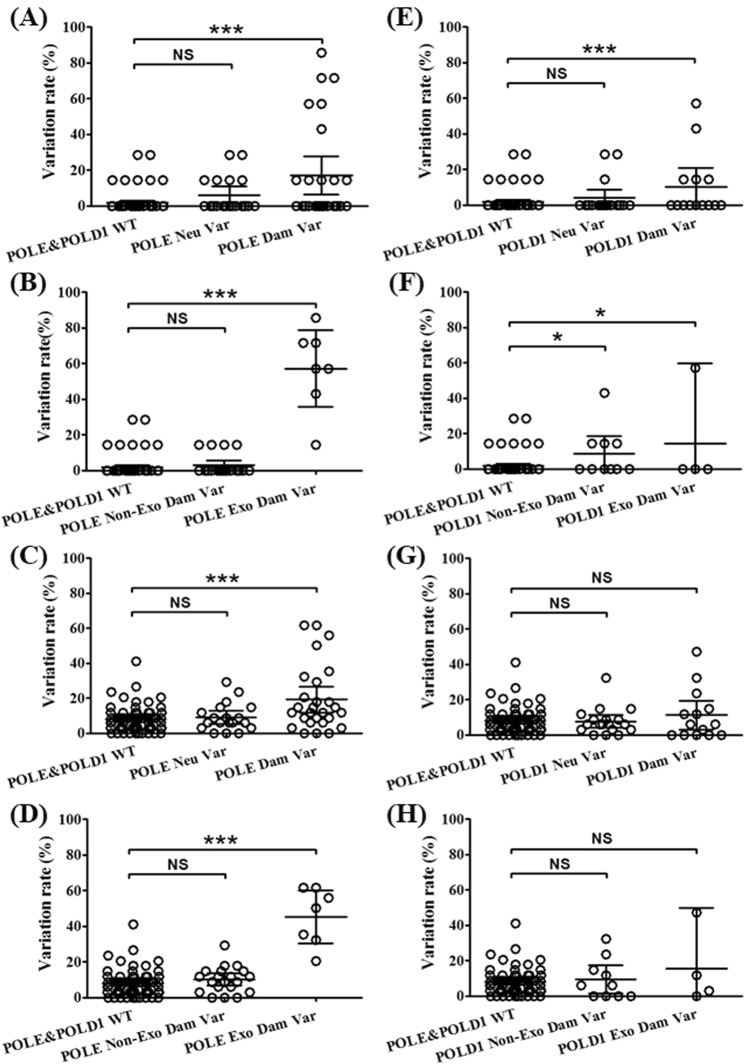
POLE/POLD1 gene variants have been suggested as potential markers for immunotherapy due to their significant association with the tumor mutational burden (TMB), an effective indicator for response prediction in immunotherapy. However, the correlation of POLE/POLD1 variants with MSI, MMR, TMB, MMR-related and key driver gene mutations needs to be defined to support patient recruitment and therapeutic effect assessment in immunotherapy. 1,392 Chinese cancer patients were recruited, and the correlation of POLE/POLD1 variants with existing immunotherapeutic markers and cancer pathways was investigated. A next-generation sequencing panel including 605 cancer-related genes was used for variant sequencing. It was found that the frequency of POLE variants was not statistically different from that in COSMIC database, while the frequency of POLD1 variants was significantly higher in lung cancer. c.857 C > G and c.2091dupC were potential high frequency variants in Chinese cancer patients. Patients carrying POLE damaging variants were significantly younger than POLE/POLD1 WT patients. Patients carrying POLE/POLD1 damaging variants exhibited significantly higher TMB and frequency of MMR gene variants than POLE/POLD1 WT patients. Patients with POLE damaging variants also exhibited significantly higher frequency of driver gene variants than POLE/POLD1 WT patients. Further analysis showed that POLE damaging variants may affect the cancer development through MMR, TGFβ and RTK/RAS/RAF signaling pathways, and POLD1 through MMR pathways. In conclusion, this study identified key characteristics and regions of POLE/POLD1 genes that correlates with TMB, MMR gene mutations and key driver gene mutations, and provided theoretical and practical basis for patient selection based on POLE/POLD1 gene status in immunotherapy.
POLE/POLD1 基因突变被认为是免疫治疗的潜在标志物,因为它们与肿瘤突变负担(TMB)显著相关,而 TMB 是免疫治疗反应预测的有效指标。然而,需要确定 POLE/POLD1 变体与 MSI、MMR、TMB、MMR 相关和关键驱动基因突变的相关性,以支持免疫治疗中的患者招募和治疗效果评估。本研究共招募了 1392 名中国癌症患者,研究了 POLE/POLD1 变体与现有的免疫治疗标志物和癌症通路的相关性。使用包含 605 个癌症相关基因的下一代测序panel 进行变体测序。结果发现,POLE 变体的频率与 COSMIC 数据库无统计学差异,而 POLD1 变体的频率在肺癌中显著升高。c.857C>G 和 c.2091dupC 是中国癌症患者潜在的高频变体。携带 POLE 破坏性变体的患者明显比 POLE/POLD1 WT 患者年轻。携带 POLE/POLD1 破坏性变体的患者 TMB 显著更高,且 MMR 基因变体的频率也显著更高,而 POLE/POLD1 WT 患者则相反。携带 POLE 破坏性变体的患者驱动基因变体的频率也显著高于 POLE/POLD1 WT 患者。进一步分析表明,POLE 破坏性变体可能通过 MMR、TGFβ和 RTK/RAS/RAF 信号通路影响癌症的发生发展,而 POLD1 则通过 MMR 通路影响癌症的发生发展。综上所述,本研究确定了 POLE/POLD1 基因与 TMB、MMR 基因突变和关键驱动基因突变相关的关键特征和区域,为免疫治疗中基于 POLE/POLD1 基因状态的患者选择提供了理论和实践依据。