Memorial Sloan Kettering Cancer Center, New York, NY, USA.
Mod Pathol. 2020 Apr;33(4):648-656. doi: 10.1038/s41379-019-0398-2. Epub 2019 Nov 1.
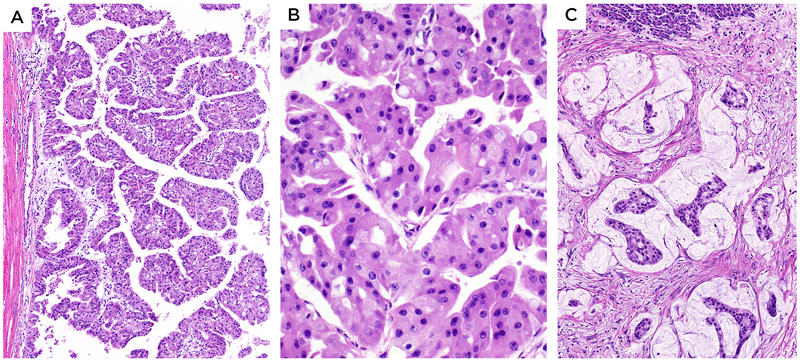
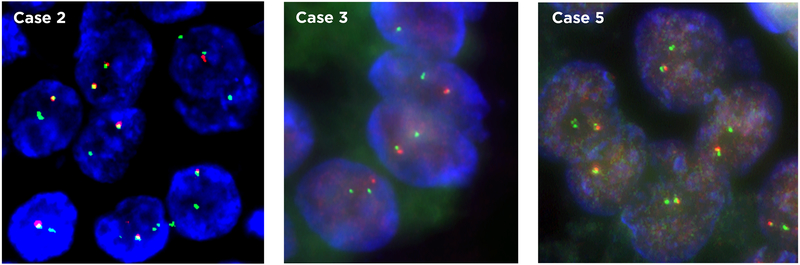
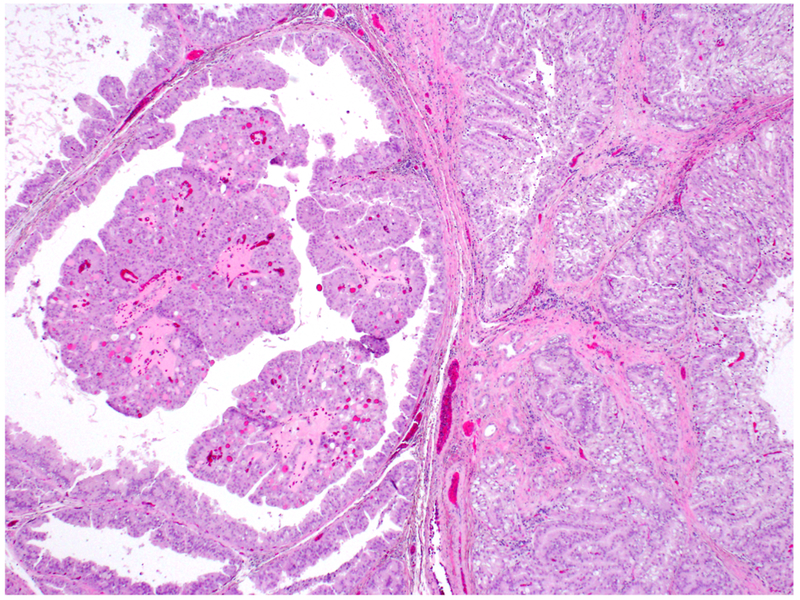
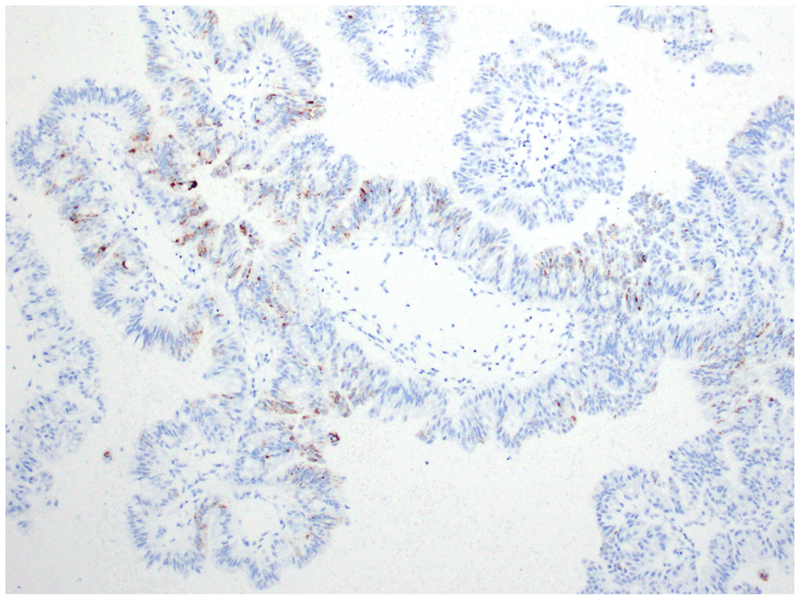
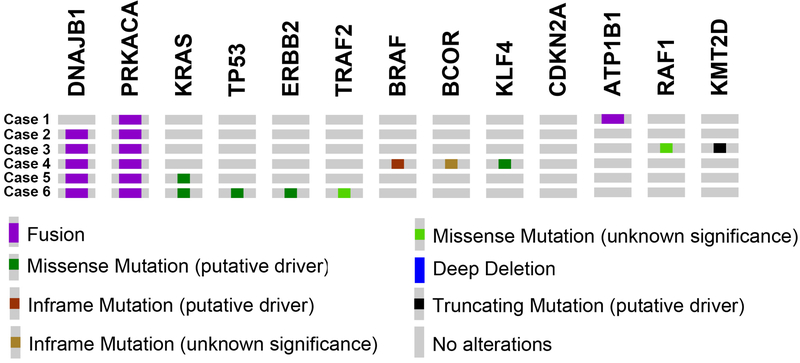
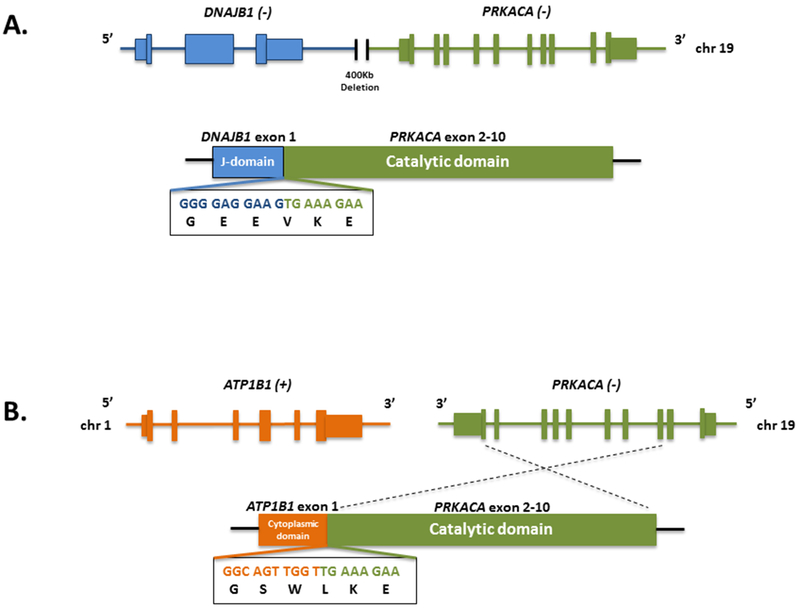
Recently discovered DNAJB1-PRKACA oncogenic fusions have been considered diagnostic for fibrolamellar hepatocellular carcinoma. In this study, we describe six pancreatobiliary neoplasms with PRKACA fusions, five of which harbor the DNAJB1-PRKACA fusion. All neoplasms were subjected to a hybridization capture-based next-generation sequencing assay (MSK-IMPACT), which enables the identification of sequence mutations, copy number alterations, and selected structural rearrangements involving ≥410 genes (n = 6) and/or to a custom targeted, RNA-based panel (MSK-Fusion) that utilizes Archer Anchored Multiplex PCR technology and next-generation sequencing to detect gene fusions in 62 genes (n = 2). Selected neoplasms also underwent FISH analysis, albumin mRNA in-situ hybridization, and arginase-1 immunohistochemical labeling (n = 3). Five neoplasms were pancreatic, and one arose in the intrahepatic bile ducts. All revealed at least focal oncocytic morphology: three cases were diagnosed as intraductal oncocytic papillary neoplasms, and three as intraductal papillary mucinous neoplasms with mixed oncocytic and pancreatobiliary or gastric features. Four cases had an invasive carcinoma component composed of oncocytic cells. Five cases revealed DNAJB1-PRKACA fusions and one revealed an ATP1B1-PRKACA fusion. None of the cases tested were positive for albumin or arginase-1. Our data prove that DNAJB1-PRKACA fusion is neither exclusive nor diagnostic for fibrolamellar hepatocellular carcinoma, and caution should be exercised in diagnosing liver tumors with DNAJB1-PRKACA fusions as fibrolamellar hepatocellular carcinoma, particularly if a pancreatic lesion is present. Moreover, considering DNAJB1-PRKACA fusions lead to upregulated protein kinase activity and that this upregulated protein kinase activity has a significant role in tumorigenesis of fibrolamellar hepatocellular carcinoma, protein kinase inhibition could have therapeutic potential in the treatment of these pancreatobiliary neoplasms as well, once a suitable drug is developed.
最近发现的 DNAJB1-PRKACA 致癌融合被认为是纤维板层肝细胞癌的诊断标志物。在本研究中,我们描述了 6 例具有 PRKACA 融合的胰胆管肿瘤,其中 5 例存在 DNAJB1-PRKACA 融合。所有肿瘤均进行了基于杂交捕获的下一代测序检测(MSK-IMPACT),该检测可鉴定涉及≥410 个基因的序列突变、拷贝数改变和选定的结构重排(n=6),或使用 Archer 锚定多重 PCR 技术和下一代测序检测 62 个基因中的基因融合的定制靶向 RNA 面板(MSK-Fusion)(n=2)。选定的肿瘤还进行了 FISH 分析、白蛋白 mRNA 原位杂交和精氨酸酶-1 免疫组织化学标记(n=3)。5 例肿瘤发生在胰腺,1 例发生在肝内胆管。所有肿瘤均显示出至少局灶性的嗜酸细胞形态:3 例诊断为导管内嗜酸细胞性乳头状肿瘤,3 例诊断为具有嗜酸细胞和胰胆管或胃特征的混合性导管内乳头状黏液性肿瘤。4 例有由嗜酸细胞组成的浸润性癌成分。5 例发现 DNAJB1-PRKACA 融合,1 例发现 ATP1B1-PRKACA 融合。所有病例均未检测到白蛋白或精氨酸酶-1 阳性。我们的数据证明,DNAJB1-PRKACA 融合既不是纤维板层肝细胞癌的特有标志物,也不是其诊断标志物,因此在诊断具有 DNAJB1-PRKACA 融合的肝肿瘤为纤维板层肝细胞癌时应谨慎,特别是如果存在胰腺病变时。此外,考虑到 DNAJB1-PRKACA 融合导致蛋白激酶活性上调,并且这种上调的蛋白激酶活性在纤维板层肝细胞癌的肿瘤发生中具有重要作用,一旦开发出合适的药物,蛋白激酶抑制可能对这些胰胆管肿瘤的治疗也具有潜在的治疗作用。