Department of Biomedical Engineering, Toin University of Yokohama, Yokohama, Japan.
Front Immunol. 2019 Oct 15;10:2061. doi: 10.3389/fimmu.2019.02061. eCollection 2019.
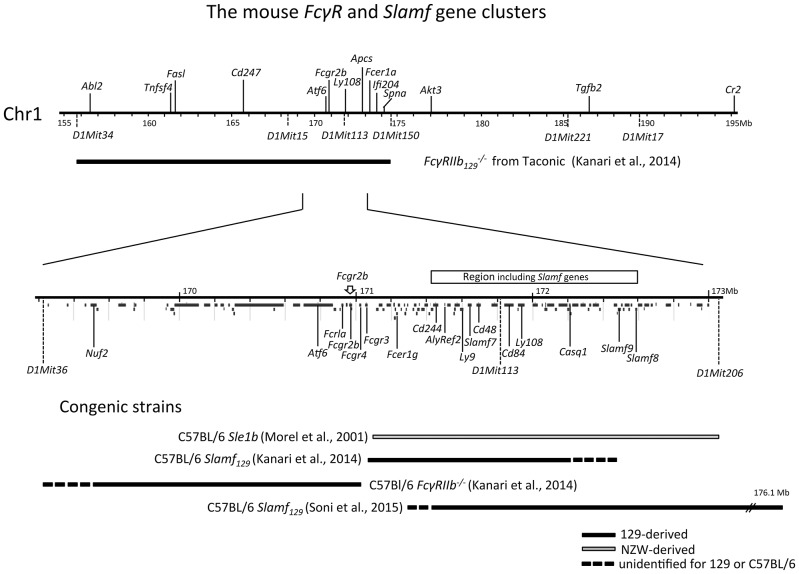
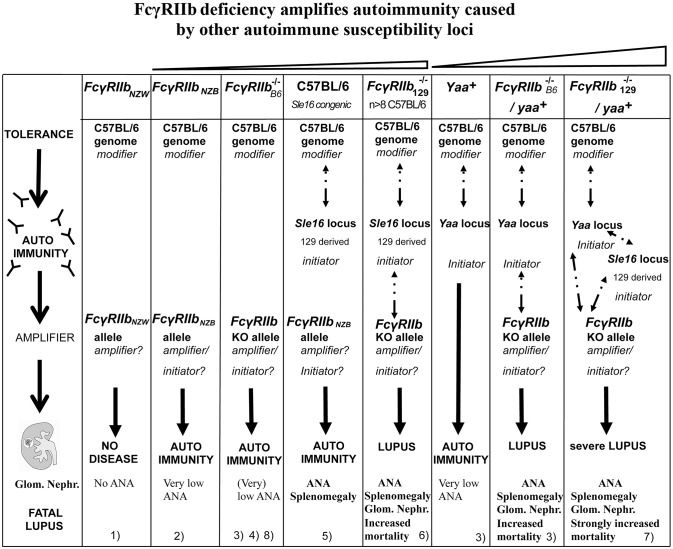
FcγRIIb is the only inhibitory Fc receptor and controls many aspects of immune and inflammatory responses. The observation 19 years ago that mice generated by gene targeting in 129 derived ES cells developed severe lupus like disease when backcrossed more than 7 generations into C57BL/6 background initiated extensive research on the functional understanding of this strong autoimmune phenotype. The genomic region in the distal part of Chr1 both in human and mice in which the gene cluster is located shows a high level of complexity in relation to the susceptibility to SLE. Specific haplotypes of closely linked genes including the and genes are associated with increased susceptibility to SLE both in mice and human. Using forward and reverse genetic approaches including in human GWAS and in mice congenic strains, KO mice (germline and cell type specific, on different genetic background), knockin mice, overexpressing transgenic mice combined with immunological models such as adoptive transfer of B cells from Ig transgenic mice the involved genes and the causal mutations and their associated functional alterations were analyzed. In this review the results of this 19 years extensive research are discussed with a focus on (genetically modified) mouse models.
FcγRIIb 是唯一的抑制性 Fc 受体,控制着免疫和炎症反应的许多方面。19 年前的观察发现,在 129 衍生的 ES 细胞中通过基因靶向产生的小鼠,当回交超过 7 代进入 C57BL/6 背景时,会发展出严重的狼疮样疾病,这引发了对这种强烈自身免疫表型的功能理解的广泛研究。在人类和小鼠中,位于基因簇远端部分的 Chr1 基因组区域与 SLE 的易感性高度相关。包括 和 基因在内的紧密连锁基因的特定单倍型与小鼠和人类 SLE 的易感性增加有关。通过正向和反向遗传方法,包括人类 GWAS 和小鼠同源基因系,KO 小鼠(种系和细胞类型特异性,在不同的遗传背景下)、基因敲入小鼠、过表达转基因小鼠,并结合免疫模型,如从 Ig 转基因小鼠中过继转移 B 细胞,分析了涉及的基因、致病突变及其相关的功能改变。在这篇综述中,讨论了这 19 年广泛研究的结果,重点是(基因修饰)小鼠模型。