Fougerolle Stéphanie, Fortier Christine, Legrand Loïc, Jourdan Marion, Marcillaud-Pitel Christel, Pronost Stéphane, Paillot Romain
Frank Duncombe, LABÉO, 14280 Saint Contest, France.
NORMANDIE UNIV UNICAEN, Biotargen, 14000 Caen, France.
Vaccines (Basel). 2019 Nov 2;7(4):174. doi: 10.3390/vaccines7040174.
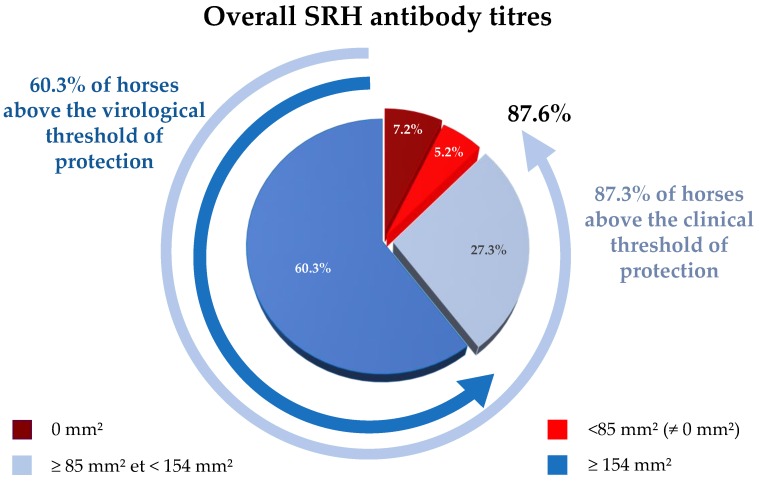
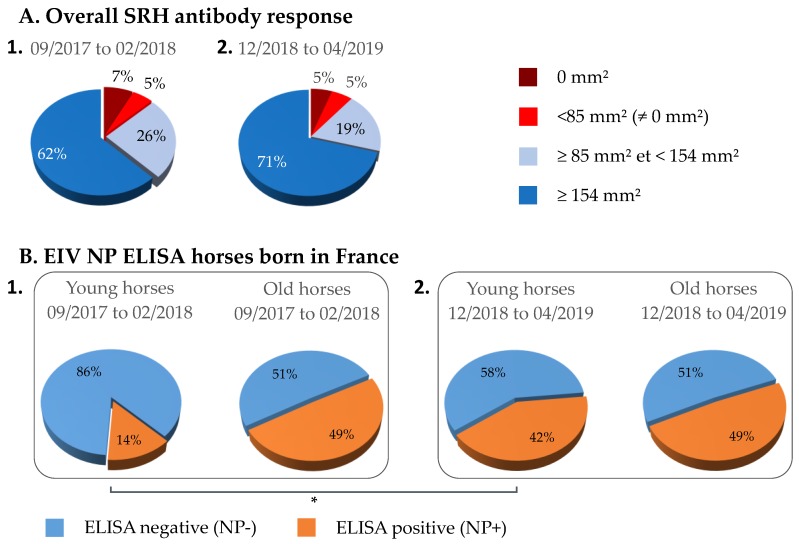
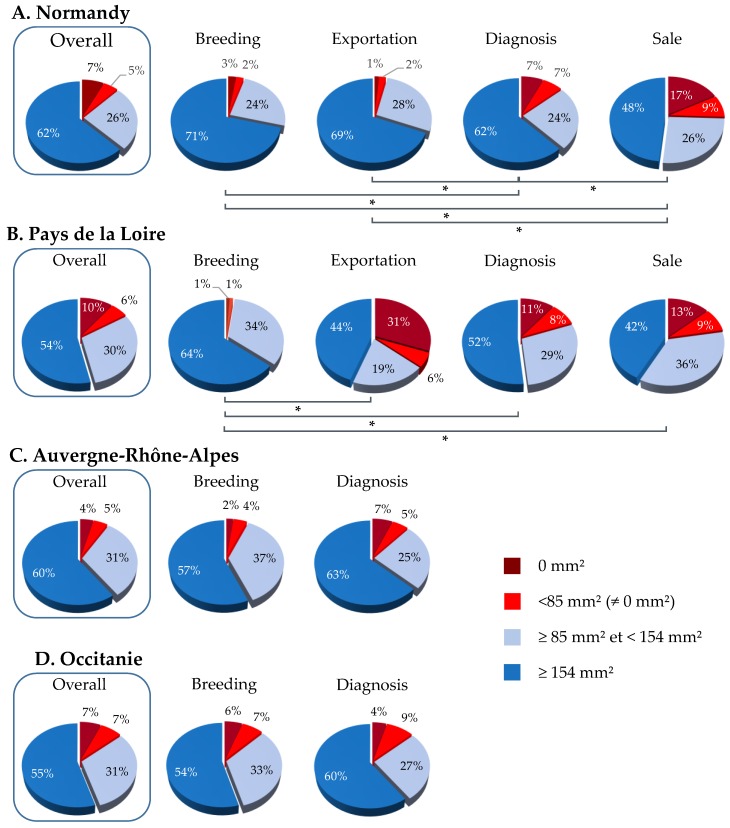
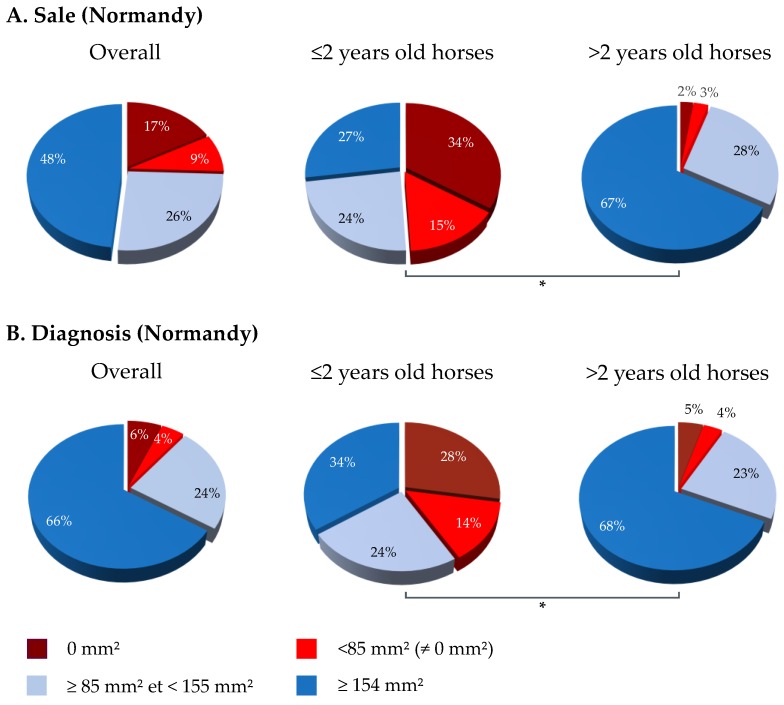
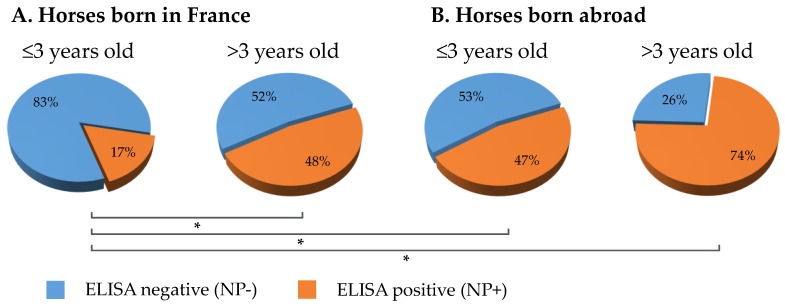
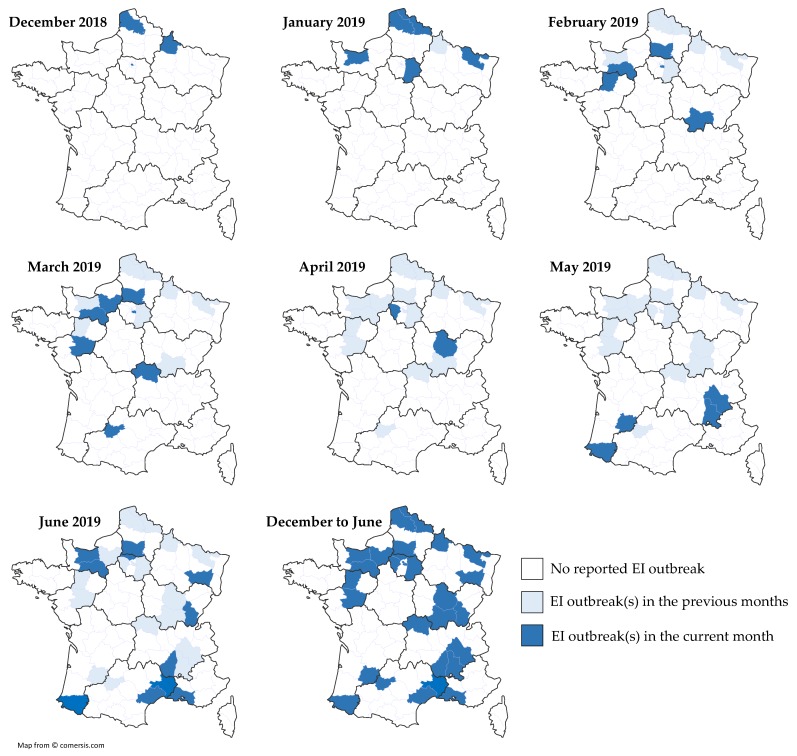
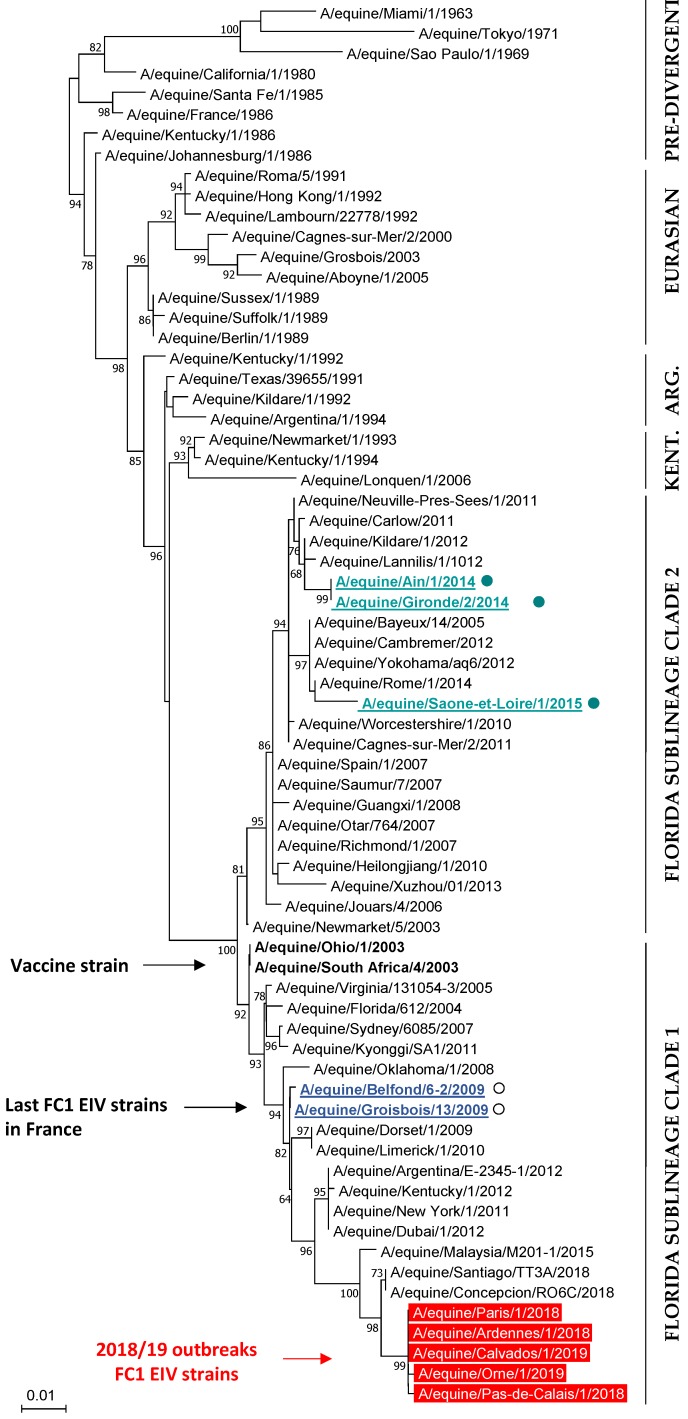
Every year, several epizooties of equine influenza (EI) are reported worldwide. However, no EI case has been identified in France between 2015 and late 2018, despite an effective field surveillance of the pathogen and the disease. Vaccination against equine influenza virus (EIV) remains to this day one of the most effective methods to prevent or limit EI outbreaks and the lack of detection of the pathogen could be linked to vaccination coverage. The aim of this study was to evaluate EI immunity and vaccine coverage in France through a large-scale serological study. A total of 3004 archived surplus serums from French horses of all ages, breeds and sexes were selected from four different geographical regions and categories (i.e., sanitary check prior to exportation, sale, breeding protocol or illness diagnosis). EIV-specific antibody response was measured by single radial hemolysis (SRH) and an EIV-nucleoprotein (NP) ELISA (used as a DIVA test). Overall immunity coverage against EIV infection (i.e., titers induced by vaccination and/or natural infection above the clinical protection threshold) reached 87.6%. The EIV NP ELISA results showed that 83% of SRH positive serum samples from young horses (≤3 years old) did not have NP antibodies, which indicates that the SRH antibody response was likely induced by EI vaccination alone (the HA recombinant canarypoxvirus-based EI vaccine is mostly used in France) and supports the absence of EIV circulation in French horse populations between 2015 and late 2018, as reported by the French equine infectious diseases surveillance network (RESPE). Results from this study confirm a strong EI immunity in a large cohort of French horses, which provides an explanation to the lack of clinical EI in France in recent years and highlights the success of vaccination against this disease. However, such EI protection has been challenged since late 2018 by the incursion in the EU of a Florida Clade 1 sub-lineage EIV (undetected in France since 2009), which is also reported here.
每年,全球都会报告几起马流感(EI)疫情。然而,在2015年至2018年末期间,法国未发现EI病例,尽管对该病原体和疾病进行了有效的现场监测。至今,针对马流感病毒(EIV)的疫苗接种仍是预防或限制EI疫情爆发的最有效方法之一,病原体未被检测到可能与疫苗接种覆盖率有关。本研究的目的是通过大规模血清学研究评估法国的EI免疫力和疫苗接种覆盖率。从四个不同地理区域和类别(即出口前卫生检查、销售、繁殖规程或疾病诊断)中选取了3004份来自法国不同年龄、品种和性别的马匹的存档剩余血清。通过单向辐射溶血(SRH)和EIV核蛋白(NP)ELISA(用作鉴别诊断试验)测量EIV特异性抗体反应。针对EIV感染的总体免疫覆盖率(即由疫苗接种和/或自然感染诱导的滴度高于临床保护阈值)达到87.6%。EIV NP ELISA结果显示,来自幼马(≤3岁)的SRH阳性血清样本中有83%没有NP抗体,这表明SRH抗体反应可能仅由EI疫苗接种诱导(法国主要使用基于金丝雀痘病毒重组HA的EI疫苗),并支持法国马群在2015年至2018年末期间没有EIV传播,正如法国马传染病监测网络(RESPE)所报告的那样。本研究结果证实了一大批法国马匹具有强大的EI免疫力,这为近年来法国缺乏临床EI病例提供了解释,并突出了针对该疾病的疫苗接种的成功。然而,自2018年末以来,这种EI保护受到了挑战,因为一种佛罗里达1系分支EIV(自2009年以来在法国未被检测到)侵入了欧盟,本文也对此进行了报道。