Lao-Oxford-Mahosot Hospital-Wellcome Trust Research Unit, Microbiology Laboratory, Mahosot Hospital, Vientiane, Lao PDR.
Centre for Tropical Medicine and Global Health, Nuffield Department of Medicine, University of Oxford, Oxford, UK.
Parasit Vectors. 2019 Nov 4;12(1):513. doi: 10.1186/s13071-019-3751-x.
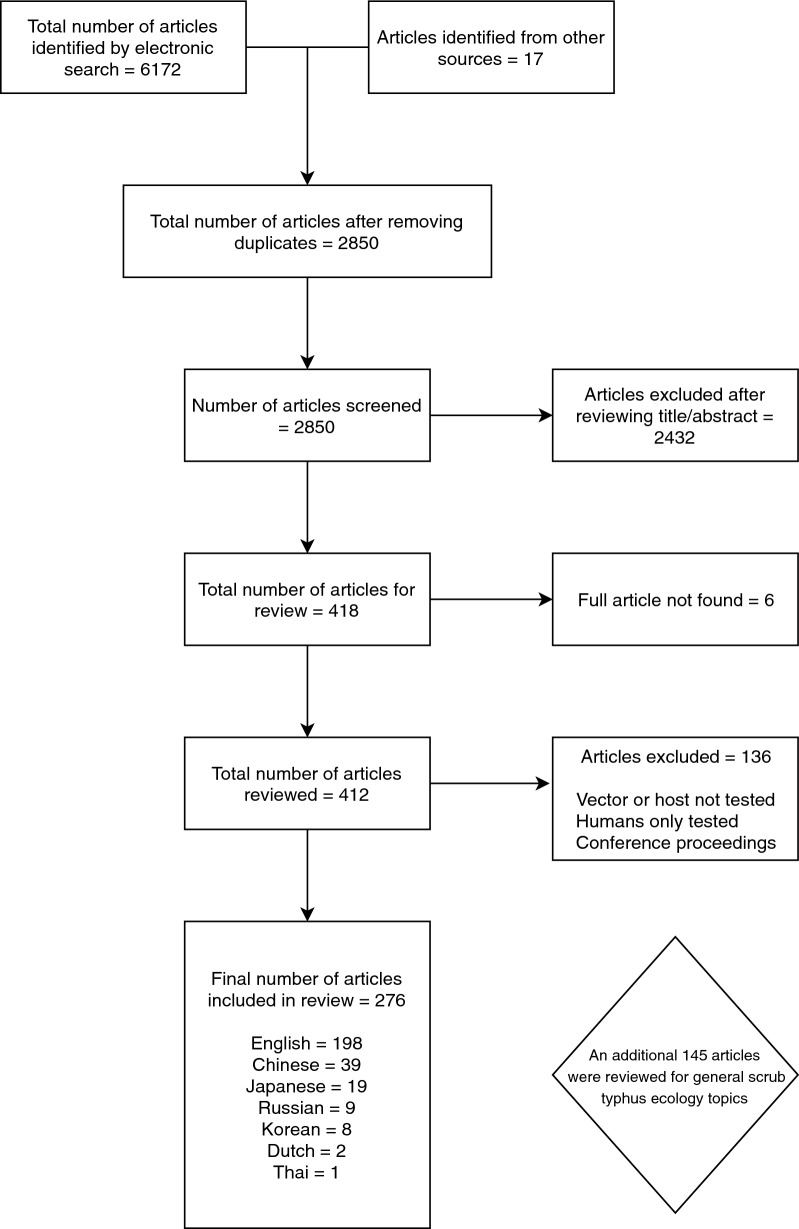
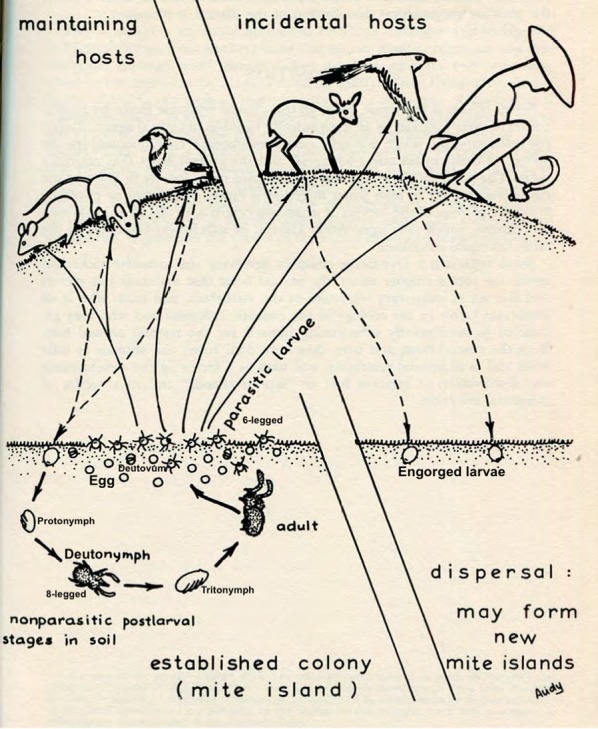
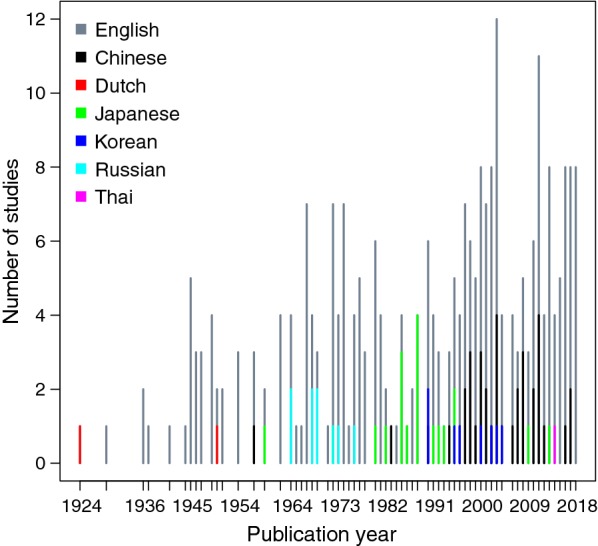
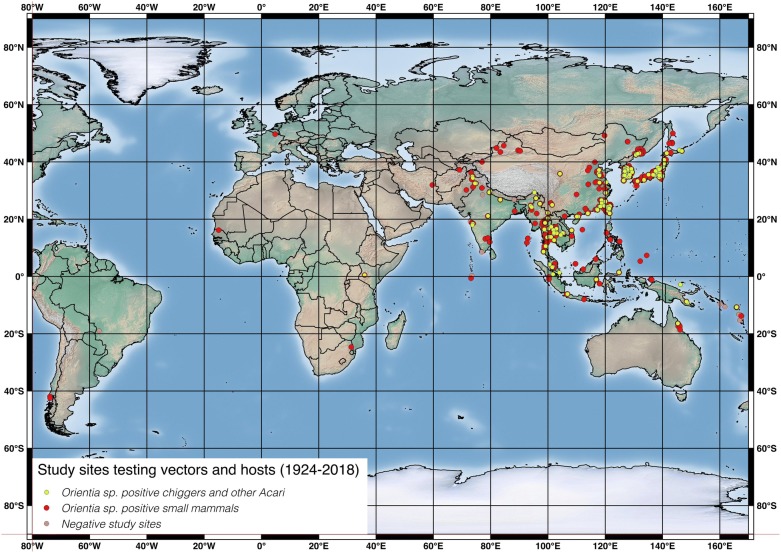
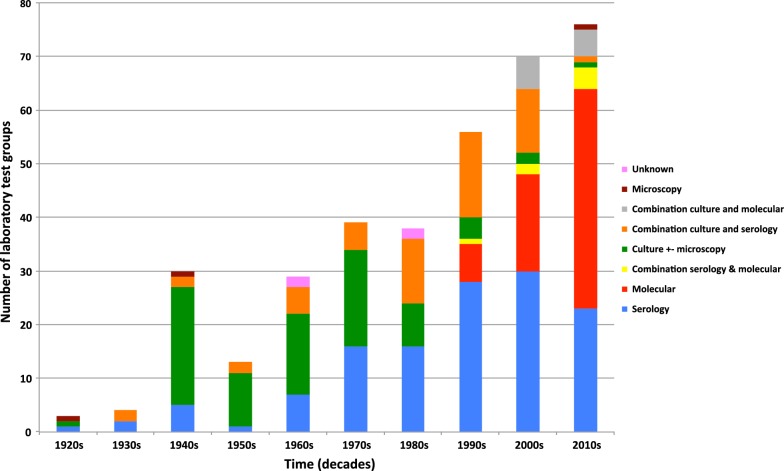
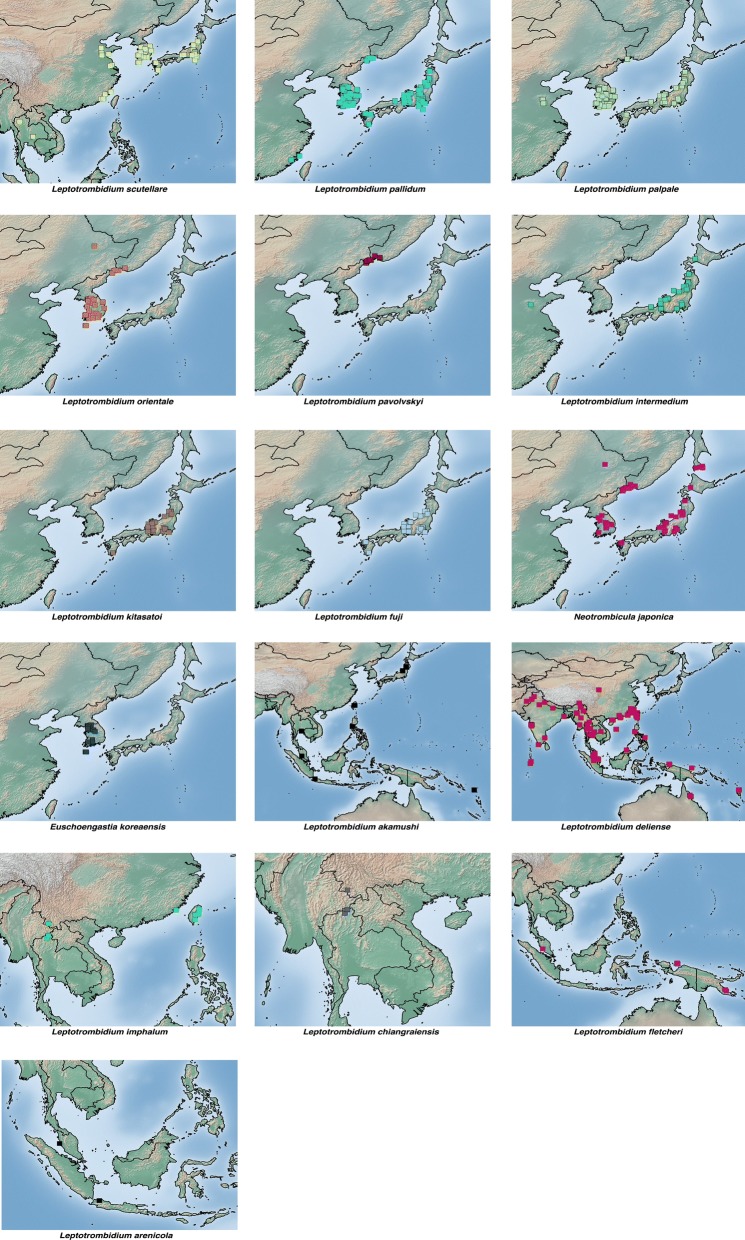
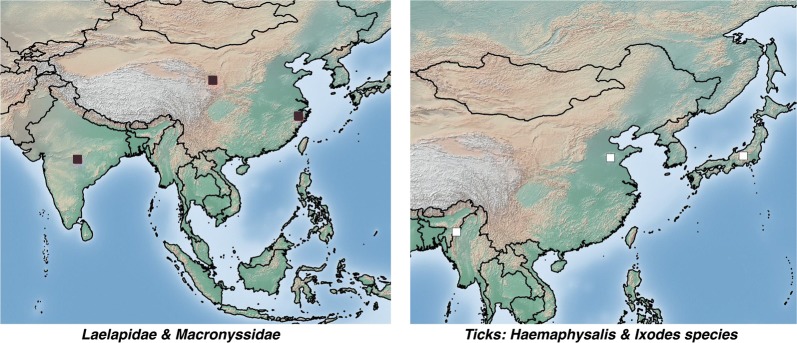
Scrub typhus, caused by Orientia tsutsugamushi, is an important and neglected vector-borne zoonotic disease with an expanding known distribution. The ecology of the disease is complex and poorly understood, impairing discussion of public health interventions. To highlight what we know and the themes of our ignorance, we conducted a systematic review of all studies investigating the pathogen in vectors and non-human hosts. A total of 276 articles in 7 languages were included, with 793 study sites across 30 countries. There was no time restriction for article inclusion, with the oldest published in 1924. Seventy-six potential vector species and 234 vertebrate host species were tested, accounting for over one million trombiculid mites ('chiggers') and 83,000 vertebrates. The proportion of O. tsutsugamushi positivity was recorded for different categories of laboratory test and host species. Vector and host collection sites were geocoded and mapped. Ecological data associated with these sites were summarised. A further 145 articles encompassing general themes of scrub typhus ecology were reviewed. These topics range from the life-cycle to transmission, habitats, seasonality and human risks. Important gaps in our understanding are highlighted together with possible tools to begin to unravel these. Many of the data reported are highly variable and inconsistent and minimum data reporting standards are proposed. With more recent reports of human Orientia sp. infection in the Middle East and South America and enormous advances in research technology over recent decades, this comprehensive review provides a detailed summary of work investigating this pathogen in vectors and non-human hosts and updates current understanding of the complex ecology of scrub typhus. A better understanding of scrub typhus ecology has important relevance to ongoing research into improving diagnostics, developing vaccines and identifying useful public health interventions to reduce the burden of the disease.
恙虫病由恙虫东方体引起,是一种重要且被忽视的媒介传播的人畜共患病,其已知分布范围正在扩大。该疾病的生态学复杂且了解甚少,这妨碍了对公共卫生干预措施的讨论。为了突出我们所知道的和我们不知道的主题,我们对所有研究病原体在媒介和非人类宿主中的作用的研究进行了系统综述。共有来自 7 种语言的 276 篇文章被纳入,涉及 30 个国家的 793 个研究地点。纳入文章没有时间限制,最早的发表于 1924 年。研究共检测了 76 种潜在的媒介物种和 234 种脊椎动物宿主,涉及超过 100 万只恙螨(“恙虫”)和 83000 种脊椎动物。记录了不同类别实验室检测和宿主物种中恙虫东方体阳性的比例。对媒介和宿主采集地点进行了地理编码和绘图,并对这些地点的生态数据进行了总结。还回顾了 145 篇涵盖恙虫病生态学一般主题的文章,这些主题范围从生命周期到传播、栖息地、季节性和人类风险。重点突出了我们理解中的重要差距,并提出了可能的工具来开始解决这些问题。许多报告的数据变化很大且不一致,提出了最低数据报告标准。随着近年来中东和南美洲有更多关于人类东方体感染的报道,以及近几十年来研究技术的巨大进步,本综述详细总结了对该病原体在媒介和非人类宿主中的作用的研究,并更新了对恙虫病复杂生态学的现有认识。对恙虫病生态学的更好理解对正在进行的研究具有重要意义,这些研究旨在改善诊断、开发疫苗和确定有用的公共卫生干预措施,以减轻疾病负担。