Department of Biology, University of Fribourg, Fribourg, Switzerland.
Elife. 2019 Nov 5;8:e50925. doi: 10.7554/eLife.50925.
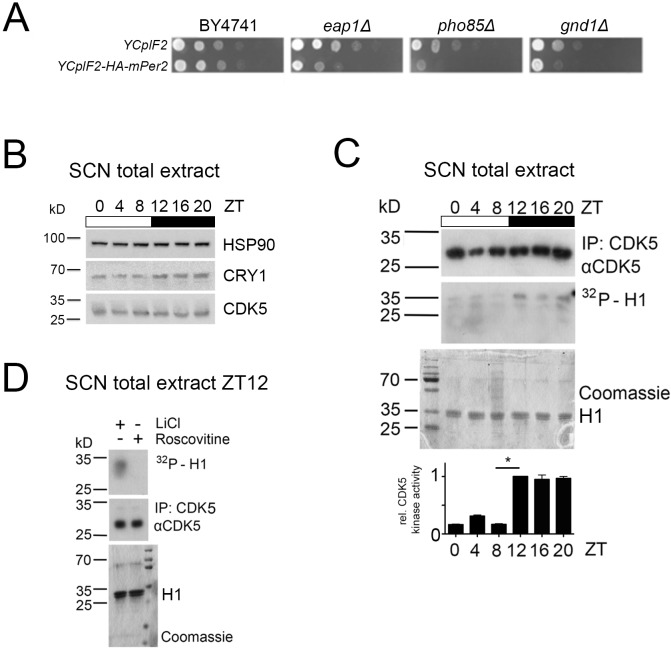
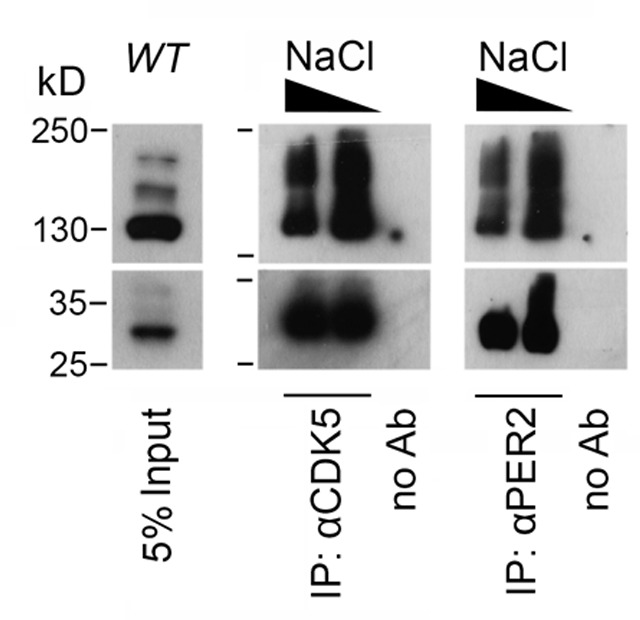
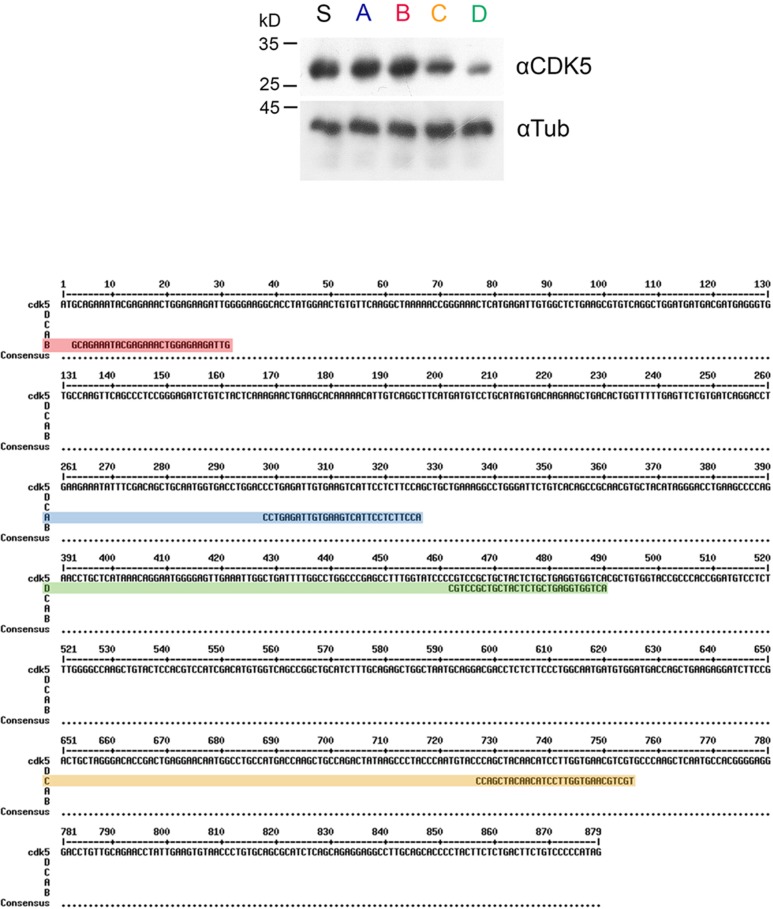
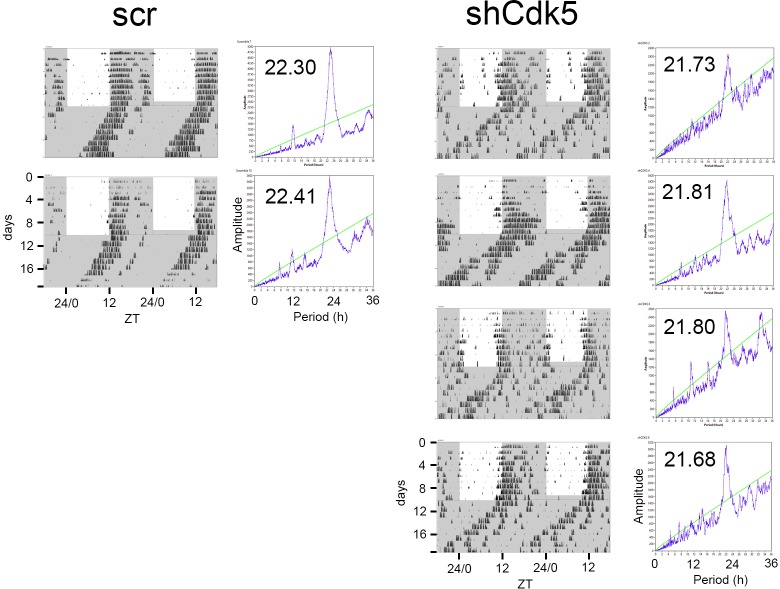
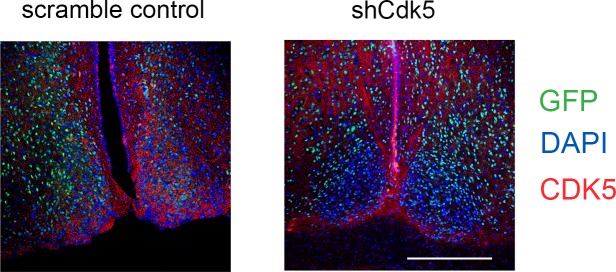
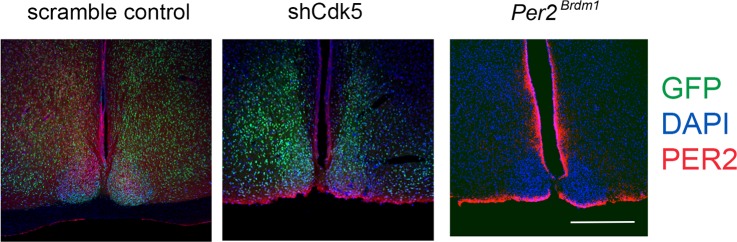
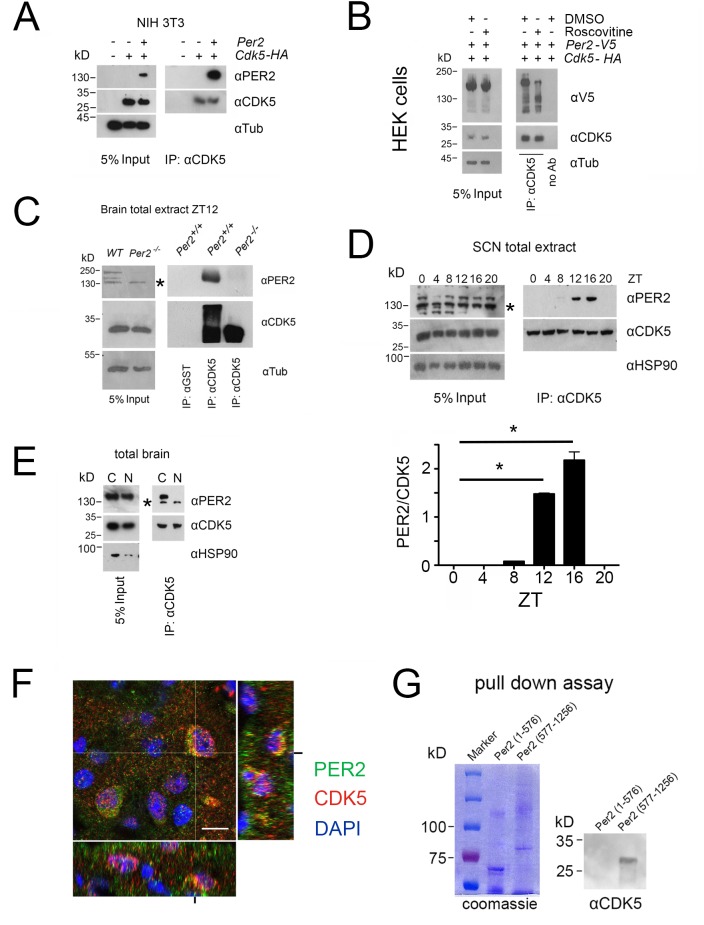
Circadian oscillations emerge from transcriptional and post-translational feedback loops. An important step in generating rhythmicity is the translocation of clock components into the nucleus, which is regulated in many cases by kinases. In mammals, the kinase promoting the nuclear import of the key clock component Period 2 (PER2) is unknown. Here, we show that the cyclin-dependent kinase 5 (CDK5) regulates the mammalian circadian clock involving phosphorylation of PER2. Knock-down of in the suprachiasmatic nuclei (SCN), the main coordinator site of the mammalian circadian system, shortened the free-running period in mice. CDK5 phosphorylated PER2 at serine residue 394 (S394) in a diurnal fashion. This phosphorylation facilitated interaction with Cryptochrome 1 (CRY1) and nuclear entry of the PER2-CRY1 complex. Taken together, we found that CDK5 drives nuclear entry of PER2, which is critical for establishing an adequate circadian period of the molecular circadian cycle. Of note is that CDK5 may not exclusively phosphorylate PER2, but in addition may regulate other proteins that are involved in the clock mechanism. Taken together, it appears that CDK5 is critically involved in the regulation of the circadian clock and may represent a link to various diseases affected by a derailed circadian clock.
昼夜节律振荡源于转录和翻译后反馈回路。产生节律性的一个重要步骤是时钟组件易位到细胞核中,在许多情况下,这一过程受激酶调节。在哺乳动物中,促进关键时钟组件 PER2(Period 2)核输入的激酶尚不清楚。在这里,我们表明细胞周期蛋白依赖性激酶 5(CDK5)通过磷酸化 PER2 来调节哺乳动物的生物钟。在哺乳动物生物钟的主要协调部位视交叉上核(SCN)中敲低,会缩短小鼠的自由运行周期。CDK5 在昼夜节律的方式下使 PER2 的丝氨酸残基 394(S394)磷酸化。这种磷酸化促进了与隐花色素 1(CRY1)的相互作用,并使 PER2-CRY1 复合物进入细胞核。总之,我们发现 CDK5 驱动 PER2 进入细胞核,这对于建立分子生物钟周期的适当昼夜节律周期至关重要。值得注意的是,CDK5 可能不仅磷酸化 PER2,而且还可能调节其他参与生物钟机制的蛋白质。总之,CDK5 似乎与昼夜节律的调节密切相关,可能是与受生物钟紊乱影响的各种疾病的联系。