Division of Allergy/Immunology in Department of Pediatrics, University of South Florida, Tampa.
Division of Allergy/Immunology in Department of Pediatrics, Johns Hopkins All Children's Hospital (JHACH), St. Petersburg, Florida.
Curr Opin Pediatr. 2019 Dec;31(6):851-862. doi: 10.1097/MOP.0000000000000833.
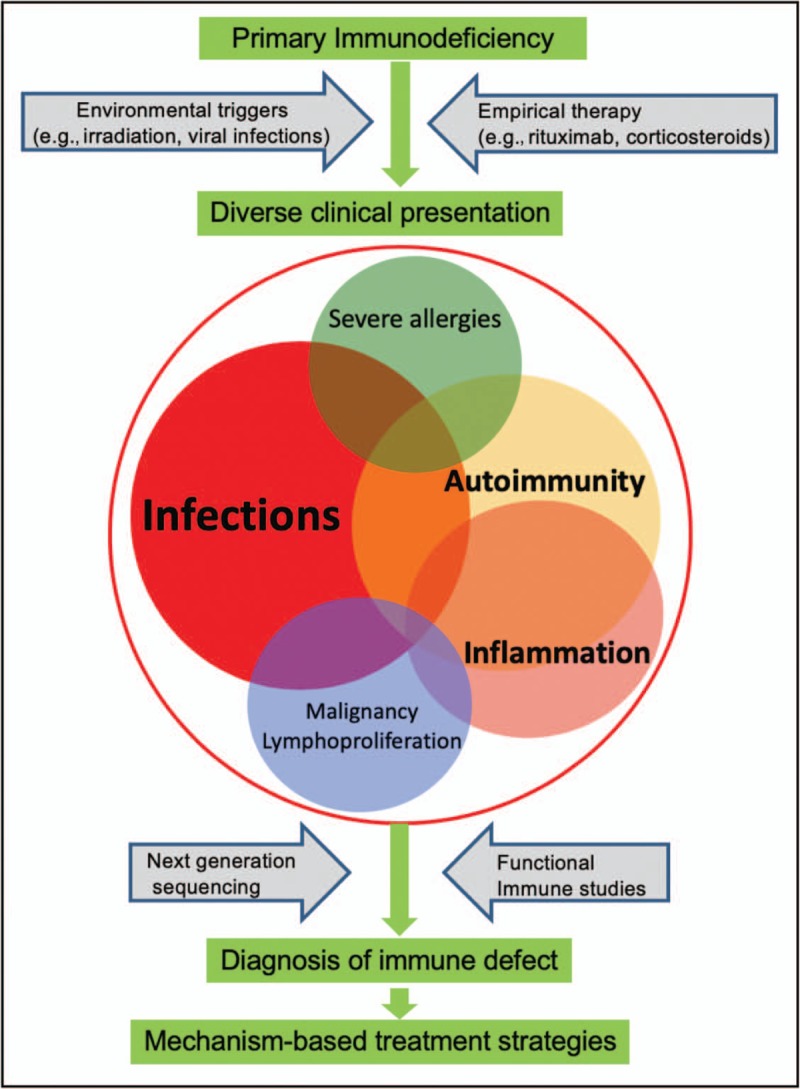
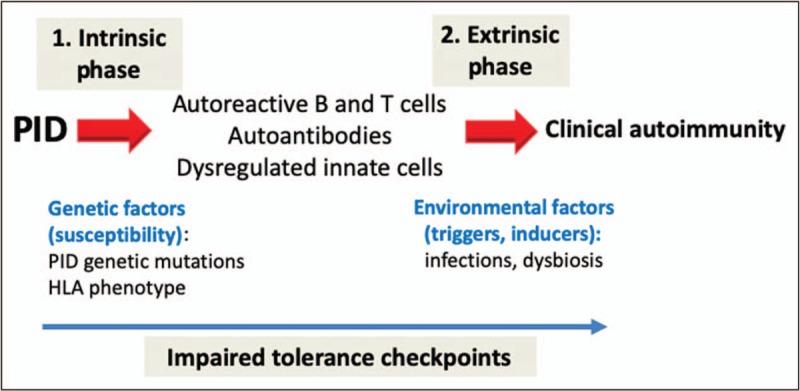
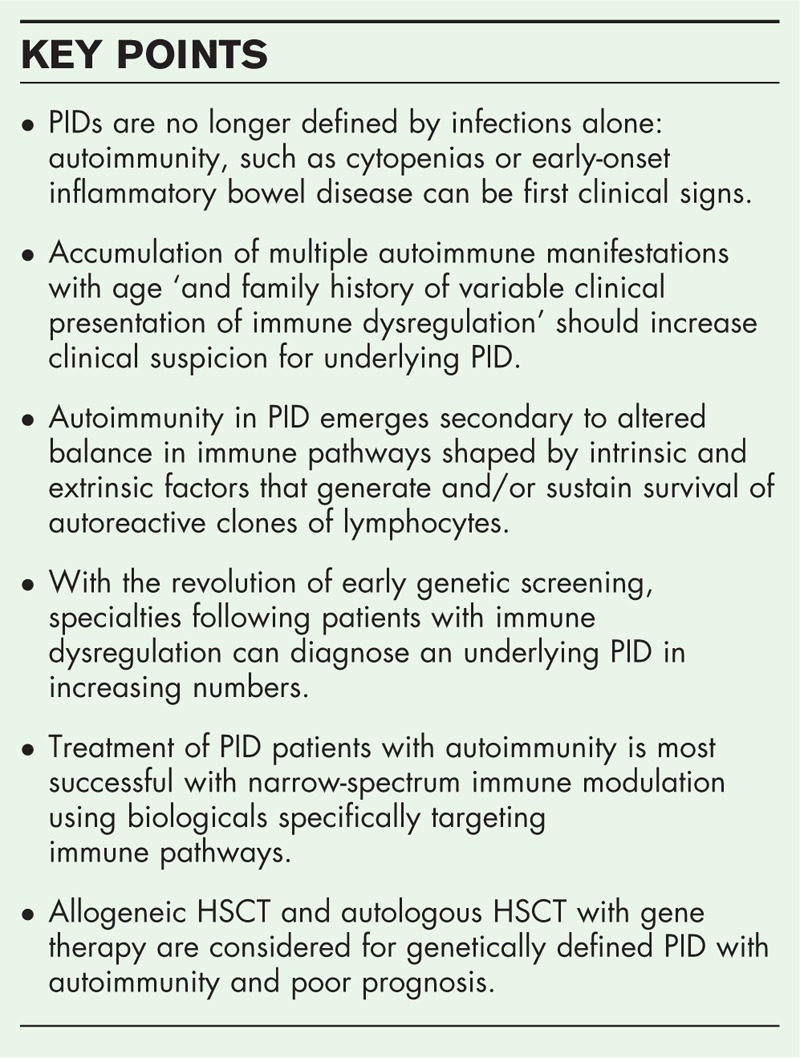
Primary immunodeficiency disorders (PIDs) are no longer defined by infections alone. First clinical sign or sequelae of PID may include autoimmunity, such as cytopenias, arthritis or enteropathy. This review addresses the latest in multidisciplinary approaches for expanding clinical phenotypes of PIDs with autoimmunity, including new presentations of known entities and novel gene defects. We also discuss diagnostic tools for identifying the distinct changes in immune cells subsets and autoantibodies, mechanistic understanding of the process, and targeted treatment and indications for hematopoietic stem-cell transplantation (HSCT).
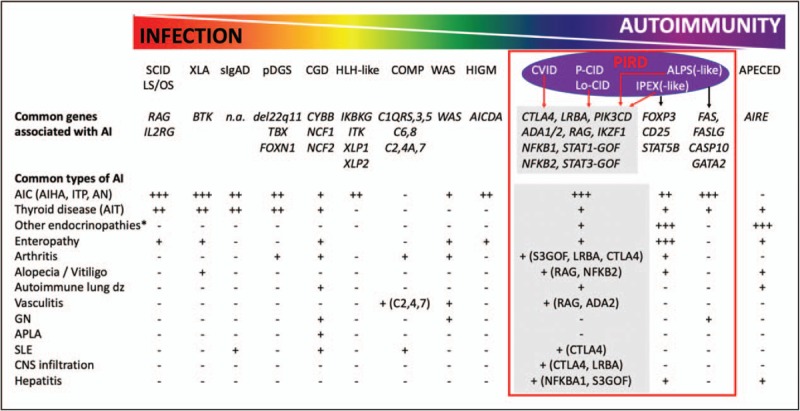
In the past years, increased awareness and use of genetic screening, confirmatory functional studies and immunological biomarkers opened the door for early recognition of PIDs among patients with autoimmunity. Large cohort studies detail the clinical spectrum and treatment outcome of PIDs with autoimmunity with specific immune genes (e.g., CTLA4, LRBA, PI3Kδ, NFKB1, RAG). The benefit of early recognition is initiation of targeted therapies with precise re-balancing of the dysregulated immune pathways (e.g., biologicals) or definitive therapy (e.g., HSCT).
Clinical presentation of patients with PID and autoimmunity is highly variable and requires in-depth diagnostics and precision medicine approaches.
原发性免疫缺陷病(PID)的定义不再仅仅局限于感染。PID 的首发临床症状或后遗症可能包括自身免疫,如血细胞减少、关节炎或肠炎。本文综述了扩大 PID 伴自身免疫的临床表型的多学科方法的最新进展,包括已知疾病实体的新表现和新的基因缺陷。我们还讨论了用于识别免疫细胞亚群和自身抗体的明显变化、对发病机制的理解、针对特定靶点的治疗以及造血干细胞移植(HSCT)适应证的诊断工具。
在过去几年中,基因筛查、确认性功能研究和免疫生物学标志物的广泛应用提高了对自身免疫患者中 PID 的认识,并为早期识别 PID 打开了大门。大型队列研究详细描述了具有特定免疫基因(例如 CTLA4、LRBA、PI3Kδ、NFKB1、RAG)的 PID 伴自身免疫的临床谱和治疗结果。早期识别的益处在于可以启动针对免疫失调途径(例如生物制剂)的靶向治疗或确定性治疗(例如 HSCT)。
PID 伴自身免疫患者的临床表现高度多样化,需要深入的诊断和精准医学方法。