Mahmud Zahid Hayat, Islam Md Shafiqul, Imran Khan Mohammad, Hakim Syed Adnan Ibna, Worth Martin, Ahmed Alvee, Hossan Shanewaz, Haider Maliha, Islam Mohammad Rafiqul, Hossain Ferdous, Johnston Dara, Ahmed Niyaz
1International Centre for Diarrhoeal Disease Research, Bangladesh, Dhaka, 1212 Bangladesh.
3Laboratory of Environmental Health, Laboratory Sciences and Services Division, icddr,b, 68, Shaheed Tajuddin Ahmed Sarani, Mohakhali, Dhaka, 1212 Bangladesh.
Gut Pathog. 2019 Nov 1;11:52. doi: 10.1186/s13099-019-0333-6. eCollection 2019.
Safe water is essential for life but unsafe for human consumption if it is contaminated with pathogenic microorganisms. An acceptable quality of water supply (adequate, safe and accessible) must be ensured to all human beings for a healthy life.
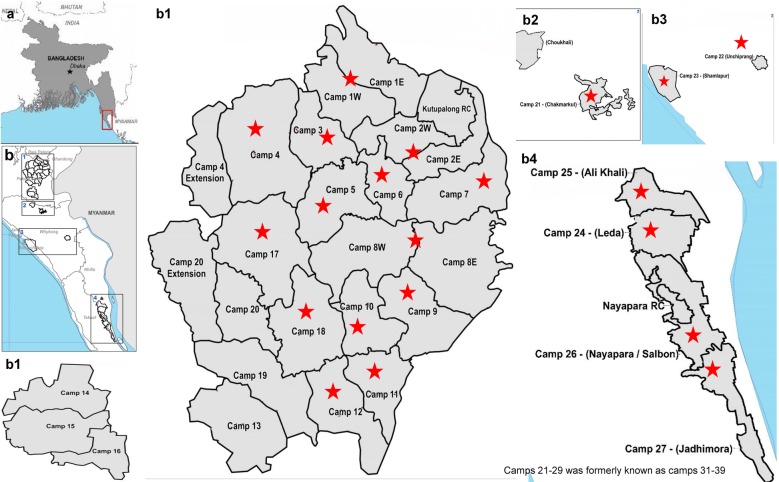
We collected and analyzed a total of 12,650 drinking water samples, for the presence of and faecal coliforms, from a large habitation of the displaced Rohingya population comprising of about 1.16 million people living within 4 km.
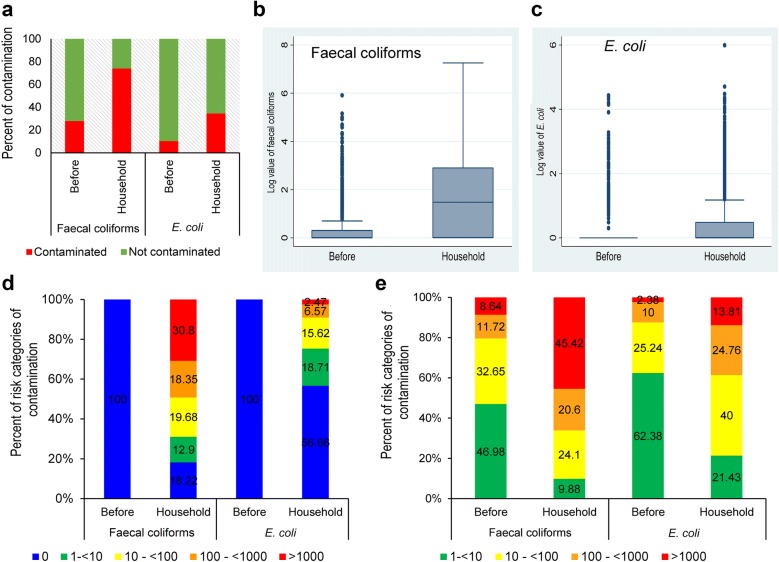
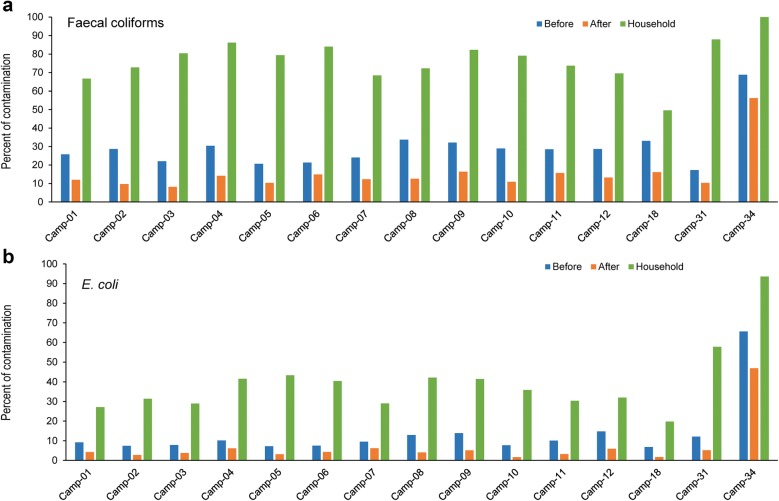
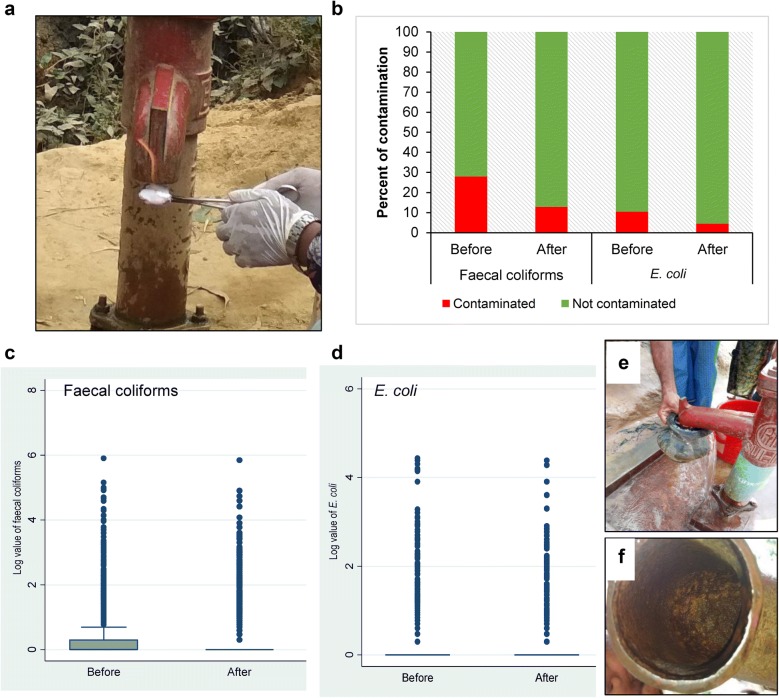
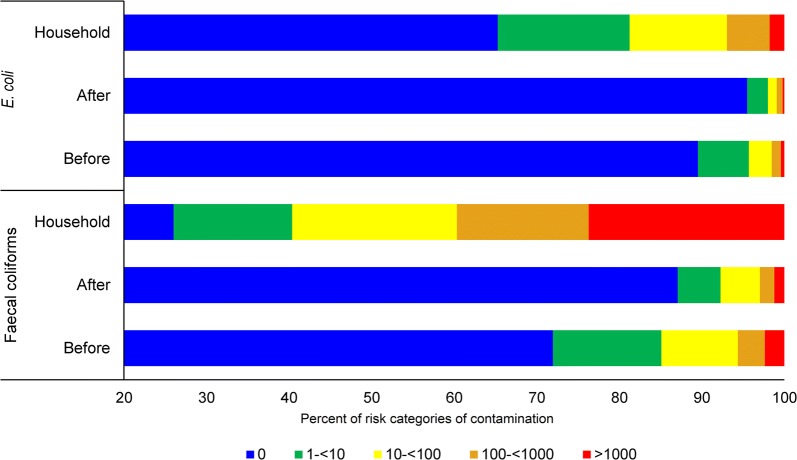
We found that 28% (n = 893) water samples derived from tubewells were contaminated with faecal coliforms and 10.5% (n = 333) were contaminated with ; also, 73.96% (n = 4644) samples from stored household sources (at point of use-POU) were found contaminated with faecal coliforms while 34.7% (n = 2179) were contaminated with It was observed that a higher percentage of POU samples fall in the highest risk category than that of their corresponding sources.
From our findings, it appears that secondary contamination could be a function of very high population density and could possibly occur during collection, transportation, and storage of water due to lack of knowledge of personal and domestic hygiene. Hence, awareness campaign is necessary, and the contaminated sources should be replaced. Further, the POU water should be treated by a suitable method.
安全的水对生命至关重要,但如果被致病微生物污染,就不适合人类饮用。必须确保向所有人提供可接受质量的供水(充足、安全且可获取),以保障健康生活。
我们从一个约有116万人居住在4公里范围内的流离失所罗兴亚人大聚居地,总共采集并分析了12650份饮用水样本,检测其中的 和粪大肠菌群。
我们发现,来自管井的水样中有28%(n = 893)被粪大肠菌群污染,10.5%(n = 333)被 污染;此外,来自家庭储存水源(使用点-POU)的样本中有73.96%(n = 4644)被粪大肠菌群污染,34.7%(n = 2179)被 污染。据观察,POU样本中处于最高风险类别的比例高于其相应水源。
从我们的研究结果来看,二次污染可能是由于人口密度极高导致的,并且可能因缺乏个人和家庭卫生知识,在水的采集、运输和储存过程中发生。因此,开展宣传活动很有必要,应更换受污染的水源。此外,POU水应用合适的方法进行处理。