Department of Microbiology, Oslo University Hospital Rikshospitalet and University of Oslo, Oslo, Norway.
Research Institute of Internal Medicine, Oslo University Hospital Rikshospitalet and Institute of Clinical Medicine, University of Oslo, Oslo, Norway.
PLoS One. 2019 Nov 8;14(11):e0225081. doi: 10.1371/journal.pone.0225081. eCollection 2019.
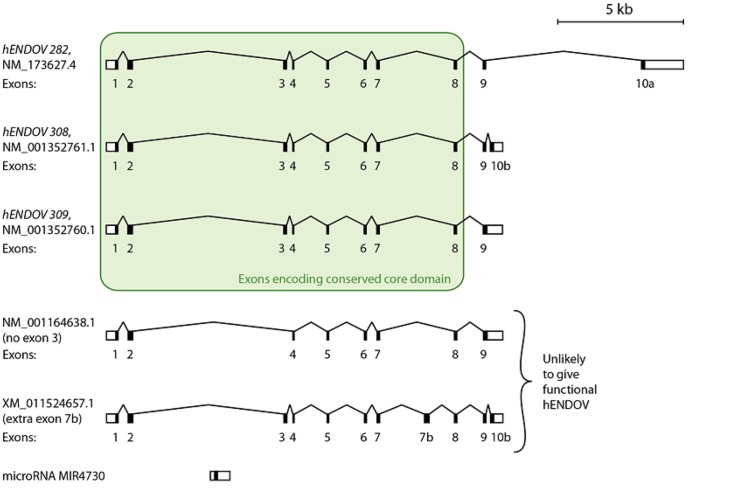
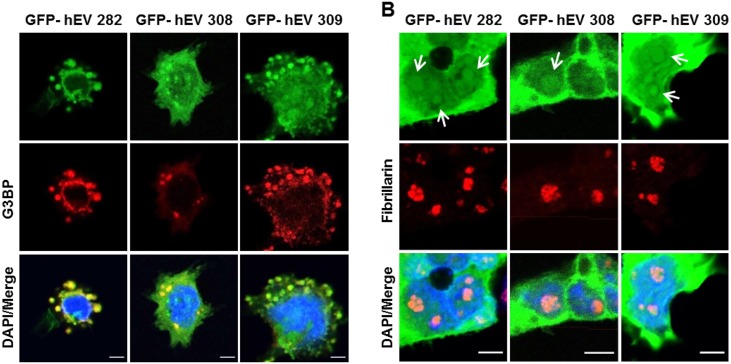
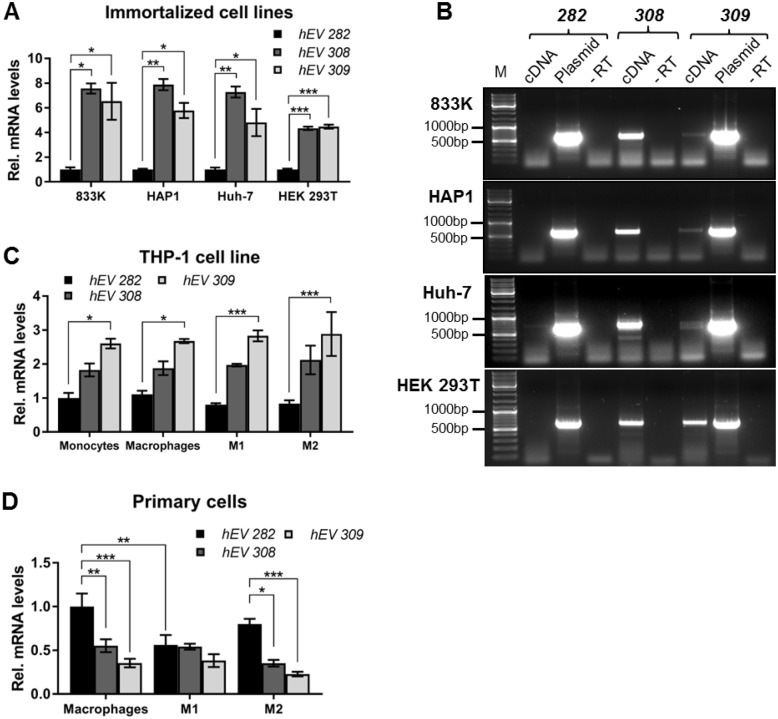
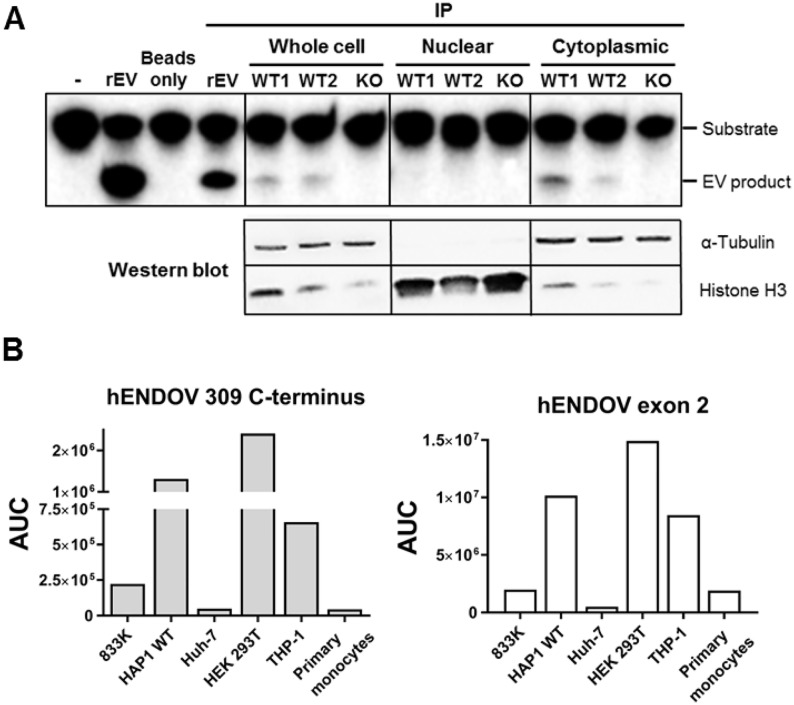
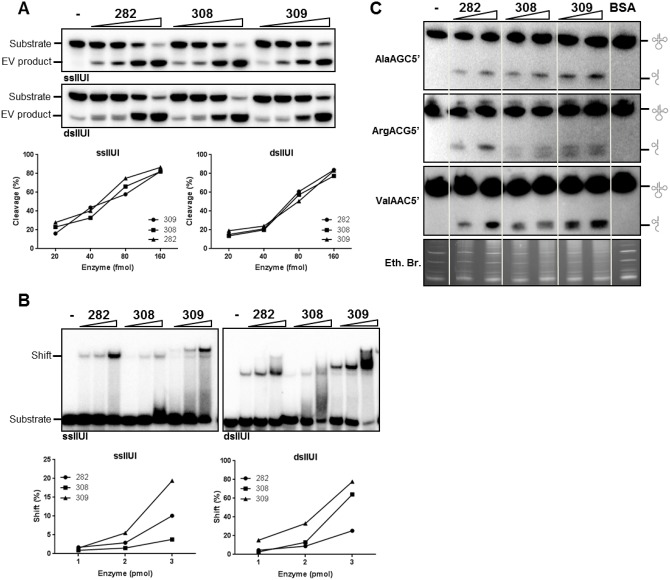
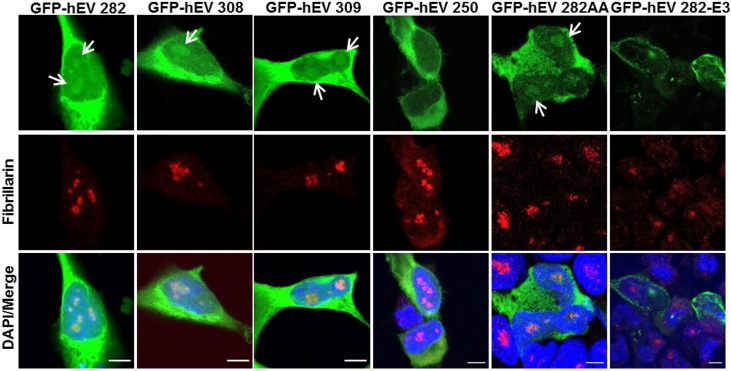
Endonuclease V (ENDOV) is a ribonuclease with affinity for inosine which is the deamination product of adenosine. The genomes of most organisms, including human, encode ENDOV homologs, yet knowledge about in vivo functions and gene regulation is sparse. To contribute in this field, we analyzed mRNA and protein expression of human ENDOV (hENDOV). Analyses of public sequence databases revealed numerous hENDOV transcript variants suggesting extensive alternative splicing. Many of the transcripts lacked one or more exons corresponding to conserved regions of the ENDOV core domain, suggesting that these transcripts do not encode for active proteins. Three complete transcripts were found with open reading frames encoding 282, 308 and 309 amino acids, respectively. Recombinant hENDOV 308 and hENDOV 309 share the same cleavage activity as hENDOV 282 which is the variant that has been used in previous studies of hENDOV. However, hENDOV 309 binds inosine-containing RNA with stronger affinity than the other isoforms. Overexpressed GFP-fused isoforms were found in cytoplasm, nucleoli and arsenite induced stress granules in human cells as previously reported for hENDOV 282. RT-qPCR analysis of the 3'-termini showed that hENDOV 308 and hENDOV 309 transcripts are more abundant than hENDOV 282 transcripts in immortalized cell lines, but not in primary cells, suggesting that cells regulate hENDOV mRNA expression. In spite of the presence of all three full-length transcripts, mass spectrometry analyses identified peptides corresponding to the hENDOV 309 isoform only. This result suggests that further studies of human ENDOV should rather encompass the hENDOV 309 isoform.
内切核酸酶 V(ENDOV)是一种具有与肌苷亲和力的核糖核酸酶,肌苷是腺嘌呤的脱氨酶产物。包括人类在内的大多数生物体的基因组都编码 ENDOV 同源物,但关于体内功能和基因调控的知识还很匮乏。为了在这一领域做出贡献,我们分析了人内切核酸酶 V(hENDOV)的 mRNA 和蛋白质表达。对公共序列数据库的分析揭示了许多 hENDOV 转录变体,表明存在广泛的选择性剪接。许多转录本缺少一个或多个外显子,这些外显子对应于 ENDOV 核心结构域的保守区域,这表明这些转录本不编码活性蛋白。发现了三个完整的转录本,它们的开放阅读框分别编码 282、308 和 309 个氨基酸。重组 hENDOV 308 和 hENDOV 309 具有与 hENDOV 282 相同的切割活性,hENDOV 282 是以前研究 hENDOV 时使用的变体。然而,hENDOV 309 与含肌苷的 RNA 的结合亲和力强于其他同工型。正如以前报道的 hENDOV 282 一样,在人类细胞中,过表达的 GFP 融合同工型存在于细胞质、核仁中和亚砷酸盐诱导的应激颗粒中。对 3'末端的 RT-qPCR 分析表明,在永生化细胞系中,hENDOV 308 和 hENDOV 309 转录本比 hENDOV 282 转录本更丰富,但在原代细胞中则不然,这表明细胞调节 hENDOV mRNA 表达。尽管存在所有三种全长转录本,但质谱分析仅鉴定出与 hENDOV 309 同工型相对应的肽。这一结果表明,对人类 ENDOV 的进一步研究应涵盖 hENDOV 309 同工型。