Jiangsu Key Laboratory of Bioactive Natural Product Research and State Key Laboratory of Natural Medicines, School of Traditional Chinese Pharmacy, China Pharmaceutical University, 24 Tong Jia Xiang, 210009, Nanjing, China.
Center for Molecular Metabolism, Nanjing University of Science and Technology, 200 Xiao Ling Wei, 210014, Nanjing, China.
Nat Commun. 2019 Nov 8;10(1):5091. doi: 10.1038/s41467-019-13078-5.
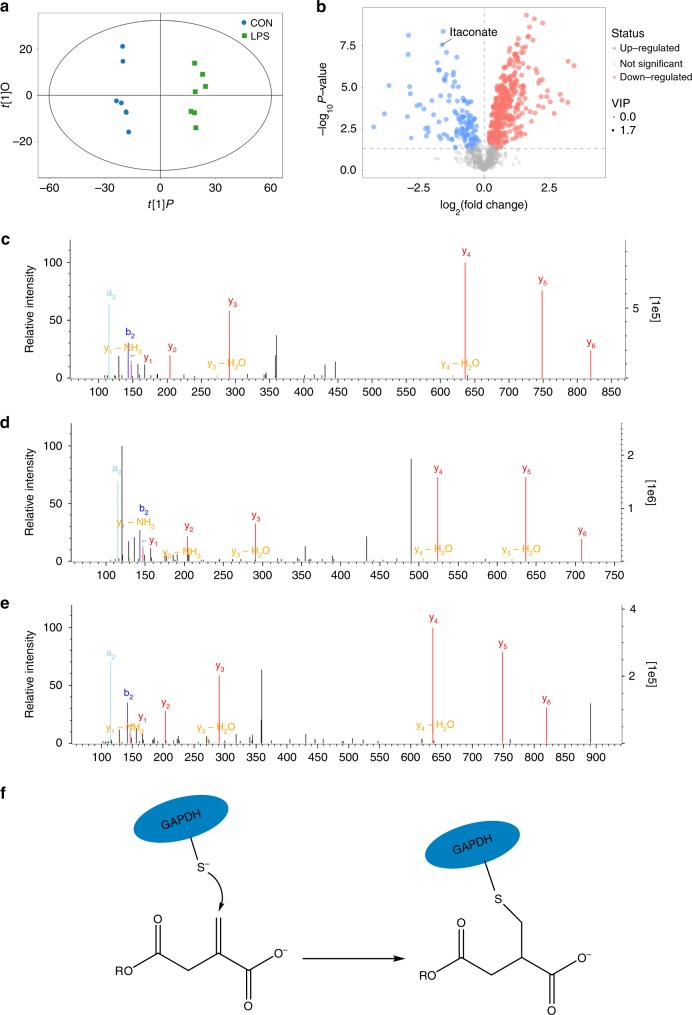
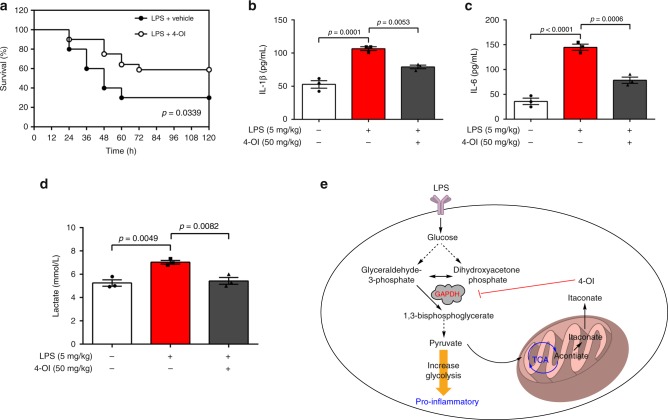
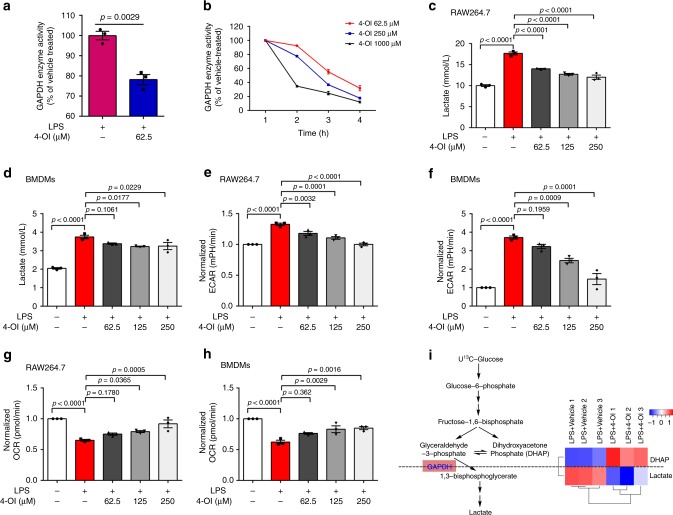
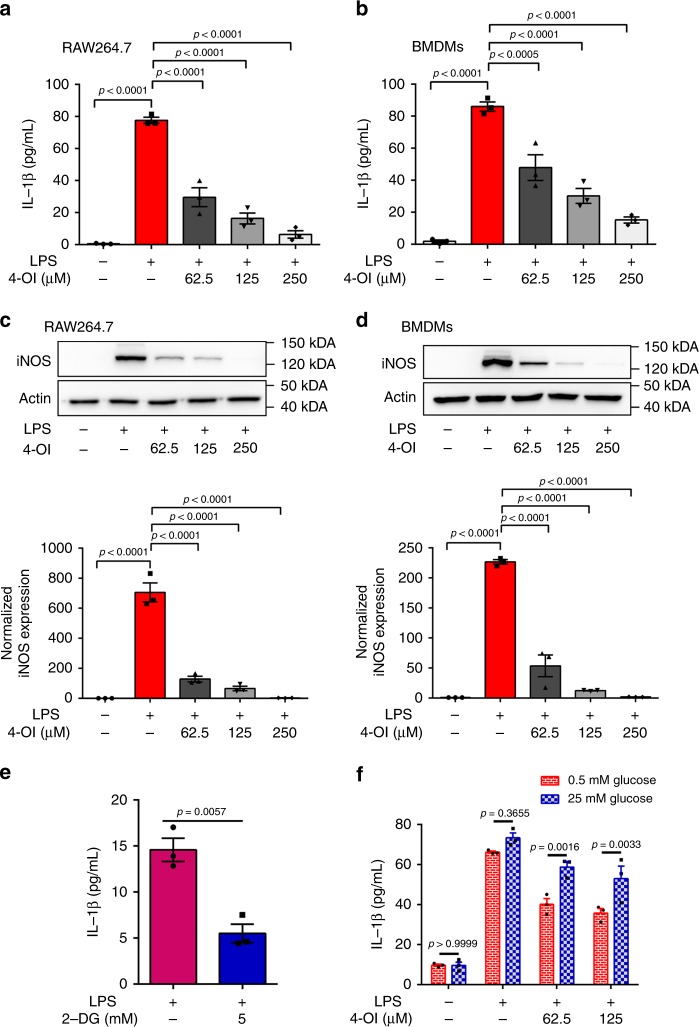
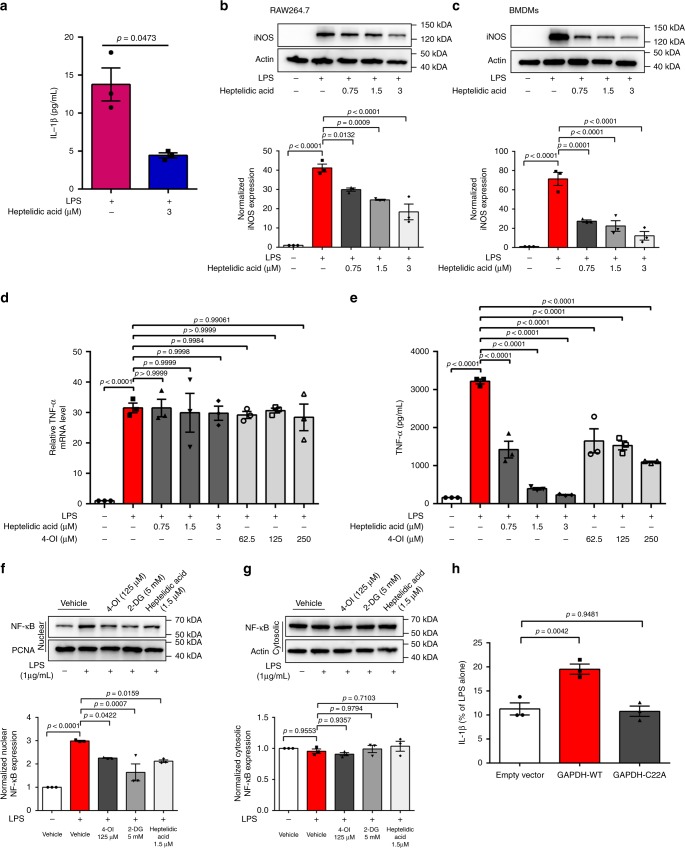
Activated macrophages switch from oxidative phosphorylation to aerobic glycolysis, similar to the Warburg effect, presenting a potential therapeutic target in inflammatory disease. The endogenous metabolite itaconate has been reported to regulate macrophage function, but its precise mechanism is not clear. Here, we show that 4-octyl itaconate (4-OI, a cell-permeable itaconate derivative) directly alkylates cysteine residue 22 on the glycolytic enzyme GAPDH and decreases its enzyme activity. Glycolytic flux analysis by UC glucose tracing provides evidence that 4-OI blocks glycolytic flux at GAPDH. 4-OI thereby downregulates aerobic glycolysis in activated macrophages, which is required for its anti-inflammatory effects. The anti-inflammatory effects of 4-OI are replicated by heptelidic acid, 2-DG and reversed by increasing wild-type (but not C22A mutant) GAPDH expression. 4-OI protects against lipopolysaccharide-induced lethality in vivo and inhibits cytokine release. These findings show that 4-OI has anti-inflammatory effects by targeting GAPDH to decrease aerobic glycolysis in macrophages.
活化的巨噬细胞从氧化磷酸化切换到有氧糖酵解,类似于沃伯格效应,为炎症性疾病提供了一个潜在的治疗靶点。内源性代谢物衣康酸已被报道调节巨噬细胞功能,但确切机制尚不清楚。在这里,我们表明 4-辛基衣康酸(4-OI,一种细胞通透的衣康酸衍生物)直接烷基化糖酵解酶 GAPDH 上的半胱氨酸残基 22,降低其酶活性。通过 UC 葡萄糖追踪进行的糖酵解通量分析提供了证据,表明 4-OI 在 GAPDH 处阻断糖酵解通量。因此,4-OI 下调活化巨噬细胞中的有氧糖酵解,这是其抗炎作用所必需的。庚酸、2-DG 复制了 4-OI 的抗炎作用,而增加野生型(但不是 C22A 突变型)GAPDH 表达则逆转了其作用。4-OI 可防止体内脂多糖诱导的致死性,并抑制细胞因子释放。这些发现表明,4-OI 通过靶向 GAPDH 降低巨噬细胞中的有氧糖酵解来发挥抗炎作用。