Dinarvand Saeed, Rostami Mohammadreza Nademi, Pop Ioan
Department of Mechanical Engineering, Islamic Azad University, Central Tehran Branch, Tehran, Iran.
Department of Mathematics, Babeş-Bolyai University, 400084, Cluj-Napoca, Romania.
Sci Rep. 2019 Nov 8;9(1):16290. doi: 10.1038/s41598-019-52720-6.
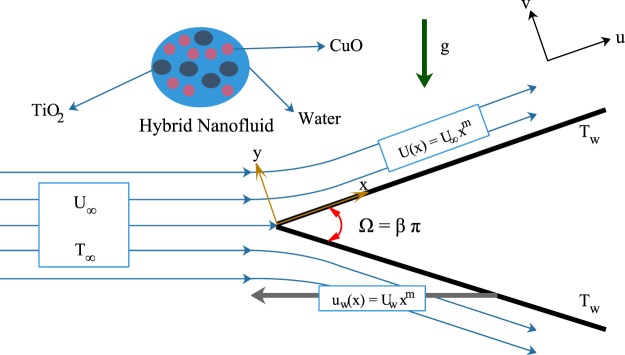
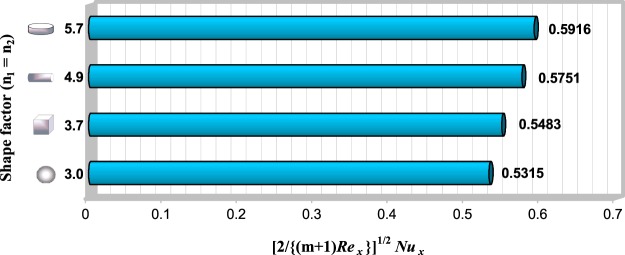
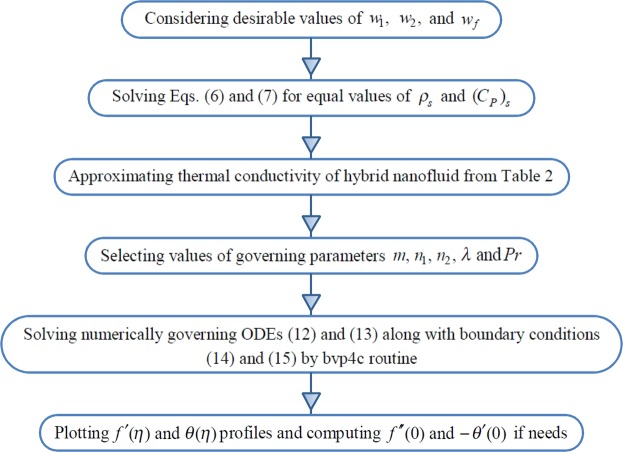
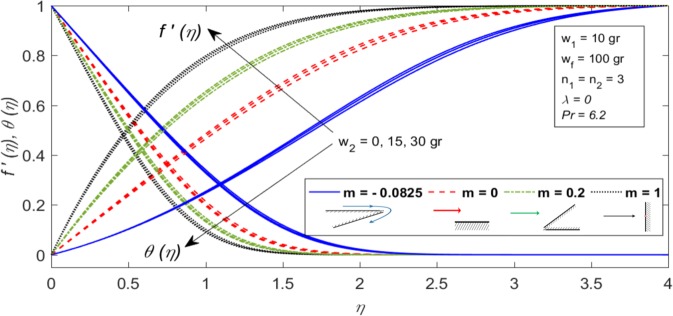
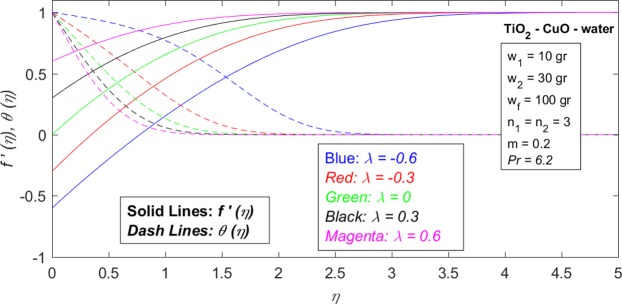
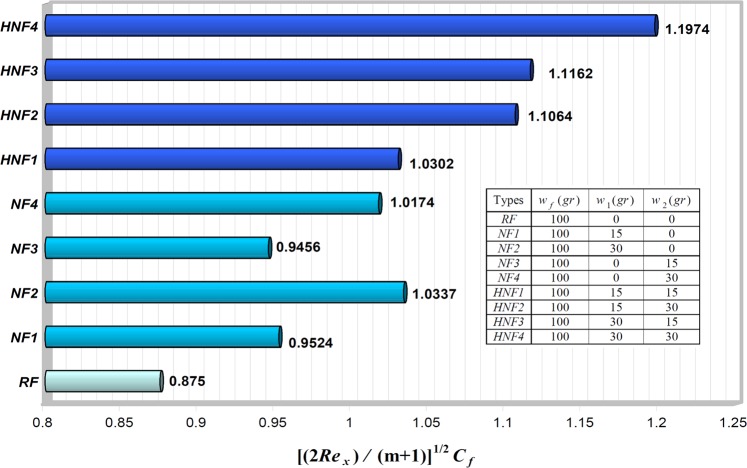
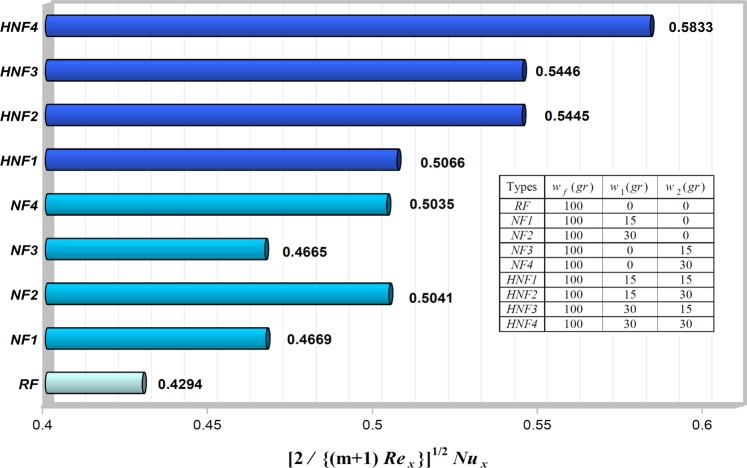
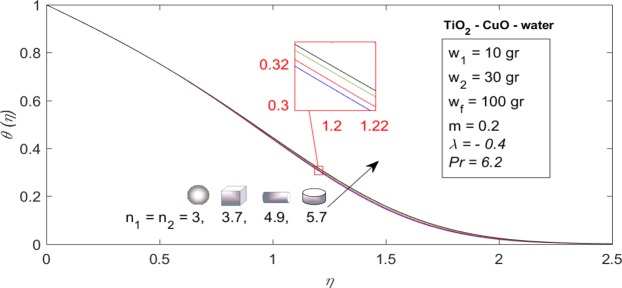
In this study, we are going to investigate semi-analytically the steady laminar incompressible two-dimensional boundary layer flow of a TiO-CuO/water hybrid nanofluid over a static/moving wedge or corner that is called Falkner-Skan problem. A novel mass-based approach to one-phase hybrid nanofluid model that suggests both first and second nanoparticles as well as base fluid masses as the vital inputs to obtain the effective thermophysical properties of our hybrid nanofluid, has been presented. Other governing parameters are moving wedge/corner parameter (λ), Falkner-Skan power law parameter (m), shape factor parameter (n) and Prandtl number (Pr). The governing partial differential equations become dimensionless with help of similarity transformation method, so that we can solve them numerically using bvp4c built-in function by MATLAB. It is worthwhile to notice that, validation results exhibit an excellent agreement with already existing reports. Besides, it is shown that both hydrodynamic and thermal boundary layer thicknesses decrease with the second nanoparticle mass as well as Falkner-Skan power law parameter. Further, we understand our hybrid nanofluid has better thermal performance relative to its mono-nanofluid and base fluid, respectively. Moreover, a comparison between various values of nanoparticle shape factor and their effect on local heat transfer rate is presented. It is proven that the platelet shape of both particles (n = n = 5.7) leads to higher local Nusselt number in comparison with other shapes including sphere, brick and cylinder. Consequently, this algorithm can be applied to analyze the thermal performance of hybrid nanofluids in other different researches.
在本研究中,我们将对TiO-CuO/水混合纳米流体在静止/移动楔形物或拐角处的稳态层流不可压缩二维边界层流动进行半解析研究,这一问题被称为福克纳-斯坎问题。我们提出了一种基于质量的新型单相混合纳米流体模型方法,该方法表明,第一和第二纳米颗粒以及基流体质量是获得混合纳米流体有效热物理性质的重要输入参数。其他控制参数包括移动楔形物/拐角参数(λ)、福克纳-斯坎幂律参数(m)、形状因子参数(n)和普朗特数(Pr)。借助相似变换方法,控制偏微分方程变为无量纲形式,这样我们就可以使用MATLAB中的bvp4c内置函数对其进行数值求解。值得注意的是,验证结果与现有报告显示出极好的一致性。此外,结果表明,随着第二纳米颗粒质量以及福克纳-斯坎幂律参数的增加,流体动力学和热边界层厚度均减小。此外,我们发现我们的混合纳米流体相对于其单纳米流体和基流体分别具有更好的热性能。此外,还给出了纳米颗粒形状因子的不同值及其对局部传热速率影响的比较。结果证明,与包括球体、砖块和圆柱体在内的其他形状相比,两种颗粒的片状形状(n = n = 5.7)导致更高的局部努塞尔数。因此,该算法可应用于分析其他不同研究中混合纳米流体的热性能。