Kim Dong Ja, Han Man-Hoon, Lee SangHan
Department of Forensic Medicine, School of Medicine, Kyungpook National University, Daegu, Korea.
Department of Pathology, Kyungpook National University Hospital, Daegu, Korea.
Yeungnam Univ J Med. 2020 Apr;37(2):128-132. doi: 10.12701/yujm.2019.00367. Epub 2019 Nov 11.
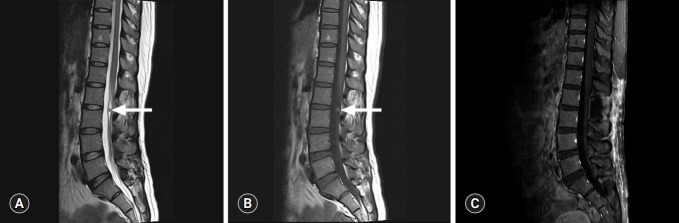
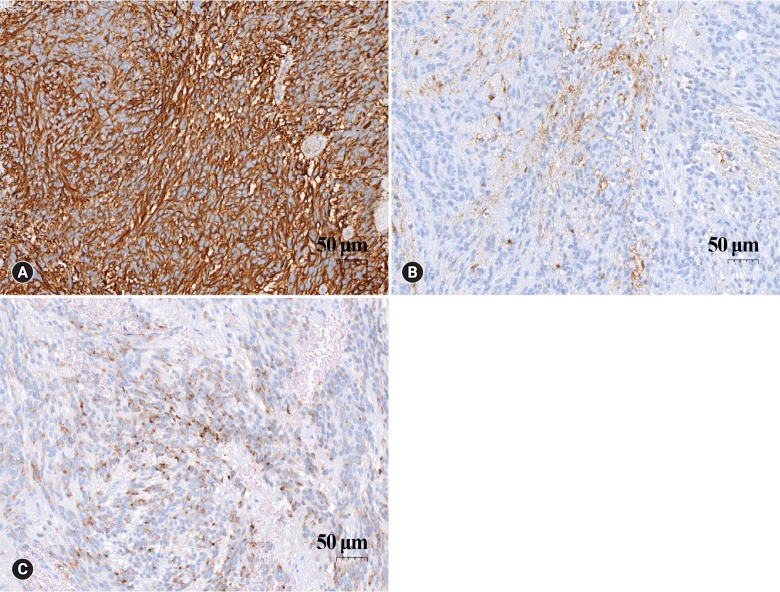
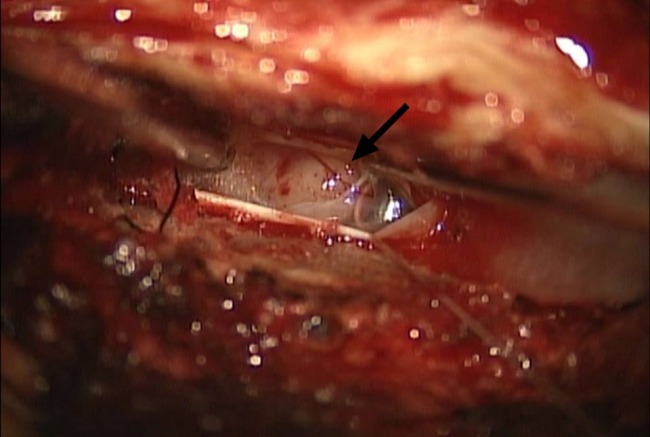
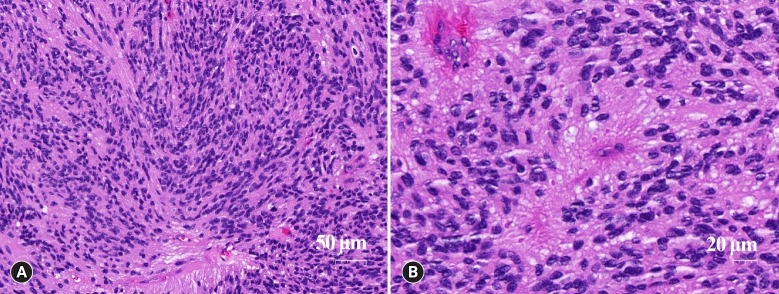
Tanycytic ependymoma is a rare variant of ependymoma that commonly affects the cervical and thoracic spinal cord. It usually arises as intramedullary lesions, and extramedullary cases are extremely rare. We report a case of a 44-year-old woman who was diagnosed with tanycytic ependymoma in her lumbar spine at level 2-3. The tumor mass developed in an intradural extramedullary location. Histopathologically, tanycytic ependymoma can be misdiagnosed as schwannoma or pilocytic astrocytoma. Immunohistochemical findings such as strong positivity for glial fibrillary acidic protein, perinuclear dot-like positive patterns for epithelial membrane antigen, and focal positivity for S-100 are helpful in diagnosing tanycytic ependymoma. It is important to be aware of this rare tumor to ensure appropriate patient management and accurate prognosis.
室管膜细胞型室管膜瘤是室管膜瘤的一种罕见变异型,通常累及颈段和胸段脊髓。它通常表现为髓内病变,髓外病例极为罕见。我们报告一例44岁女性,其在腰椎2-3水平被诊断为室管膜细胞型室管膜瘤。肿瘤肿块位于硬脊膜内髓外位置。组织病理学上,室管膜细胞型室管膜瘤可能被误诊为神经鞘瘤或毛细胞型星形细胞瘤。免疫组织化学结果,如胶质纤维酸性蛋白强阳性、上皮膜抗原核周点状阳性模式以及S-100局灶阳性,有助于诊断室管膜细胞型室管膜瘤。认识到这种罕见肿瘤对于确保适当的患者管理和准确的预后至关重要。