Hosseinpour Tehrani Hamed, Becker Johanna, Bator Isabel, Saur Katharina, Meyer Svenja, Rodrigues Lóia Ana Catarina, Blank Lars M, Wierckx Nick
1iAMB-Institute of Applied Microbiology, ABBt-Aachen Biology and Biotechnology, RWTH Aachen University, Worringerweg 1, 52074 Aachen, Germany.
2Institute of Bio- and Geosciences IBG-1: Biotechnology, Forschungszentrum Jülich, Wilhelm-Johnen-Str., 52425 Jülich, Germany.
Biotechnol Biofuels. 2019 Nov 6;12:263. doi: 10.1186/s13068-019-1605-6. eCollection 2019.
Itaconic acid is an unsaturated, dicarboxylic acid which finds a wide range of applications in the polymer industry and as a building block for fuels, solvents and pharmaceuticals. Currently, is used for industrial production, with titers above 100 g L depending on the conditions. Besides , is also a promising itaconic acid production host due to its yeast-like morphology. Recent strain engineering efforts significantly increased the yield, titer and rate of production.
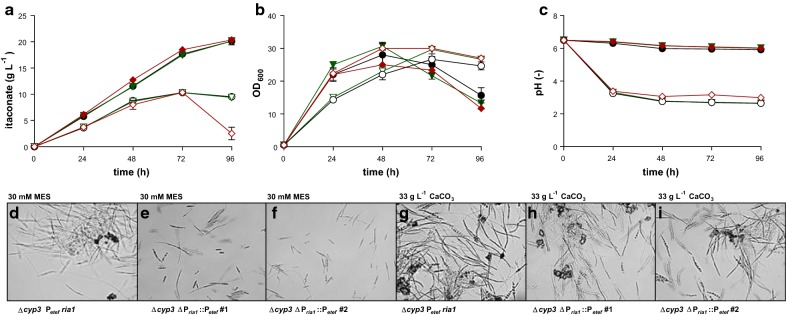
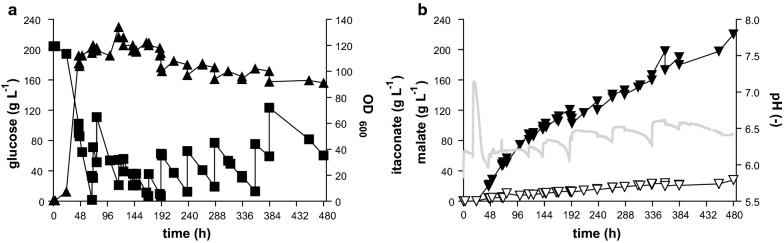
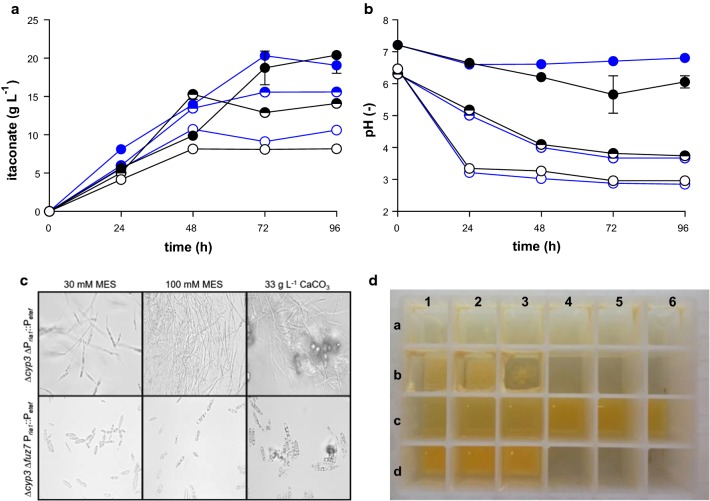
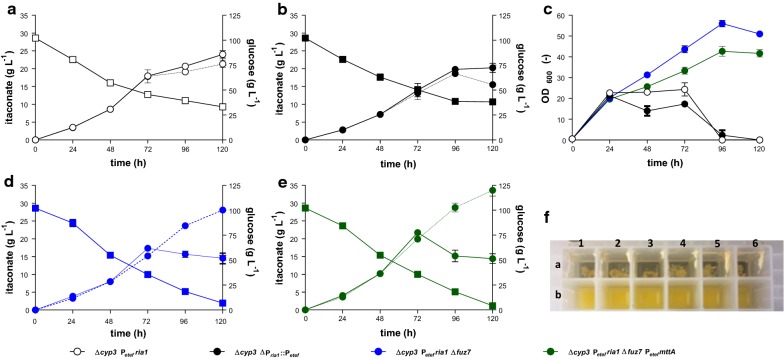
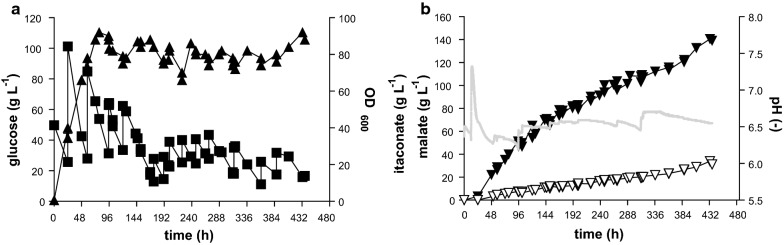
In this study, itaconate production by was further increased by integrated strain- and process engineering. Next-generation itaconate hyper-producing strains were generated using CRISPR/Cas9 and FLP/FRT genome editing tools for gene deletion, promoter replacement, and overexpression of genes. The handling and morphology of this engineered strain were improved by deletion of , which is part of a regulatory cascade that governs morphology and pathogenicity. These strain modifications enabled the development of an efficient fermentation process with in situ product crystallization with CaCO. This integrated approach resulted in a maximum itaconate titer of 220 g L, with a total acid titer of 248 g L, which is a significant improvement compared to best published itaconate titers reached with and with .
In this study, itaconic acid production could be enhanced significantly by morphological- and metabolic engineering in combination with process development, yielding the highest titer reported with any microorganism.
衣康酸是一种不饱和二羧酸,在聚合物工业中有着广泛应用,并且是燃料、溶剂和药品的基础原料。目前,其用于工业生产,根据条件不同,产量可达100 g/L以上。此外,由于其酵母样形态,它也是一种有潜力的衣康酸生产宿主。最近的菌株工程努力显著提高了产量、滴度和生产速率。
在本研究中,通过整合菌株和工艺工程,进一步提高了该菌的衣康酸产量。使用CRISPR/Cas9和FLP/FRT基因组编辑工具进行基因缺失、启动子替换和基因过表达,构建了新一代衣康酸高产菌株。通过缺失作为控制形态和致病性调节级联一部分的基因,改善了该工程菌株的操作和形态。这些菌株修饰使得能够开发一种利用碳酸钙原位产物结晶的高效发酵工艺。这种整合方法产生了220 g/L的最大衣康酸滴度,总酸滴度为248 g/L,与使用和所报道的最佳衣康酸滴度相比有显著提高。
在本研究中,通过形态和代谢工程结合工艺开发,衣康酸产量得以显著提高,产生了任何微生物所报道的最高滴度。