MTA-SE Pathobiochemistry Research Group, Tűzoltó St. 37-47, H1094 Budapest, Hungary.
Department of Medical Chemistry, Molecular Biology and Pathobiochemistry, Semmelweis University, H1094 Budapest, Hungary.
Int J Mol Sci. 2019 Nov 8;20(22):5590. doi: 10.3390/ijms20225590.
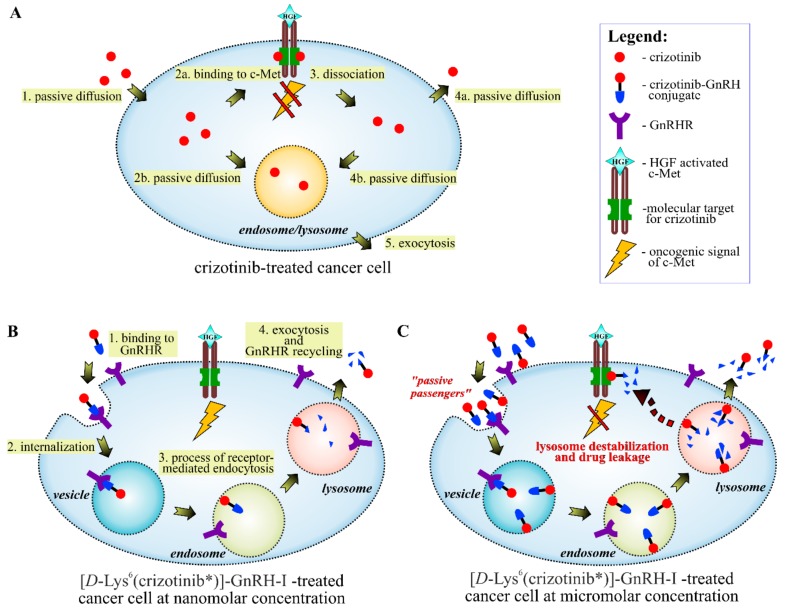
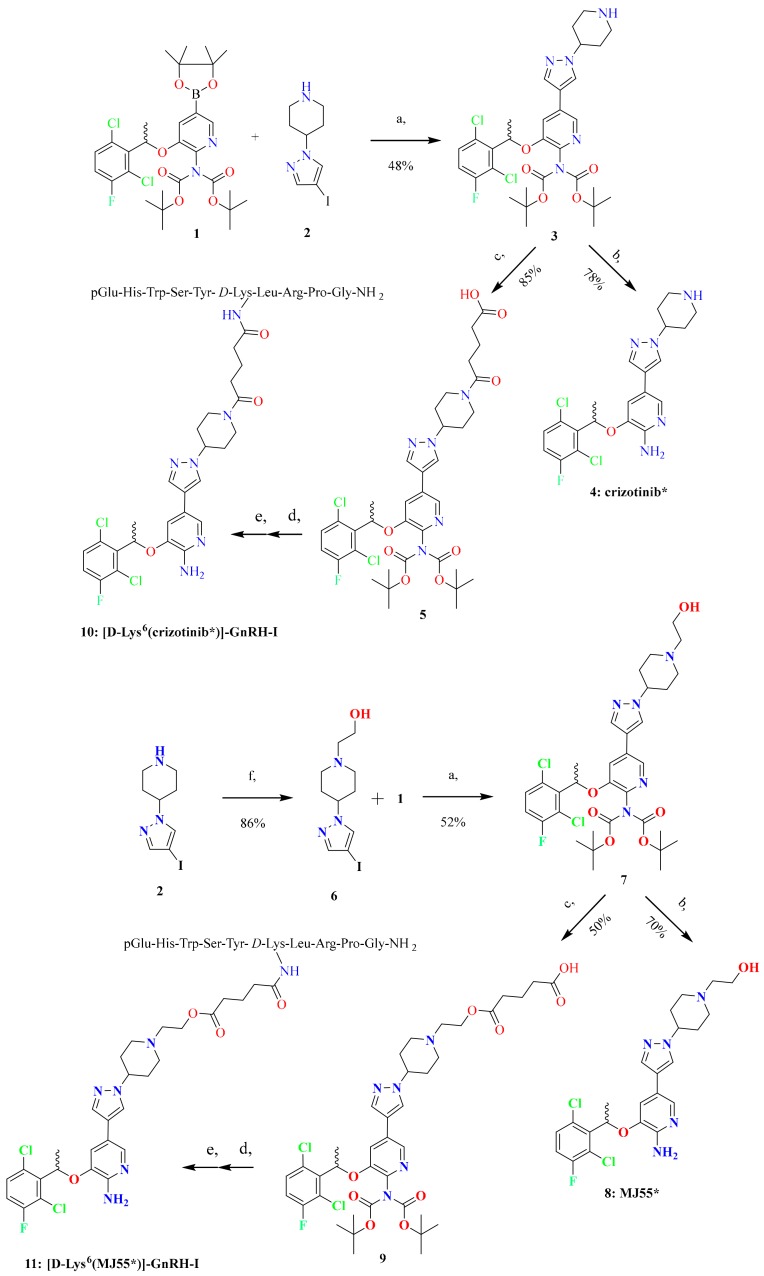
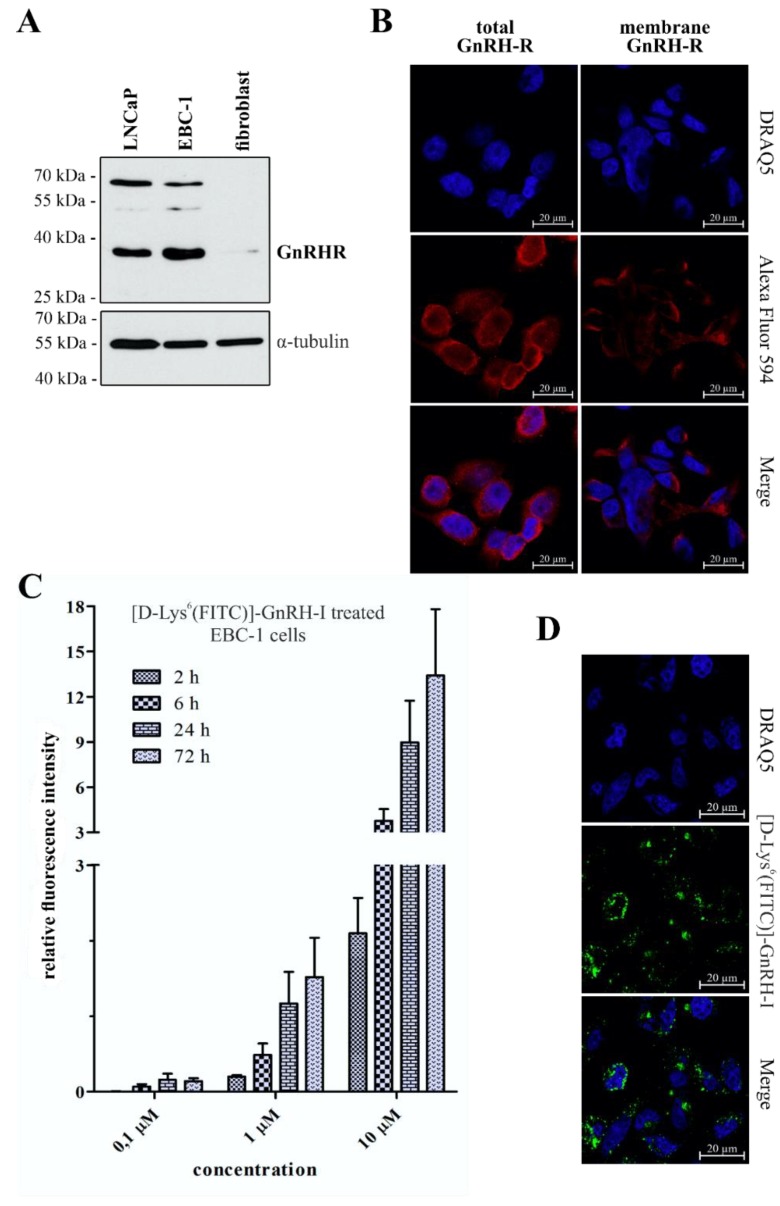
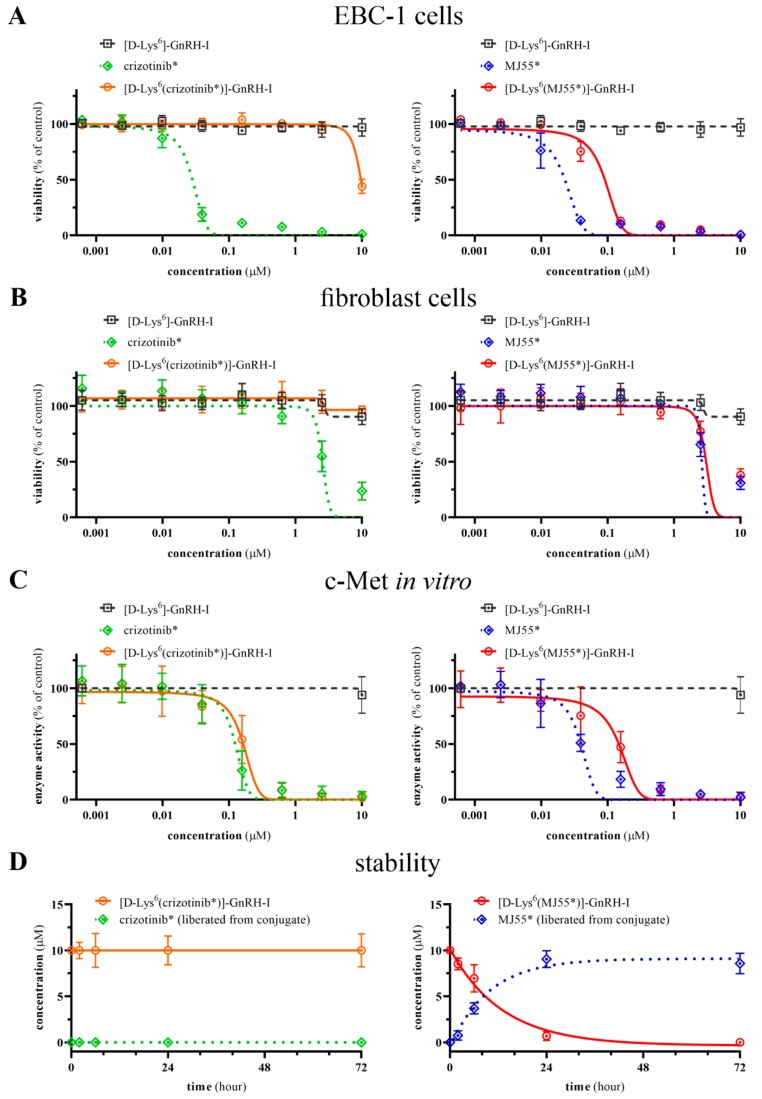
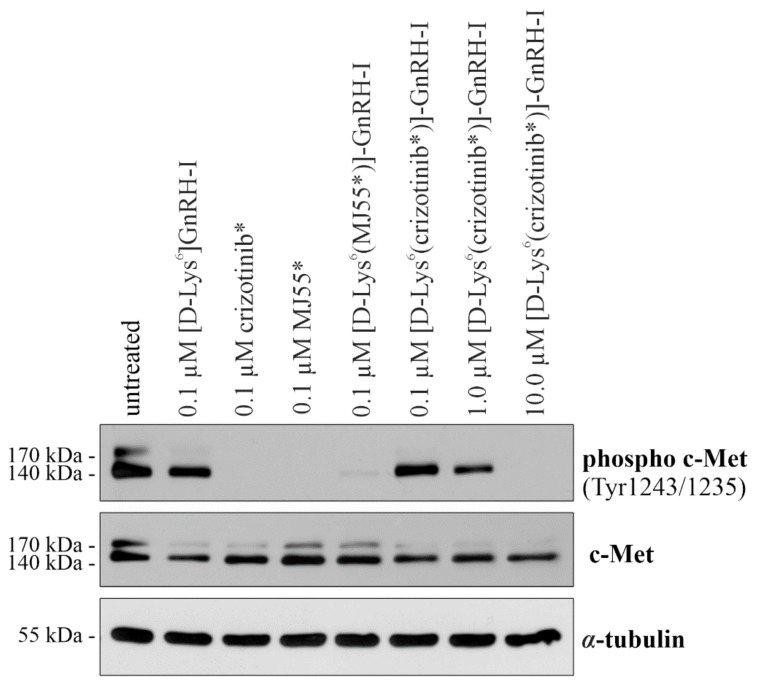
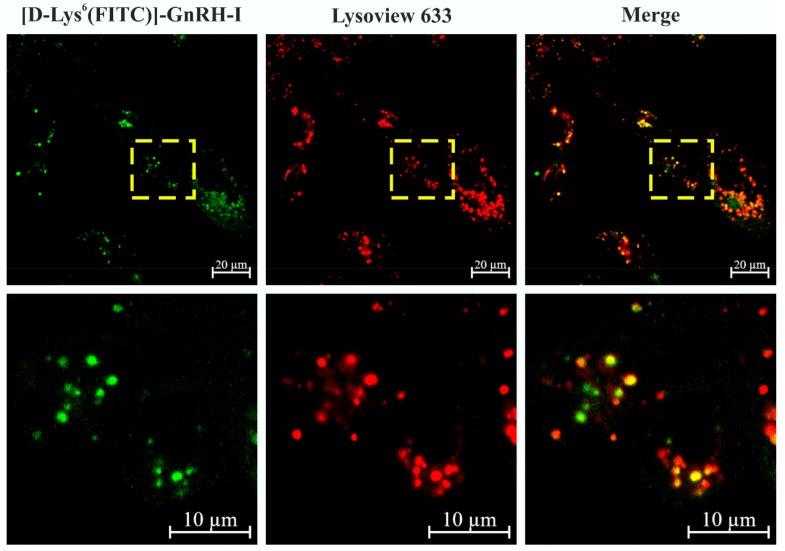
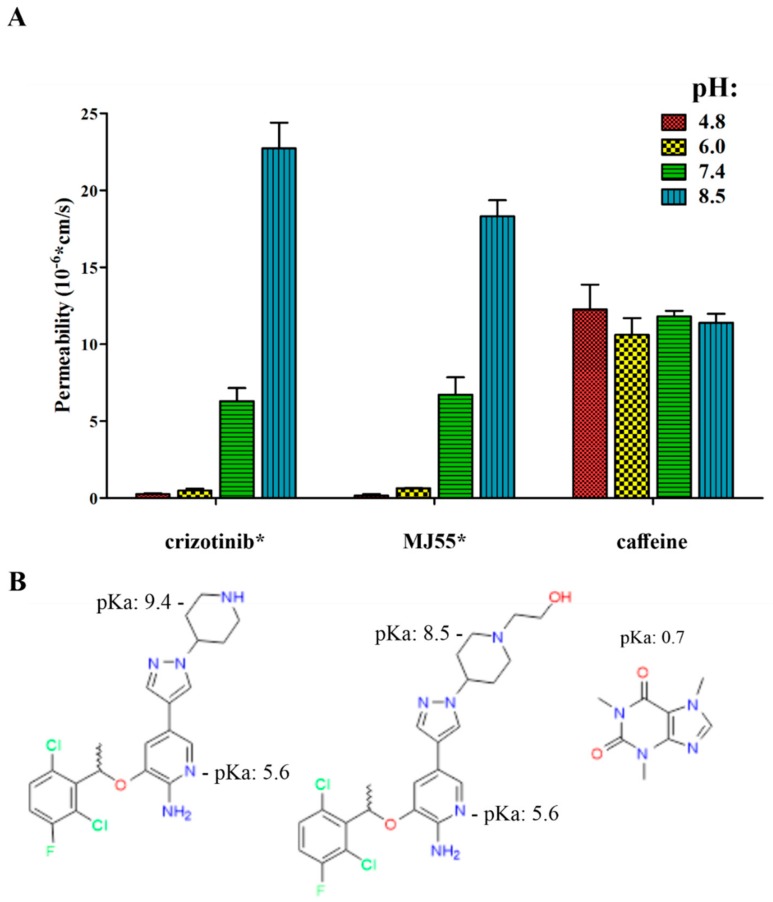
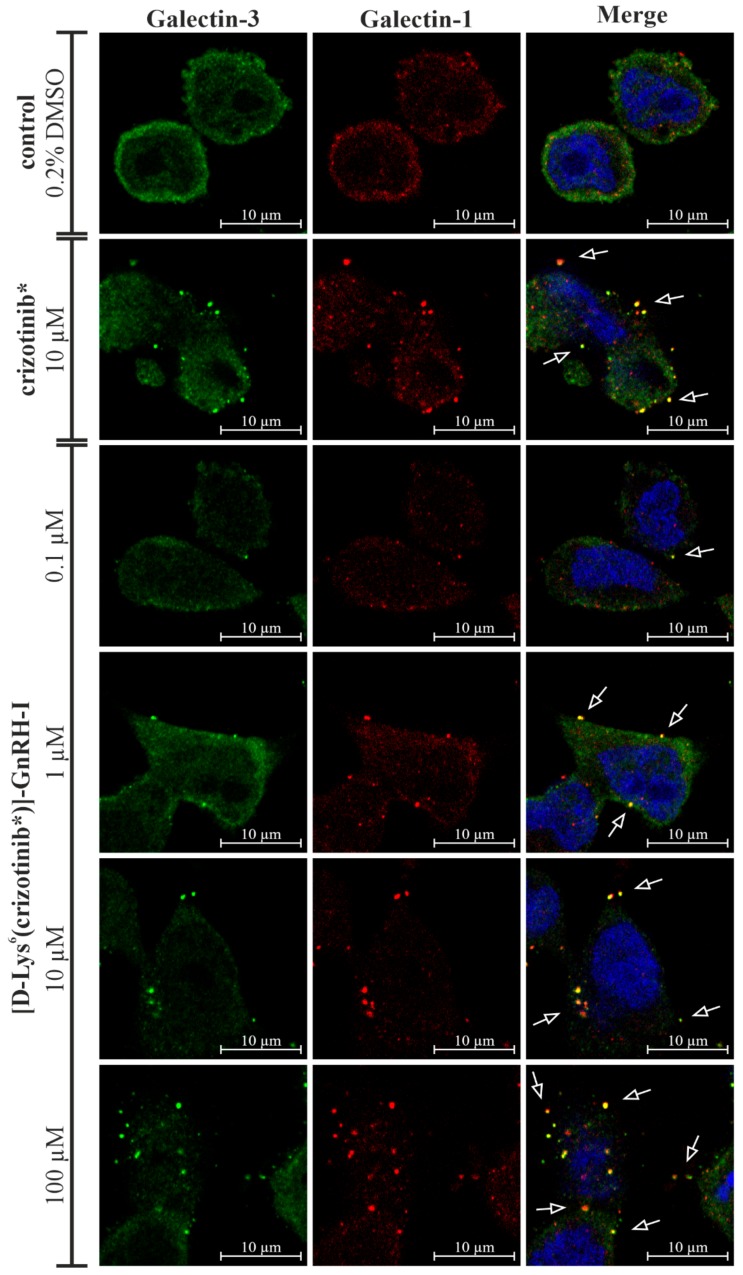
Several promising anti-cancer drug-GnRH (gonadotropin-releasing hormone) conjugates have been developed in the last two decades, although none of them have been approved for clinical use yet. Crizotinib is an effective multi-target kinase inhibitor, approved against anaplastic lymphoma kinase (ALK)- or ROS proto-oncogene 1 (ROS-1)-positive non-small cell lung carcinoma (NSCLC); however, its application is accompanied by serious side effects. In order to deliver crizotinib selectively into the tumor cells, we synthesized novel crizotinib analogues and conjugated them to a [d-Lys]-GnRH-I targeting peptide. Our most prominent crizotinib-GnRH conjugates, the amide-bond-containing [d-Lys(crizotinib*)]-GnRH-I and the ester-bond-containing [d-Lys(MJ55*)]-GnRH-I, were able to bind to GnRH-receptor (GnRHR) and exert a potent c-Met kinase inhibitory effect. The efficacy of compounds was tested on the -amplified and GnRHR-expressing EBC-1 NSCLC cells. In vitro pharmacological profiling led to the conclusion that that crizotinib-GnRH conjugates are transported directly into lysosomes, where the membrane permeability of crizotinib is diminished. As a consequence of GnRHR-mediated endocytosis, GnRH-conjugated crizotinib bypasses its molecular targets-the ATP-binding site of RTKs- and is sequestered in the lysosomes. These results explained the lower efficacy of crizotinib-GnRH conjugates in EBC-1 cells, and led to the conclusion that drug escape from the lysosomes is a major challenge in the development of clinically relevant anti-cancer drug-GnRH conjugates.
在过去的二十年中,已经开发出了几种有前途的抗癌药物-GnRH(促性腺激素释放激素)缀合物,尽管它们都尚未被批准用于临床使用。克唑替尼是一种有效的多靶点激酶抑制剂,已被批准用于治疗间变性淋巴瘤激酶(ALK)或 ROS 原癌基因 1(ROS-1)阳性非小细胞肺癌(NSCLC);然而,其应用伴随着严重的副作用。为了将克唑替尼选择性递送到肿瘤细胞中,我们合成了新型克唑替尼类似物,并将其与靶向 [d-Lys]-GnRH-I 的肽连接。我们最突出的克唑替尼-GnRH 缀合物,含有酰胺键的 [d-Lys(crizotinib*)]-GnRH-I 和含有酯键的 [d-Lys(MJ55*)]-GnRH-I,能够与 GnRH 受体(GnRHR)结合并发挥强大的 c-Met 激酶抑制作用。在 -扩增和表达 GnRHR 的 EBC-1 NSCLC 细胞上测试了化合物的功效。体外药理学分析得出的结论是,克唑替尼-GnRH 缀合物直接被转运到溶酶体中,从而降低了克唑替尼的膜通透性。作为 GnRHR 介导的内吞作用的结果, GnRH 缀合的克唑替尼绕过其分子靶标-RTK 的 ATP 结合位点,并被隔离在溶酶体中。这些结果解释了克唑替尼-GnRH 缀合物在 EBC-1 细胞中效果较低的原因,并得出结论,从溶酶体中逃逸是开发临床相关抗癌药物-GnRH 缀合物的主要挑战。