Research Institute of Pharmaceutical Sciences, Sookmyung Women's University, Yongsan-Gu, Seoul 04310, Korea.
Department of Food and Nutrition, Sookmyung Women's University, Yongsan-Gu, Seoul 04310, Korea.
Nutrients. 2019 Nov 10;11(11):2724. doi: 10.3390/nu11112724.
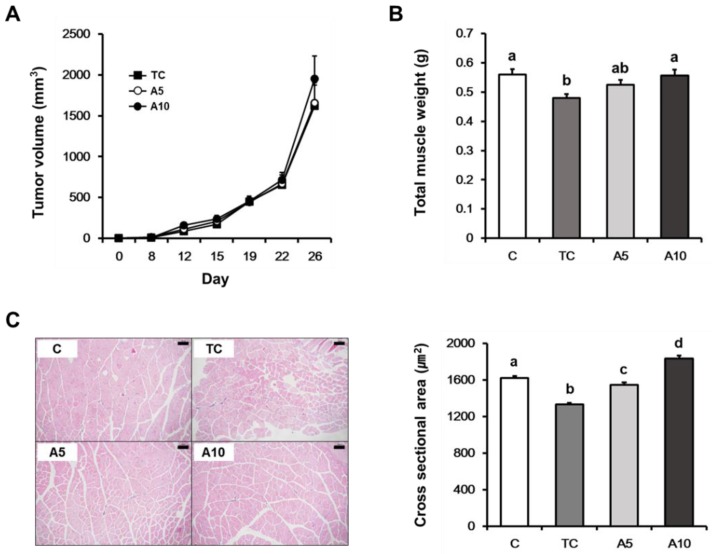
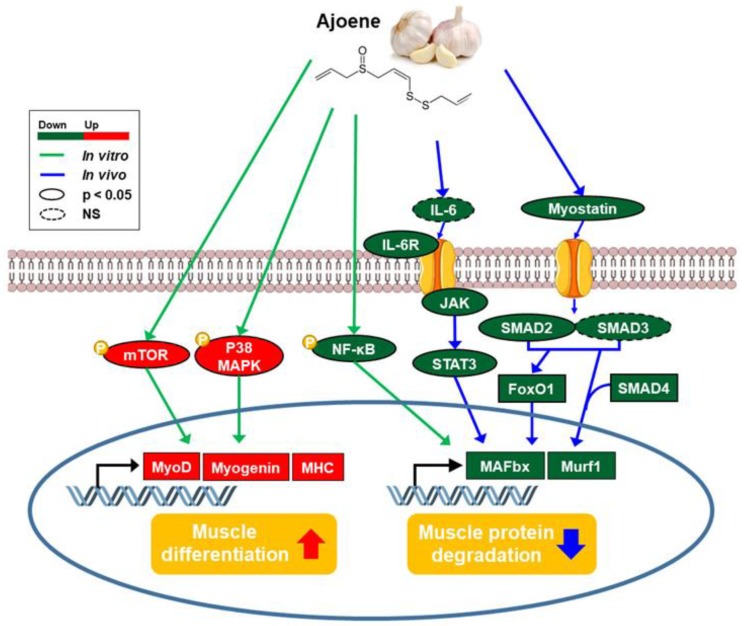
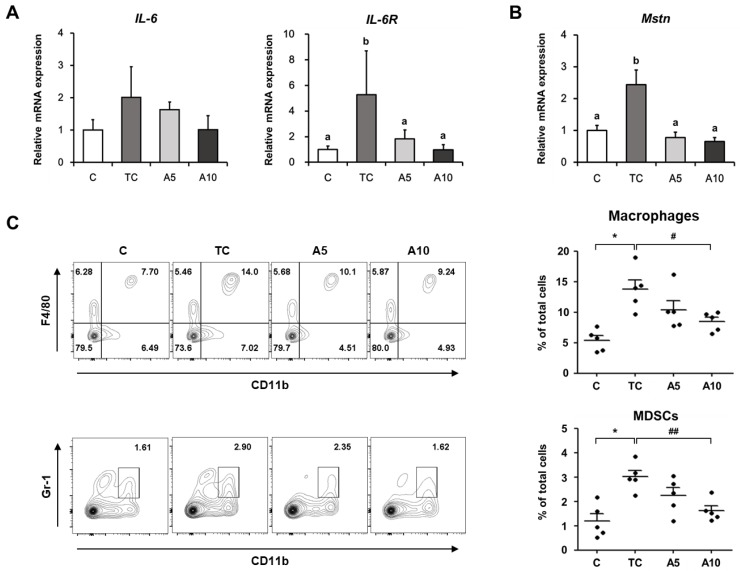
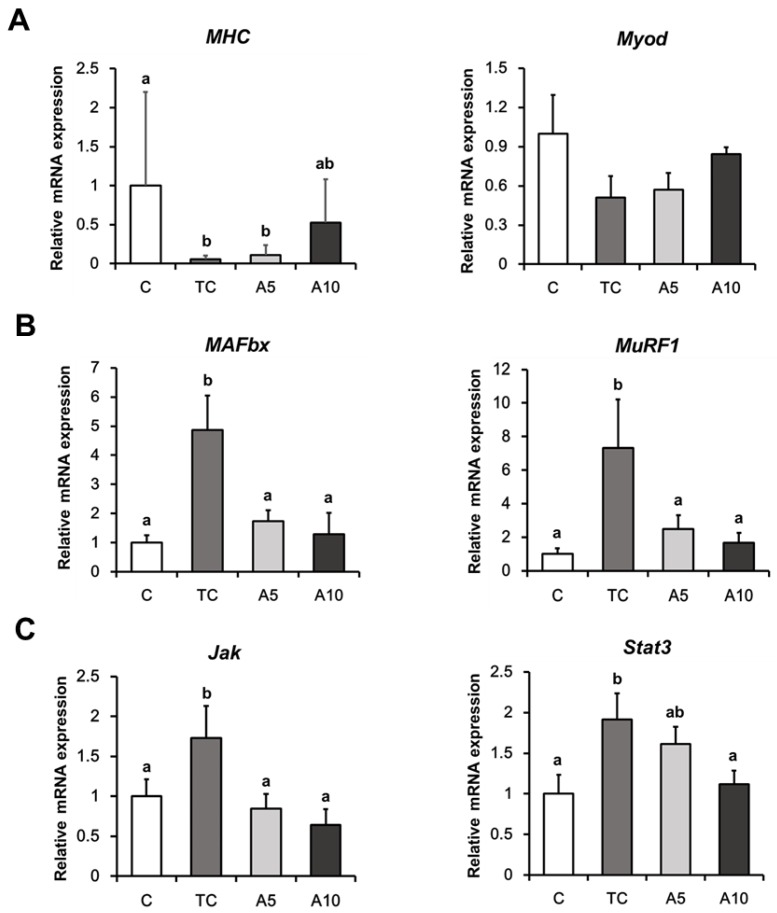
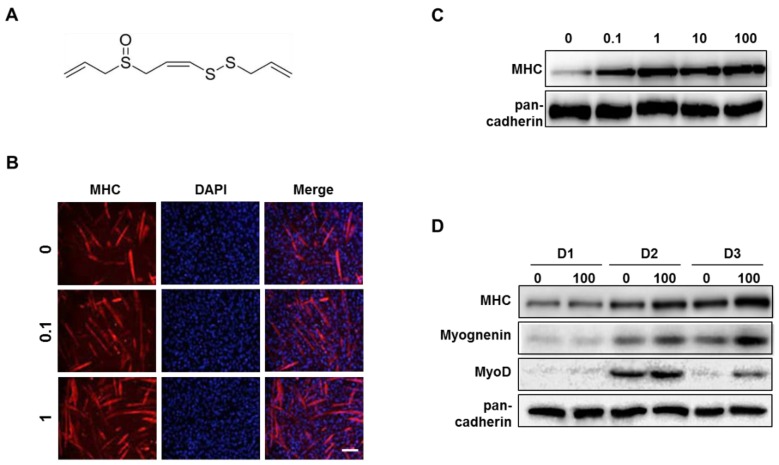
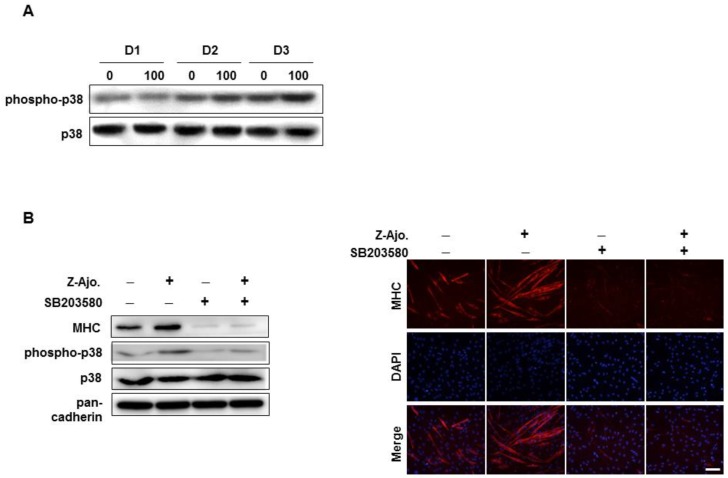
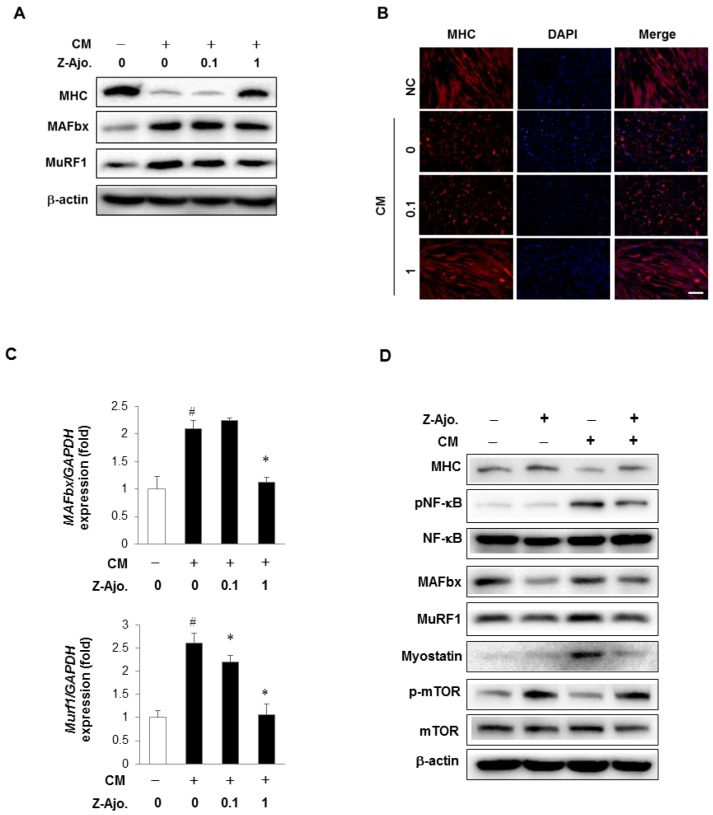
Skeletal muscle atrophy is one of the major symptoms of cancer cachexia. Garlic (), one of the world's most commonly used and versatile herbs, has been employed for the prevention and treatment of diverse diseases for centuries. In the present study, we found that ajoene, a sulfur compound found in crushed garlic, exhibits protective effects against muscle atrophy. Using CT26 tumor-bearing BALB/c mice, we demonstrate in vivo that ajoene extract alleviated muscle degradation by decreasing not only myokines secretion but also janus kinase/signal transducer and activator of transcription 3 (JAK/STAT3) and SMADs/forkhead box (FoxO) signaling pathways, thereby suppressing muscle-specific E3 ligases. In mouse skeletal myoblasts, Z-ajoene enhanced myogenesis as evidenced by increased expression of myogenic markers via p38 mitogen-activated protein kinase (MAPK) activation. In mature myotubes, Z-ajoene protected against muscle protein degradation induced by conditioned media from CT26 colon carcinoma cells, by suppressing expression of muscle specific E3 ligases and nuclear transcription factor kappa B (NF-κB) phosphorylation which contribute to muscle atrophy. Moreover, Z-ajoene treatment improved myofiber formation via stimulation of muscle protein synthesis. These findings suggest that ajoene extract and Z-ajoene can attenuate skeletal muscle atrophy induced by cancer cachexia through suppressing inflammatory responses and the muscle wasting as well as by promoting muscle protein synthesis.
骨骼肌萎缩是癌症恶病质的主要症状之一。大蒜()作为世界上最常用和多功能的草药之一,几个世纪以来一直被用于预防和治疗各种疾病。在本研究中,我们发现大蒜中的一种含硫化合物——蒜素,具有预防肌肉萎缩的保护作用。我们使用 CT26 荷瘤 BALB/c 小鼠,体内实验表明大蒜素提取物通过减少肌因子分泌以及 Janus 激酶/信号转导和转录激活因子 3(JAK/STAT3)和 SMADs/叉头框(FoxO)信号通路,从而抑制肌肉特异性 E3 连接酶,缓解肌肉降解。在小鼠骨骼肌成肌细胞中,Z-蒜素通过激活 p38 丝裂原活化蛋白激酶(MAPK)增加肌生成标志物的表达,促进肌生成。在成熟的肌管中,Z-蒜素通过抑制肌肉特异性 E3 连接酶和核转录因子 kappa B(NF-κB)磷酸化来抑制 CT26 结肠癌细胞条件培养基诱导的肌肉蛋白降解,从而保护肌肉蛋白不被降解,这些作用与肌肉萎缩有关。此外,Z-蒜素通过刺激肌肉蛋白合成促进肌纤维形成。这些发现表明,大蒜素提取物和 Z-蒜素可以通过抑制炎症反应和肌肉消耗以及促进肌肉蛋白合成来减轻癌症恶病质引起的骨骼肌萎缩。