State Key Laboratory of Ophthalmology, Zhongshan Ophthalmic Center, Sun Yat-sen University, 54 South Xianlie Road, Guangzhou, 510060, People's Republic of China.
Mol Cancer. 2019 Nov 13;18(1):159. doi: 10.1186/s12943-019-1068-1.
Uveal melanoma (UM) is the most common primary intraocular tumor. Hepatic metastasis is the major and direct death-related reason in UM patients. Given that cancer stem-like cells (CSCs) are roots of metastasis, targeting CSCs may be a promising strategy to overcome hepatic metastasis in UM. Salinomycin, which has been identified as a selective inhibitor of CSCs in multiple types of cancer, may be an attractive agent against CSCs thereby restrain hepatic metastasis in UM. The objective of the study is to explore the antitumor activity of salinomycin against UM and clarify its underlying mechanism.
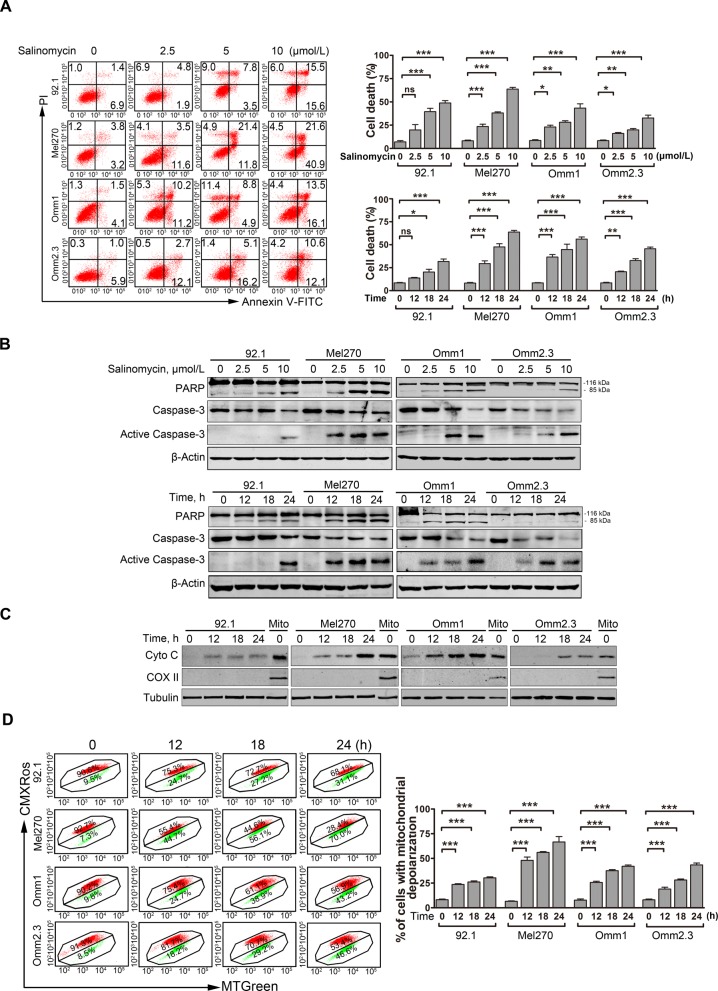
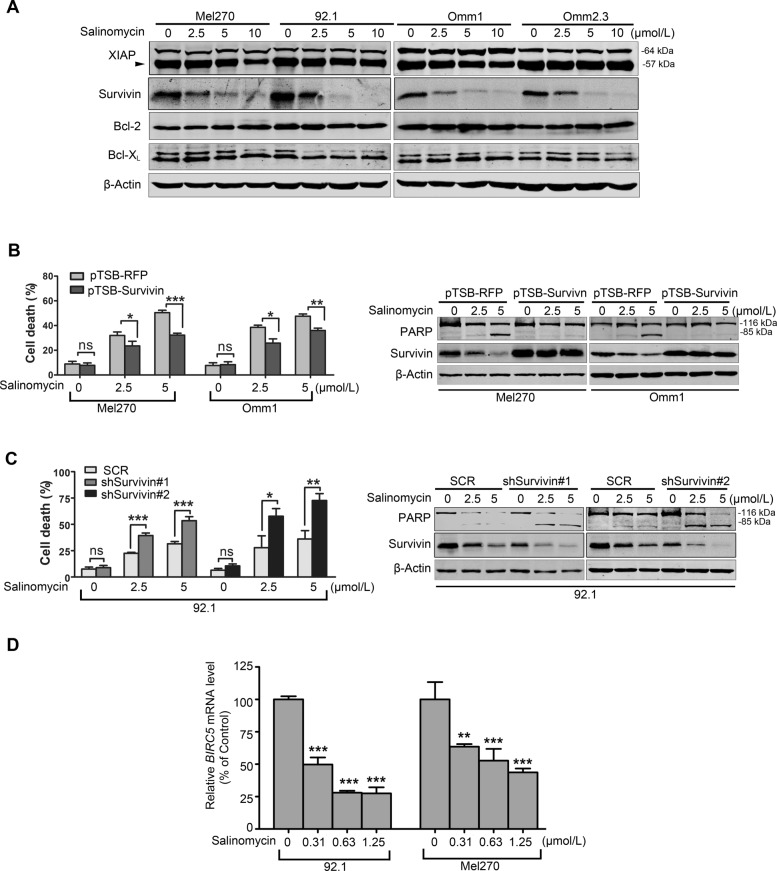
UM cells were treated with salinomycin, and its effects on cell proliferation, apoptosis, migration, invasion, CSCs population, and the related signal transduction pathways were determined. The in vivo antitumor activity of salinomycin was evaluated in the NOD/SCID UM xenograft model and intrasplenic transplantation liver metastasis mouse model.
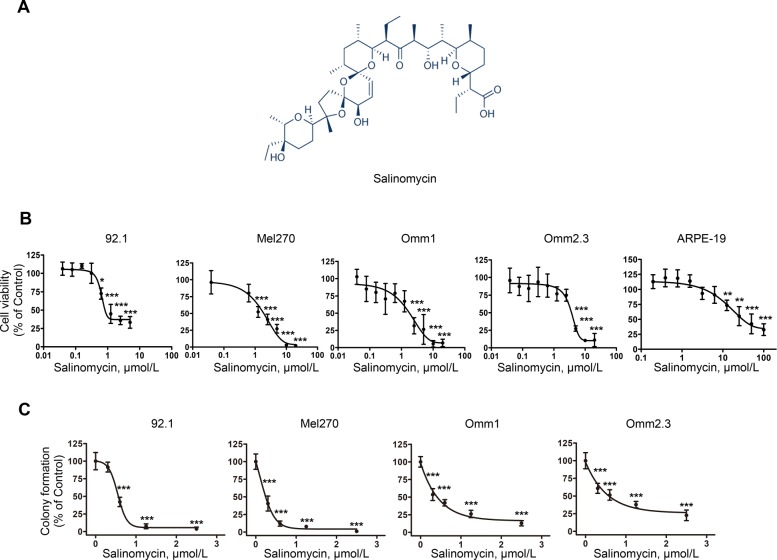
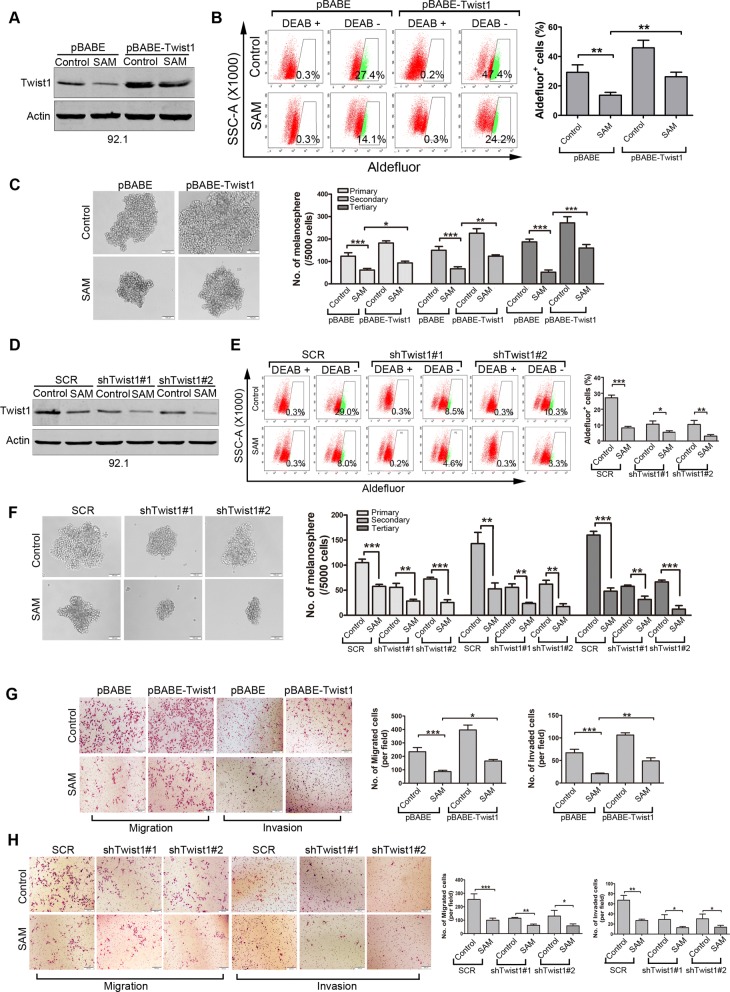
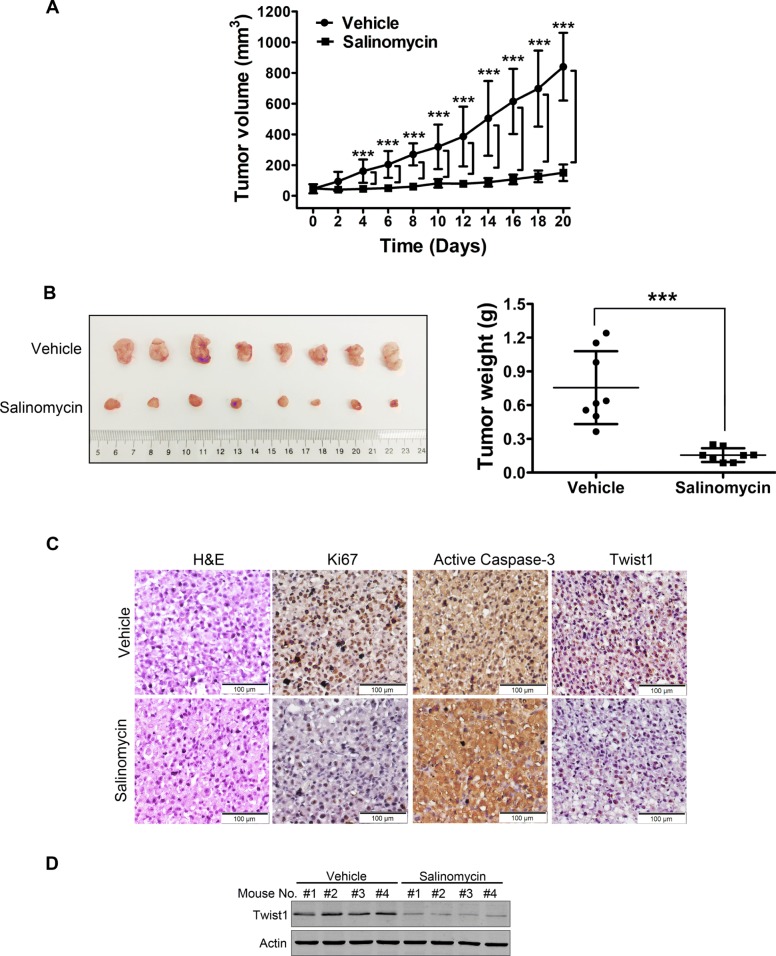
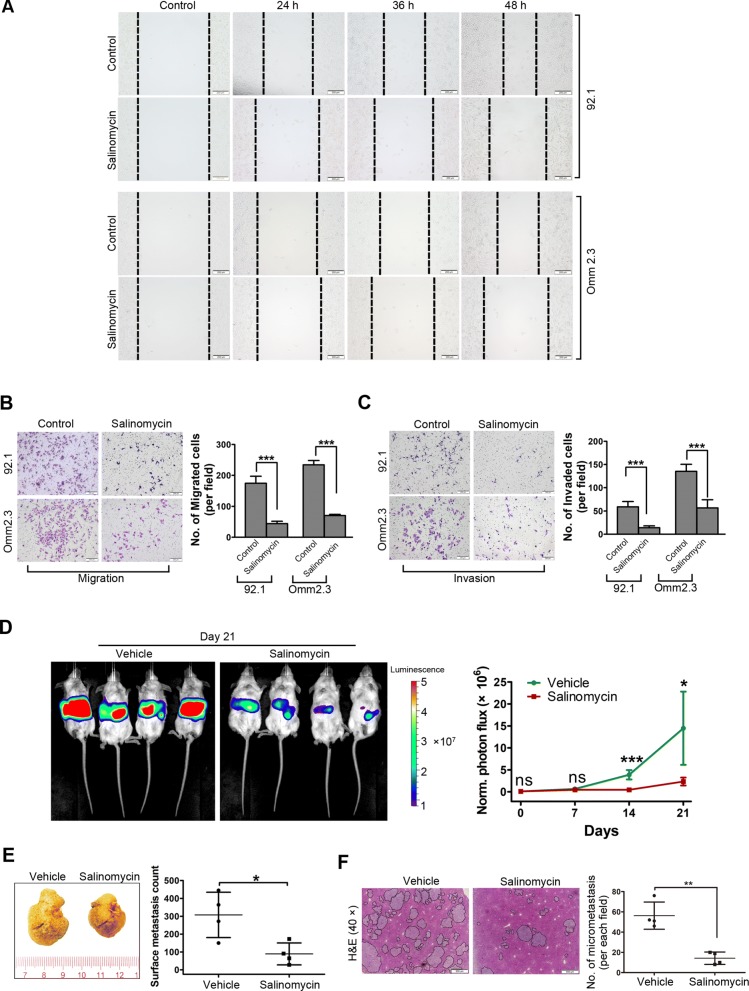
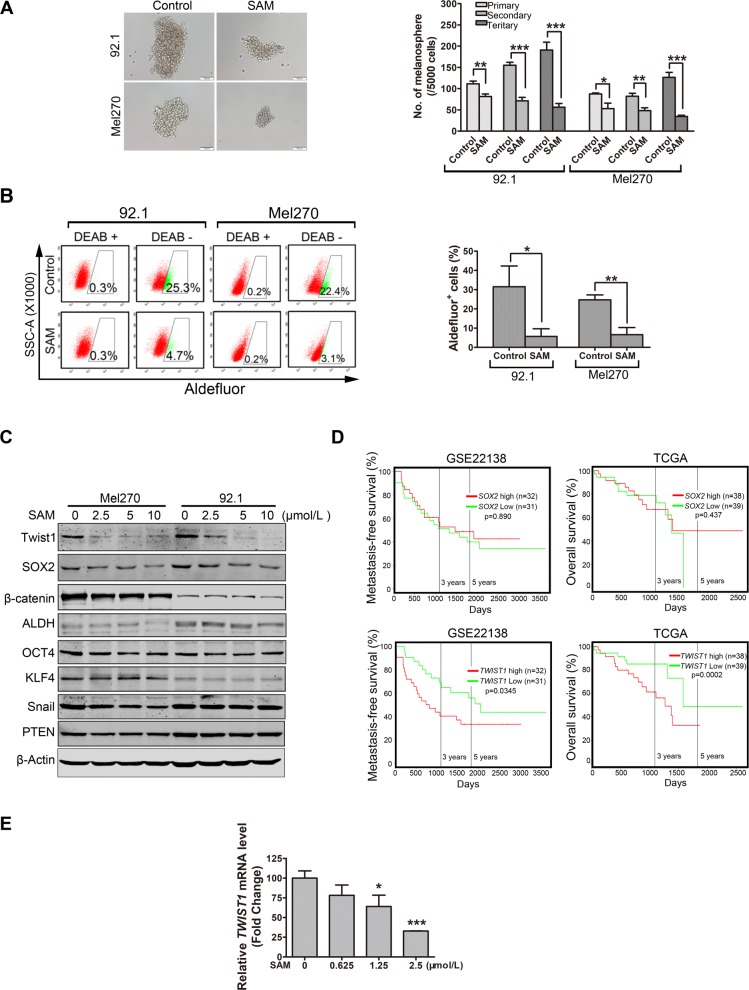
We found that salinomycin remarkably obviated growth and survival in UM cell lines and in a UM xenograft mouse model. Meanwhile, salinomycin significantly eliminated CSCs and efficiently hampered hepatic metastasis in UM liver metastasis mouse model. Mechanistically, Twist1 was fundamental for the salinomycin-enabled CSCs elimination and migration/invasion blockage in UM cells.
Our findings suggest that targeting UM CSCs by salinomycin is a promising therapeutic strategy to hamper hepatic metastasis in UM. These results provide the first pre-clinical evidence for further testing of salinomycin for its antitumor efficacy in UM patients with hepatic metastasis.
葡萄膜黑色素瘤(UM)是最常见的原发性眼内肿瘤。肝转移是 UM 患者的主要致死原因。鉴于癌症干细胞样细胞(CSC)是转移的根源,针对 CSC 可能是克服 UM 肝转移的有前途的策略。已经在多种类型的癌症中鉴定出的青蒿琥酯是 CSC 的选择性抑制剂,可能是一种有吸引力的针对 CSC 的药物,从而抑制 UM 中的肝转移。本研究的目的是探讨青蒿琥酯对 UM 的抗肿瘤活性,并阐明其潜在机制。
用青蒿琥酯处理 UM 细胞,测定其对细胞增殖、凋亡、迁移、侵袭、CSC 群体及相关信号转导通路的影响。在 NOD/SCID UM 异种移植模型和脾内移植肝转移小鼠模型中评估青蒿琥酯的体内抗肿瘤活性。
我们发现青蒿琥酯可显著减轻 UM 细胞系和 UM 异种移植小鼠模型中的生长和存活。同时,青蒿琥酯可显著消除 CSC,并有效抑制 UM 肝转移小鼠模型中的肝转移。机制上,Twist1 是青蒿琥酯在 UM 细胞中实现 CSC 消除和迁移/侵袭阻滞的关键。
我们的研究结果表明,通过青蒿琥酯靶向 UM CSC 是一种有前途的治疗策略,可抑制 UM 中的肝转移。这些结果为进一步在 UM 肝转移患者中测试青蒿琥酯的抗肿瘤疗效提供了首个临床前证据。