Bernardino Angelo F, Pais Fabiano S, Oliveira Louisi S, Gabriel Fabricio A, Ferreira Tiago O, Queiroz Hermano M, Mazzuco Ana Carolina A
Grupo de Ecologia Bentônica, Department of Oceanography, Universidade Federal do Espírito Santo, Vitoria, Espirito Santo, Brazil.
Instituto René Rachou, FIOCRUZ/Minas, Belo Horizonte, Minas Gerais, Brazil.
PeerJ. 2019 Nov 7;7:e8042. doi: 10.7717/peerj.8042. eCollection 2019.
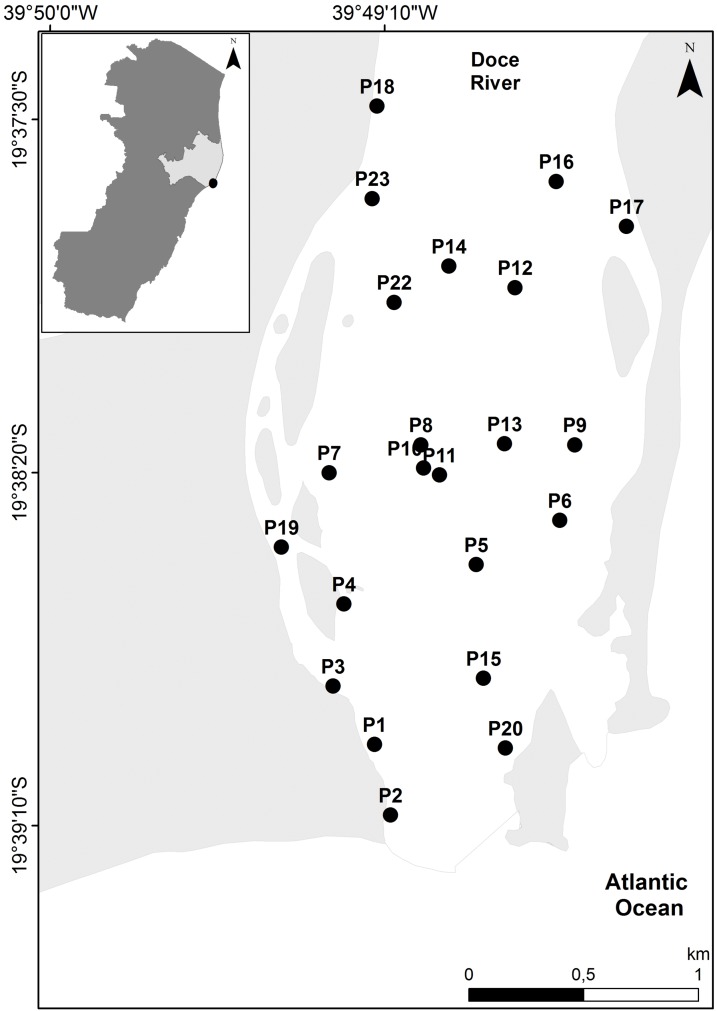
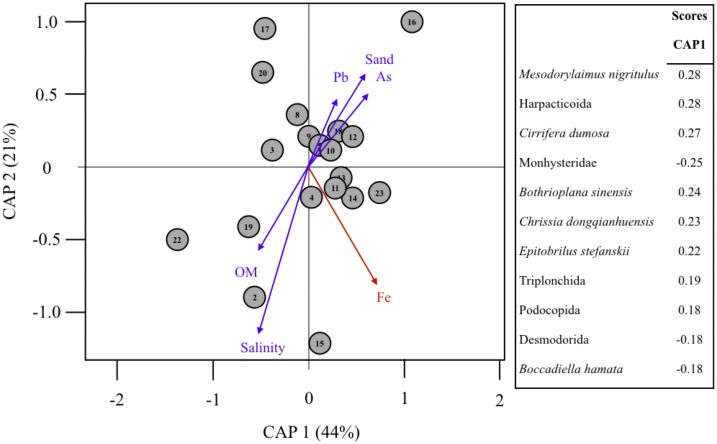
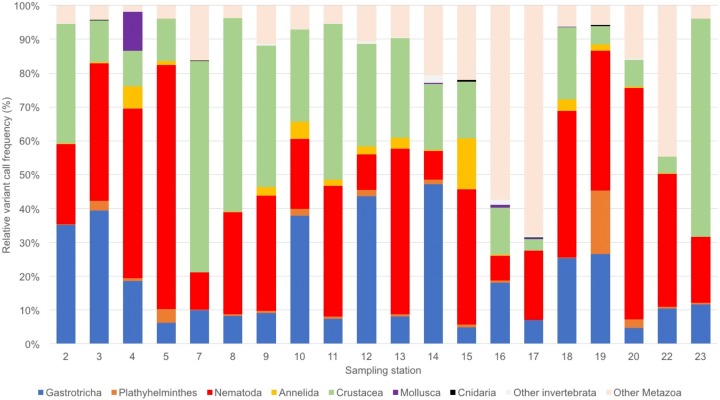
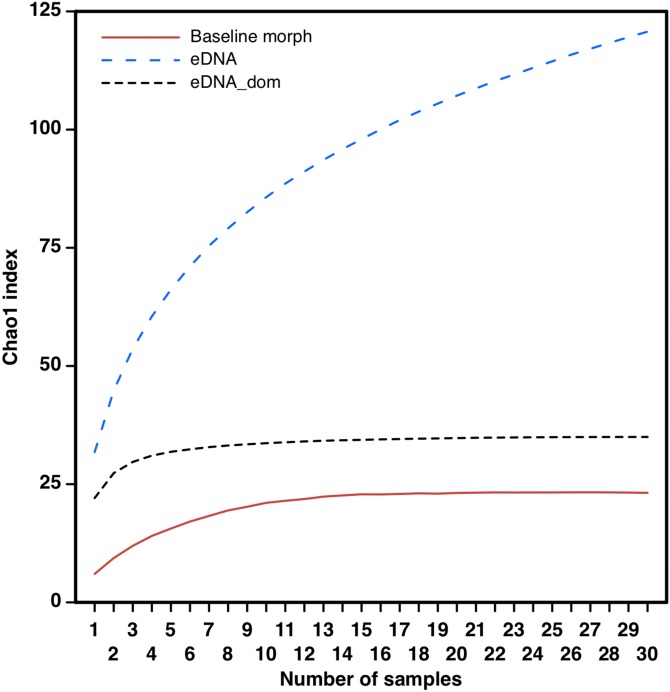
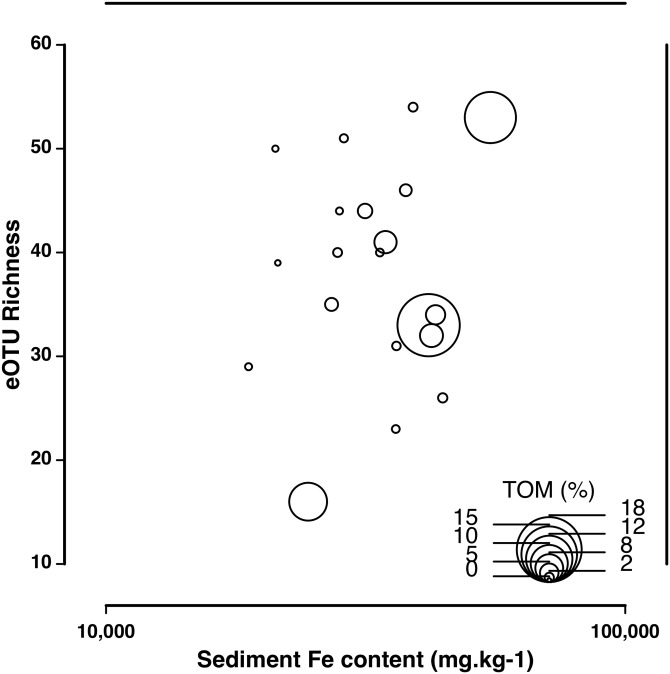
Mine tailing disasters have occurred worldwide and contemporary release of tailings of large proportions raise concerns of the chronic impacts that trace metals may have on the aquatic biodiversity. Environmental metabarcoding (eDNA) offers an as yet poorly explored opportunity for biological monitoring of impacted aquatic ecosystems from mine tailings and contaminated sediments. eDNA has been increasingly recognized to be an effective method to detect previously unrecognized small-sized Metazoan taxa, but their ecological responses to environmental pollution has not been assessed by metabarcoding. Here, we evaluated chronic effects of trace metal contamination from sediment eDNA of the Rio Doce estuary, 1.7 years after the Samarco mine tailing disaster, which released over 40 million m of iron tailings in the Rio Doce river basin. We identified 123 new sequence variants environmental taxonomic units (eOTUs) of benthic taxa and an assemblage composition dominated by Nematoda, Crustacea and Platyhelminthes; typical of other estuarine ecosystems. We detected environmental filtering on the meiofaunal assemblages and multivariate analysis revealed strong influence of Fe contamination, supporting chronic impacts from mine tailing deposition in the estuary. This was in contrast to environmental filtering of meiofaunal assemblages of non-polluted estuaries. Here, we suggest that the eDNA metabarcoding technique provides an opportunity to fill up biodiversity gaps in coastal marine ecology and may become a valid method for long term monitoring studies in mine tailing disasters and estuarine ecosystems with high trace metals content.
尾矿灾难在全球范围内都有发生,而近期大量尾矿的排放引发了人们对痕量金属可能对水生生物多样性产生的长期影响的担忧。环境宏条形码(eDNA)为受尾矿和受污染沉积物影响的水生生态系统的生物监测提供了一个尚未得到充分探索的机会。eDNA已越来越被认为是一种检测以前未被识别的小型后生动物类群的有效方法,但其对环境污染的生态反应尚未通过宏条形码进行评估。在这里,我们评估了圣埃斯皮里图州矿业公司尾矿灾难发生1.7年后,多西河河口沉积物eDNA中痕量金属污染的长期影响,该灾难在多西河流域释放了超过4000万立方米的铁尾矿。我们识别出了123个底栖类群的新序列变体环境分类单元(eOTUs),其组合构成以线虫纲、甲壳纲和扁形动物门为主;这是其他河口生态系统的典型特征。我们检测到了对小型底栖动物组合的环境筛选,多变量分析显示铁污染有强烈影响,这支持了尾矿沉积对河口的长期影响。这与未受污染河口的小型底栖动物组合的环境筛选情况形成对比。在这里,我们认为eDNA宏条形码技术为填补沿海海洋生态学中的生物多样性空白提供了一个机会,并且可能成为尾矿灾难和痕量金属含量高的河口生态系统长期监测研究的有效方法。