Australian Research Centre for Human Evolution, Environmental Futures Research Institute, Griffith University, Nathan, Brisbane, Australia.
Ancient DNA Laboratory, Learning Resource Center, Kasr Al-Ainy Faculty of Medicine, Cairo University, Cairo, Egypt.
PLoS One. 2019 Nov 13;14(11):e0223964. doi: 10.1371/journal.pone.0223964. eCollection 2019.
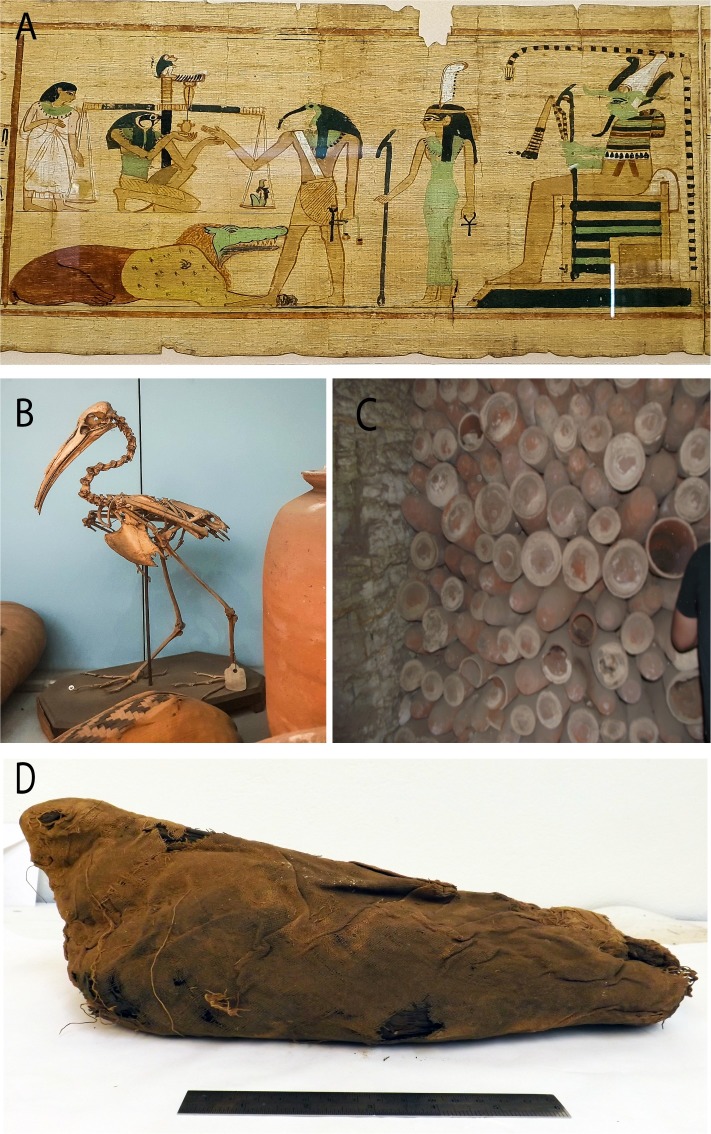
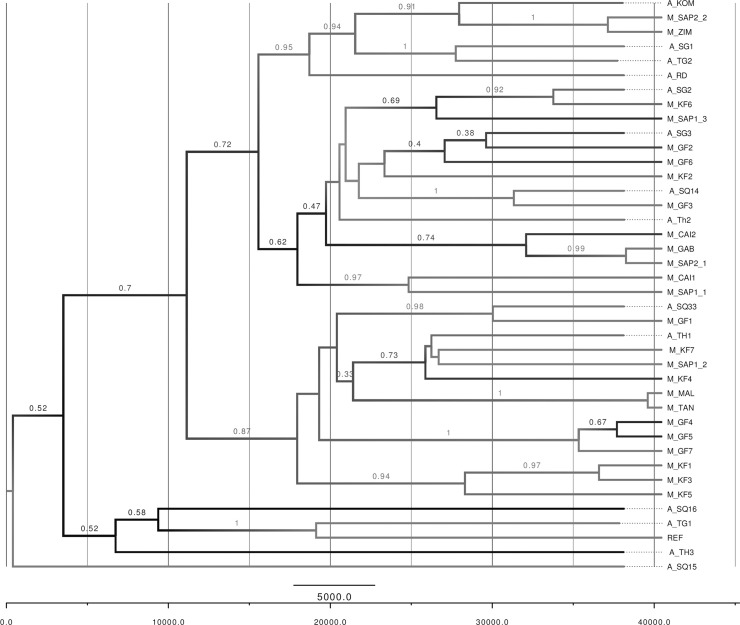
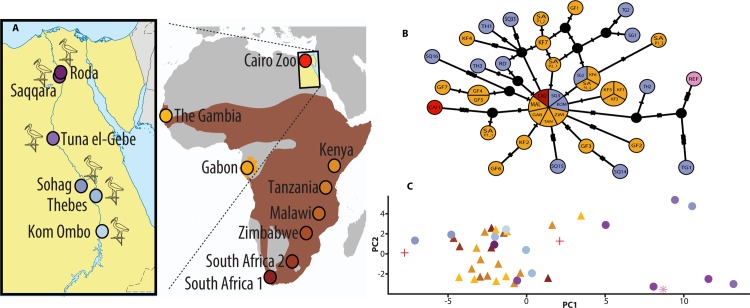
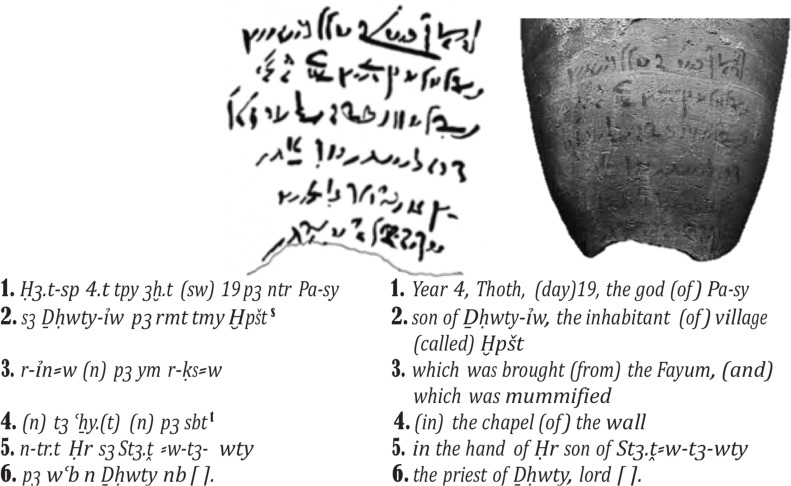
The ancient catacombs of Egypt harbor millions of well-preserved mummified Sacred Ibis (Threskiornis aethiopicus) dating from ~600BC. Although it is known that a very large number of these 'votive' mummies were sacrificed to the Egyptian God Thoth, how the ancient Egyptians obtained millions of these birds for mummification remains unresolved. Ancient Egyptian textual evidences suggest they may have been raised in dedicated large-scale farms. To investigate the most likely method used by the priests to secure birds for mummification, we report the first study of complete mitochondrial genomes of 14 Sacred Ibis mummies interred ~2500 years ago. We analysed and compared the mitogenomic diversity among Sacred Ibis mummies to that found in modern Sacred Ibis populations from throughout Africa. The ancient birds show a high level of genetic variation comparable to that identified in modern African populations, contrary to the suggestion in ancient hieroglyphics (or ancient writings) of centralized industrial scale farming of sacrificial birds. This suggests a sustained short-term taming of the wild migratory Sacred Ibis for the ritual yearly demand.
埃及古老的地下墓穴中保存着数以百万计的木乃伊圣鹮(Threskiornis aethiopicus),这些圣鹮可以追溯到公元前 600 年左右。尽管人们知道大量的这种“祭祀”木乃伊是为了祭祀埃及神透特而牺牲的,但古埃及人是如何获得数百万只这种鸟类来进行木乃伊化的,这仍然没有得到解决。古埃及的文字证据表明,它们可能是在专门的大规模农场中饲养的。为了研究祭司们最有可能用来为木乃伊制作获取鸟类的方法,我们报告了对 14 具约 2500 年前埋葬的圣鹮木乃伊的完整线粒体基因组的首次研究。我们分析并比较了圣鹮木乃伊的线粒体基因组多样性与在整个非洲发现的现代圣鹮种群的多样性。这些古老的鸟类表现出了与现代非洲种群相当的高水平遗传变异,这与古代象形文字(或古代文字)中对集中化工业规模饲养祭祀鸟类的描述相反。这表明每年都需要对野生候鸟圣鹮进行短暂的驯化,以满足仪式需求。