Children's Hospital Of Fudan University, 399 Wan Yuan Road, Shanghai, Minhang District, China.
BMC Pediatr. 2019 Nov 14;19(1):439. doi: 10.1186/s12887-019-1798-7.
The objective of this study was to summarize clinical features and PRRT2 mutations of paediatric paroxysmal kinesigenic dyskinesia (PKD) patients and observe the tolerability and effects of morning draughts of oxcarbazepine.
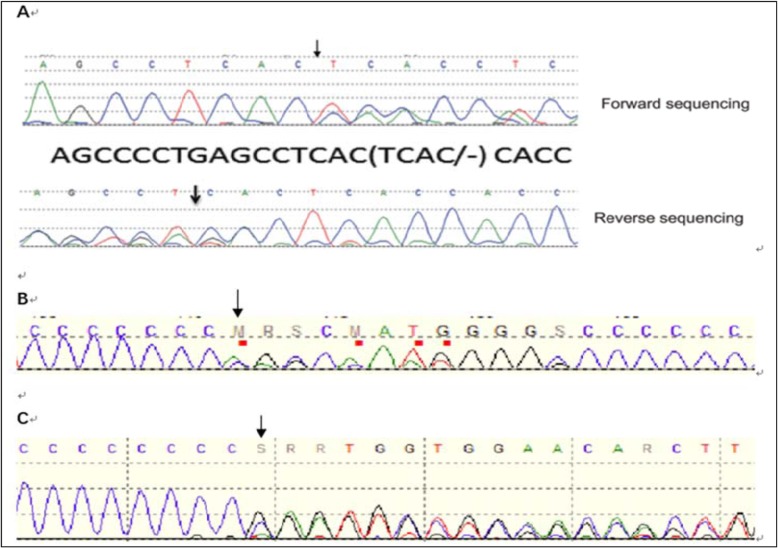
Twenty patients diagnosed with PKD at Children's Hospital of Fudan University between January 2011 and December 2015 were enrolled. These patients' medical records were reviewed. Peripheral venous blood was obtained from all enrolled patients, and polymerase chain reaction (PCR) and Sanger sequencing were used to sequence proline-rich transmembrane protein 2 (PRRT2) gene mutations. Clinical features of PKD patients with and without PRRT2 mutations were compared. All enrolled patients were treated with morning draughts of oxcarbazepine (OXC). The starting dose was 5 mg/kg·d, and the dose was increased by 5 mg/kg·d each week until attacks stopped. Effective doses and adverse effects were recorded.
For all enrolled patients, dyskinesia was triggered by sudden movement. Dyskinetic movement usually involved the limbs and was bilateral; the majority of enrolled patients exhibited both dystonia and choreoathetosis. We identified PRRT2 mutations in 5 patients, including 4 familial patients and 1 sporadic patient. All 20 patients took low doses of OXC (5-20 mg/kg·d) as draughts in the morning, and dyskinesia attacks stopped in 19 patients.
Paediatric PKD patients have various phenotypes. PRRT2 mutations are common in familial cases. OXC taken as morning draughts can be a treatment option for paediatric PKD patients.
本研究旨在总结儿科发作性运动诱发性运动障碍(PKD)患者的临床特征和 PRRT2 突变,并观察奥卡西平清晨剂量的耐受性和疗效。
回顾性分析 2011 年 1 月至 2015 年 12 月复旦大学附属儿科医院收治的 20 例 PKD 患儿的临床资料。所有患儿均接受外周静脉血采集,应用聚合酶链反应(PCR)和 Sanger 测序方法检测 PRRT2 基因突变。比较伴有和不伴有 PRRT2 基因突变的 PKD 患儿的临床特征。所有患儿均采用奥卡西平清晨剂量治疗,起始剂量为 5mg/kg·d,每周增加 5mg/kg·d,直至发作停止。记录有效剂量和不良反应。
所有患儿的运动障碍均由突然运动诱发,运动性发作常累及四肢,呈双侧性;大多数患儿同时存在肌张力障碍和舞蹈手足徐动症。共发现 5 例患儿存在 PRRT2 基因突变,包括 4 例家系性病例和 1 例散发性病例。20 例患儿均采用奥卡西平清晨剂量治疗(5~20mg/kg·d),19 例患儿的运动障碍发作停止。
儿科 PKD 患儿的临床表现多样,PRRT2 基因突变常见于家系性病例。奥卡西平清晨剂量治疗可能是儿科 PKD 患儿的一种治疗选择。