Department of pharmacy, Tongde Hospital of Zhejiang Province, Hangzhou, China.
Department of pharmacy, Zhejiang Province Hospital of Traditional Chinese Medicine, Hangzhou, China.
Sci Rep. 2019 Nov 13;9(1):16721. doi: 10.1038/s41598-019-53267-2.
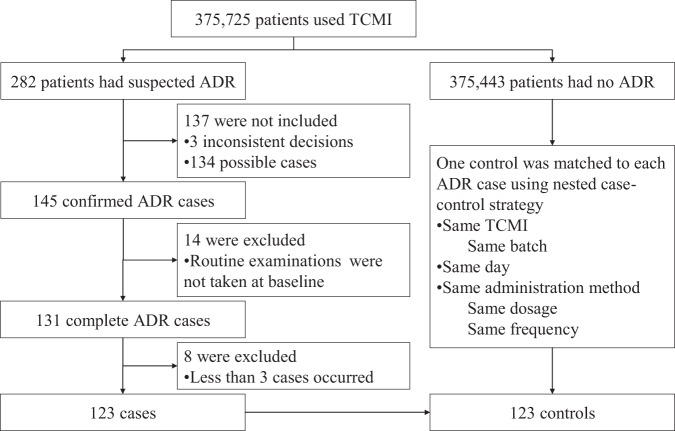
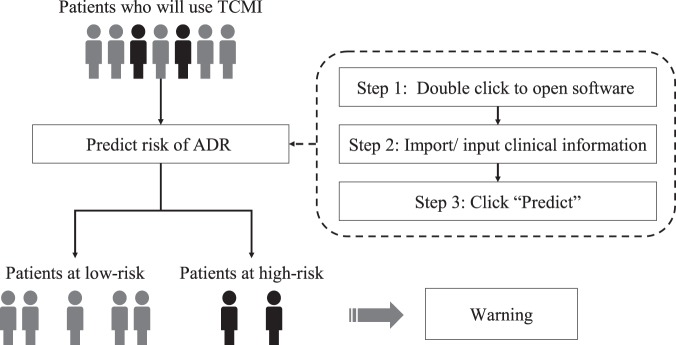
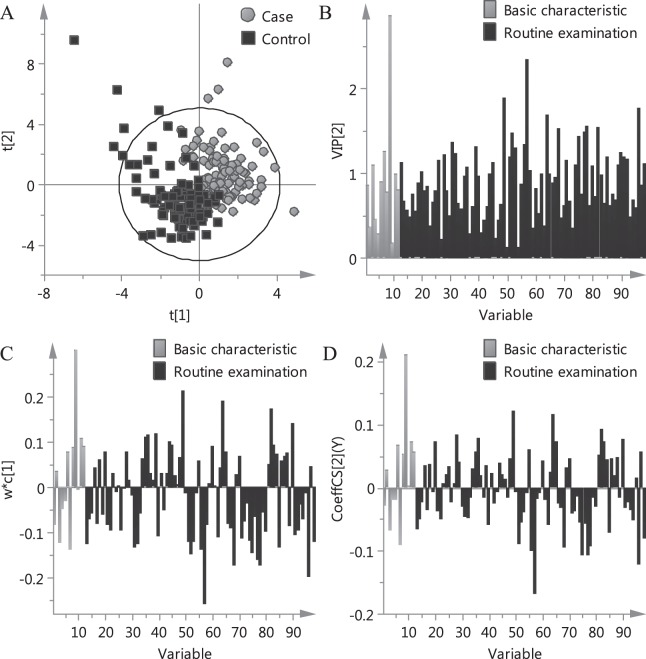
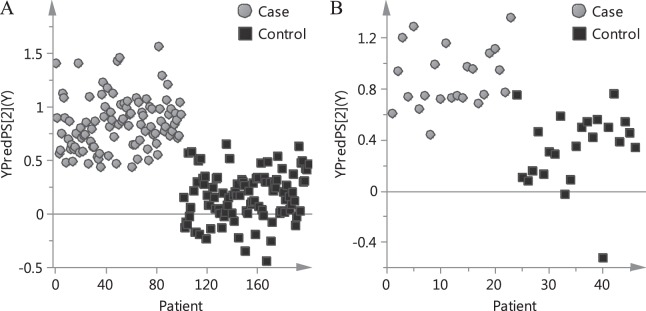
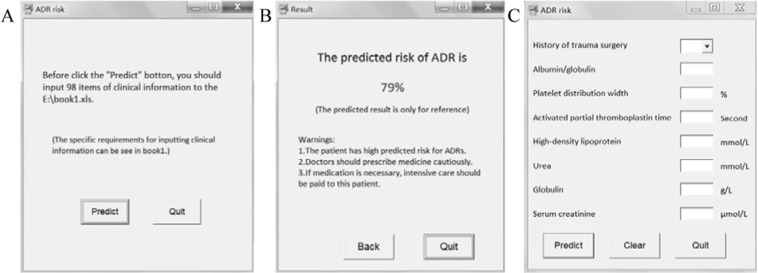
The adverse drug reaction (ADR) of traditional Chinese medicine injection (TCMI) has become one of the major concerns of public health in China. There are significant advantages for developing methods to improve the use of TCMI in routine clinical practice. The method of predicting TCMI-induced ADR was illustrated using a nested case-control study in 123 cases and 123 controls. The partial least squares regression (PLSR) models, which mapped the influence of basic characteristics and routine examinations to ADR, were established to predict the risk of ADR. The software was devised to provide an easy-to-use tool for clinic application. The effectiveness of the method was evaluated through its application to new patients with 95.7% accuracy of cases and 91.3% accuracy of controls. By using the method, the patients at high-risk could be conveniently, efficiently and economically recognized without any extra financial burden for additional examination. This study provides a novel insight into individualized management of the patients who will use TCMI.
中药注射剂(TCMI)的药物不良反应(ADR)已成为中国公众健康的主要关注点之一。开发方法以提高 TCMI 在常规临床实践中的使用具有重要意义。采用嵌套病例对照研究,对 123 例病例和 123 例对照进行了预测 TCMI 诱导 ADR 的方法说明。建立了偏最小二乘回归(PLSR)模型,该模型将基本特征和常规检查的影响映射到 ADR,以预测 ADR 的风险。该软件设计用于为临床应用提供易于使用的工具。该方法通过对 95.7%的病例和 91.3%的对照的新患者的应用进行了有效性评估。通过使用该方法,可以方便、高效和经济地识别高风险患者,而不会给患者带来额外的经济负担,无需进行额外的检查。本研究为使用 TCMI 的患者的个体化管理提供了新的思路。