Ministry of Education Laboratory of Earth Surface Processes, College of Urban and Environmental Sciences, Peking University, 100871, Beijing, China.
School of Forestry and Environmental Studies, Yale University, New Haven, CT, 06511, USA.
Nat Commun. 2019 Nov 14;10(1):5164. doi: 10.1038/s41467-019-13221-2.
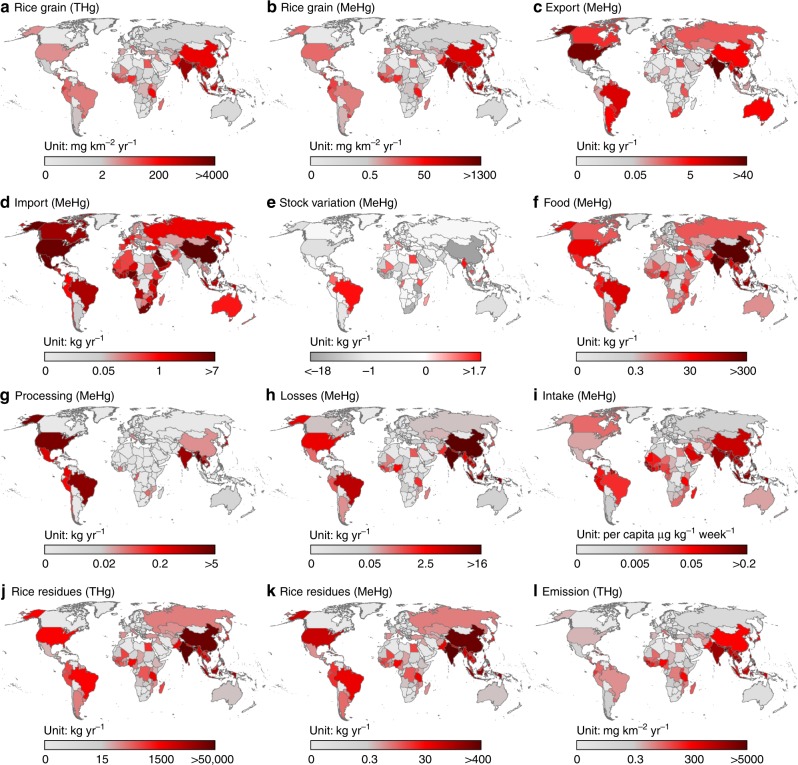
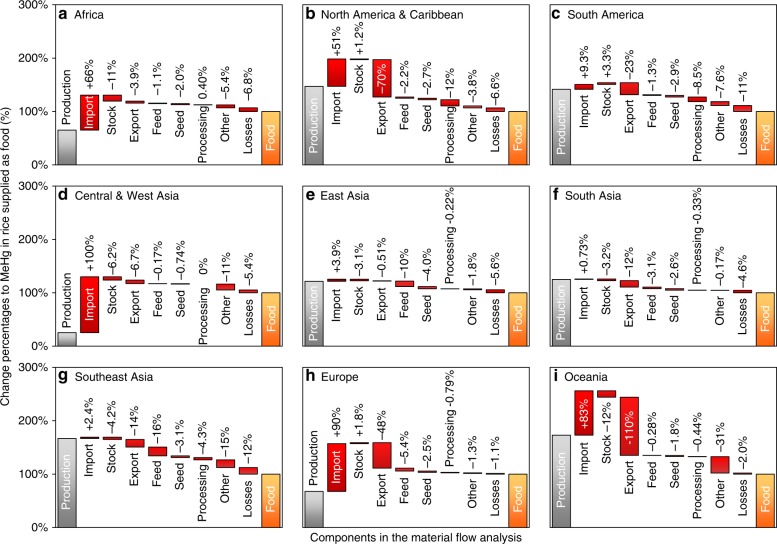
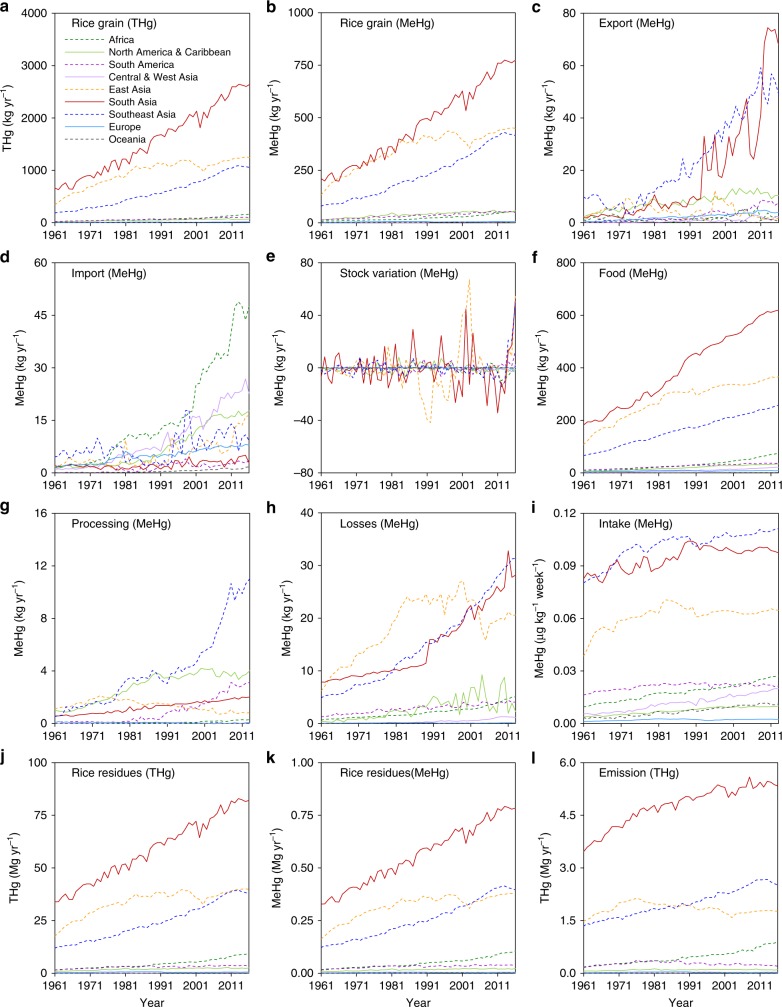
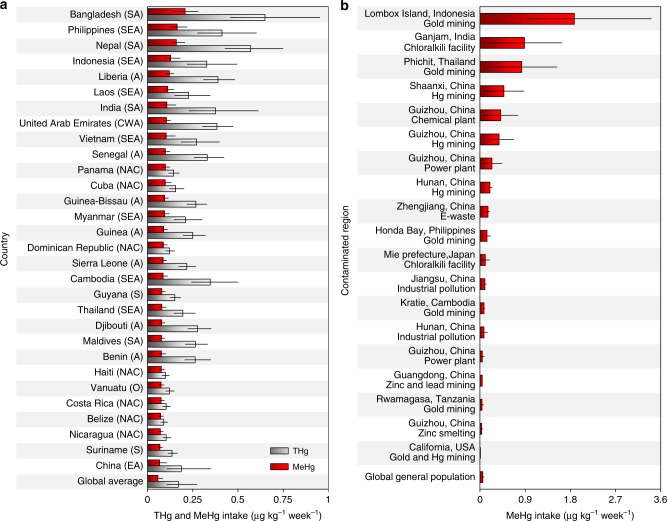
Protecting the environment and enhancing food security are among the world's greatest challenges. Fish consumption is widely considered to be the single significant dietary source of methylmercury. Nevertheless, by synthesizing data from the past six decades and using a variety of models, we find that rice could be a significant global dietary source of human methylmercury exposure, especially in South and Southeast Asia. In 2013, globalization caused 9.9% of human methylmercury exposure via the international rice trade and significantly aggravated rice-derived exposure in Africa (62%), Central Asia (98%) and Europe (42%). In 2016, 180 metric tons of mercury were generated in rice plants, 14-fold greater than that exported from oceans via global fisheries. We suggest that future research should consider both the joint ingestion of rice with fish and the food trade in methylmercury exposure assessments, and anthropogenic biovectors such as crops should be considered in the global mercury cycle.
保护环境和增强粮食安全是全球面临的最大挑战之一。鱼类消费被广泛认为是甲基汞的单一重要膳食来源。然而,通过综合过去六十年的数据并使用多种模型,我们发现大米可能是人类摄入甲基汞的重要全球膳食来源,特别是在南亚和东南亚。2013 年,全球化导致 9.9%的人类甲基汞暴露是通过国际稻米贸易造成的,这极大加剧了非洲(62%)、中亚(98%)和欧洲(42%)的稻米摄入暴露。2016 年,在水稻植株中生成了 180 公吨汞,是通过全球渔业从海洋中输出的汞的 14 倍。我们建议未来的研究应考虑在评估甲基汞暴露时将大米与鱼类的联合摄入以及食物贸易都考虑在内,而人为的生物载体如农作物也应在全球汞循环中得到考虑。