Vaccine Preventable Bacteria Section, Public Health England-National Infection Service, London NW9 5EQ, UK.
Immunisation and Countermeasures, Public Health England-National Infection Service, London NW9 5EQ, UK.
Genes (Basel). 2019 Oct 25;10(11):845. doi: 10.3390/genes10110845.
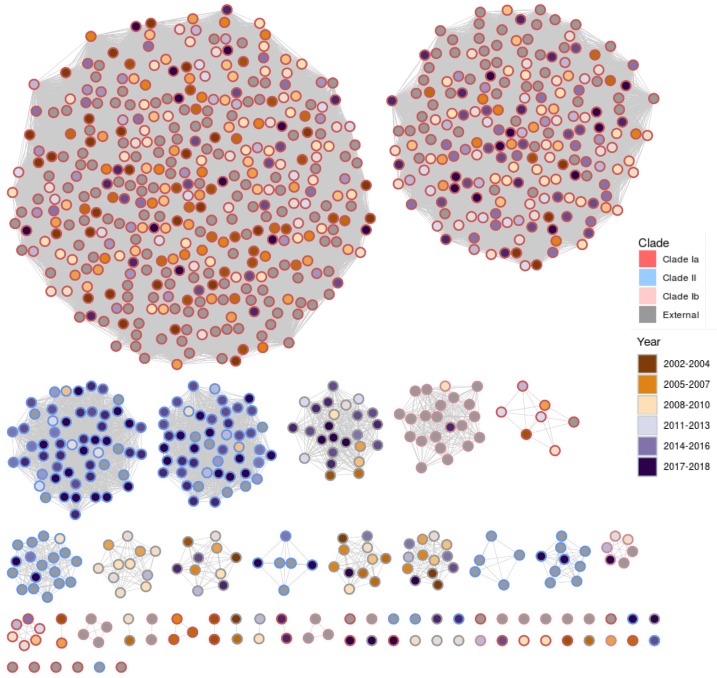
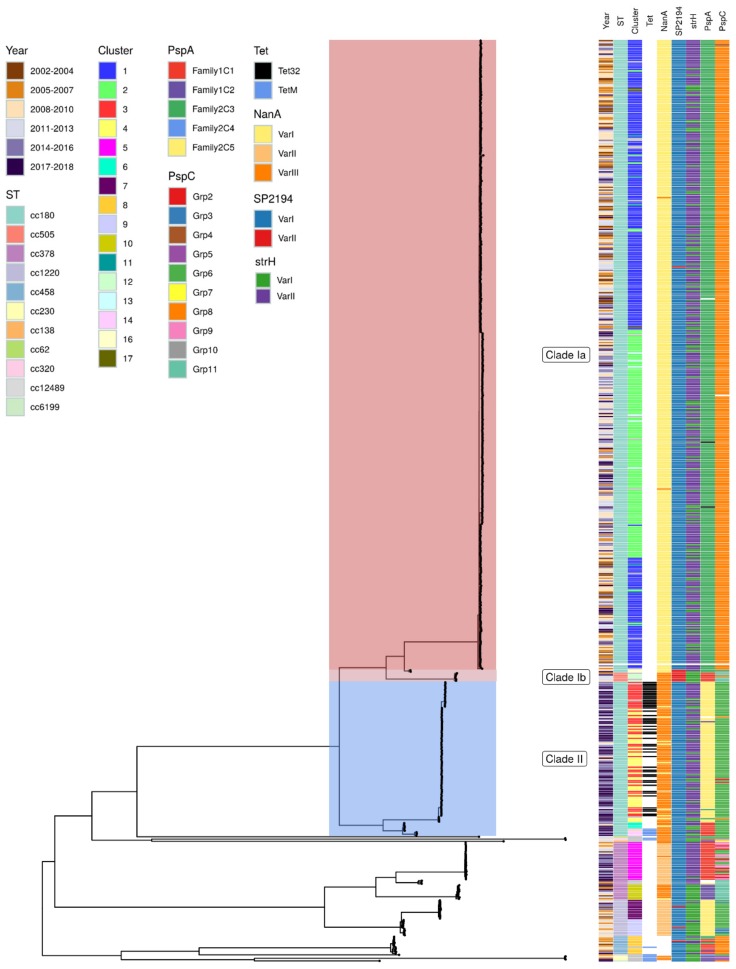
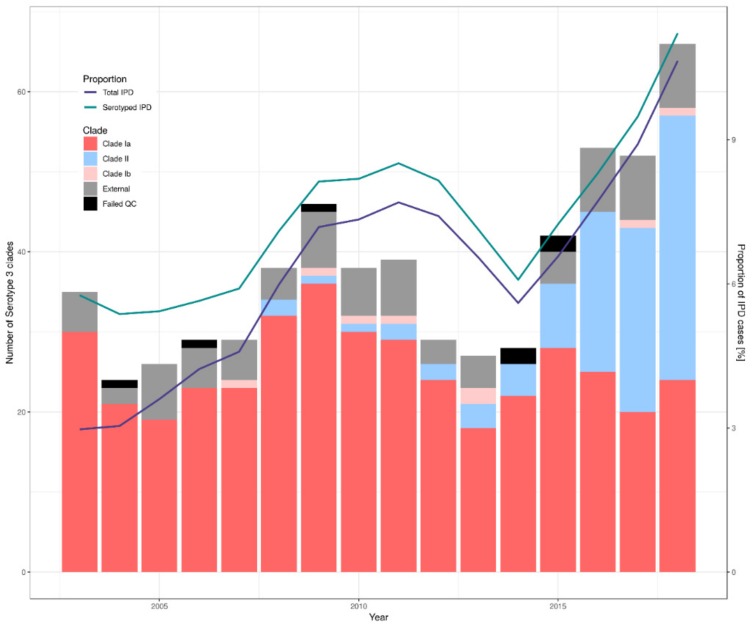
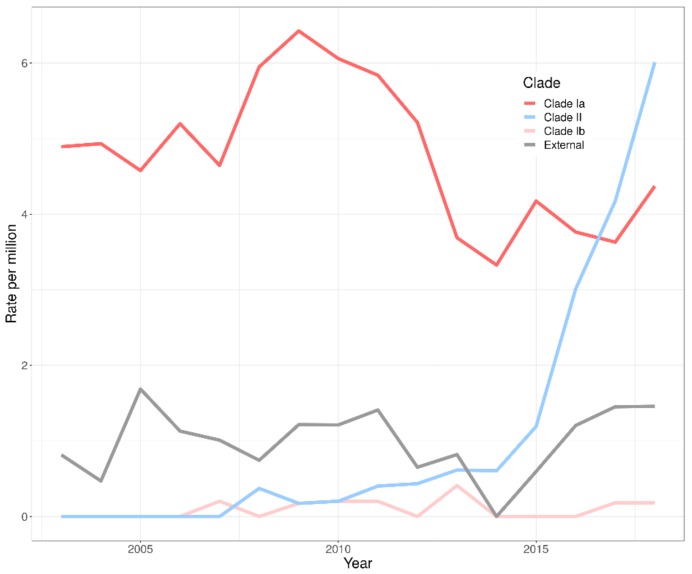
Despite its inclusion in pneumococcal conjugate vaccine 13 (PCV13), serotype 3 remains a major cause of invasive pneumococcal disease in England and Wales. Previous studies have indicated that there are distinct lineages within serotype 3 clonal complex 180 and the clade distributions have shifted in recent years with the emergence of clade II. We undertook whole genome sequencing and genomic analysis of 616 serotype 3 isolates from England and Wales between 2003 and 2018, including invasive and carriage isolates. Our investigations showed that clade II has expanded since 2014 and now represents 50% of serotype 3 invasive pneumococcal disease (IPD) isolates in England and Wales. Genomic analysis of antibiotic resistance and protein antigen genes showed that distinct profiles are present within the clades which could account for the recent emergence of this clade. This investigation highlights the importance and utility of routine whole genome sequencing and its ability to identify new and emerging variation at the single nucleotide level which informs surveillance and will impact future vaccine development.
尽管 3 型血清已被包含在肺炎球菌结合疫苗 13 型(PCV13)中,但它仍然是英格兰和威尔士侵袭性肺炎球菌病的主要原因。先前的研究表明,3 型克隆复合体 180 内存在不同的谱系,近年来随着 II 谱系的出现,谱系分布发生了变化。我们对 2003 年至 2018 年间从英格兰和威尔士采集的 616 株 3 型血清分离株进行了全基因组测序和基因组分析,包括侵袭性和携带性分离株。我们的研究表明,自 2014 年以来,II 谱系已经扩大,现在占英格兰和威尔士 3 型侵袭性肺炎球菌病(IPD)分离株的 50%。对抗生素耐药性和蛋白抗原基因的基因组分析表明,谱系内存在不同的特征,这可能是该谱系最近出现的原因。这项研究强调了常规全基因组测序的重要性和实用性,以及它在识别单核苷酸水平上新出现的变异方面的能力,这为监测提供了信息,并将影响未来的疫苗开发。