Experimental Immunology Laboratory, IDI-IRCCS, 00167 Rome, Italy.
Epidemiology Unit, IDI-IRCCS, 00167 Rome, Italy.
Int J Mol Sci. 2019 Nov 15;20(22):5731. doi: 10.3390/ijms20225731.
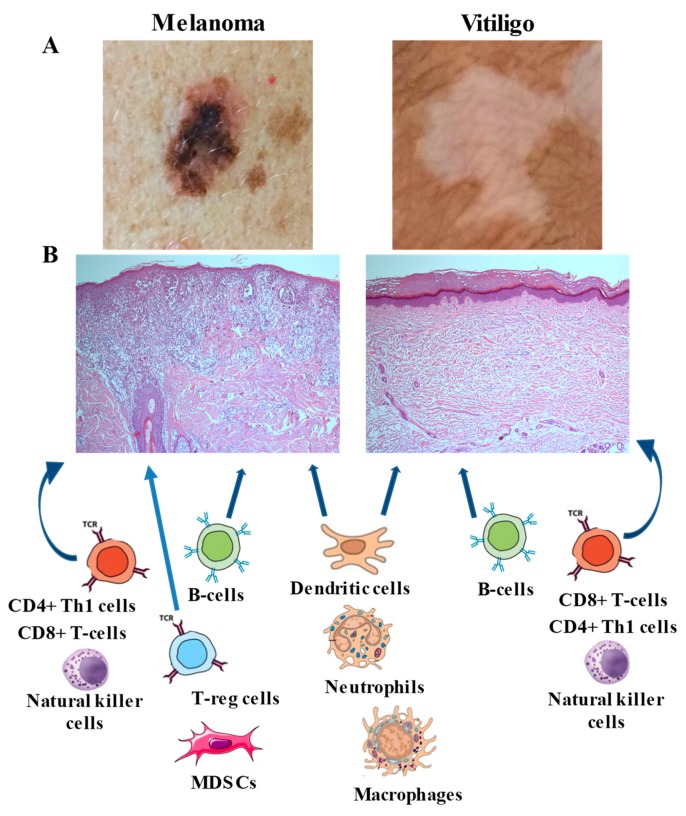
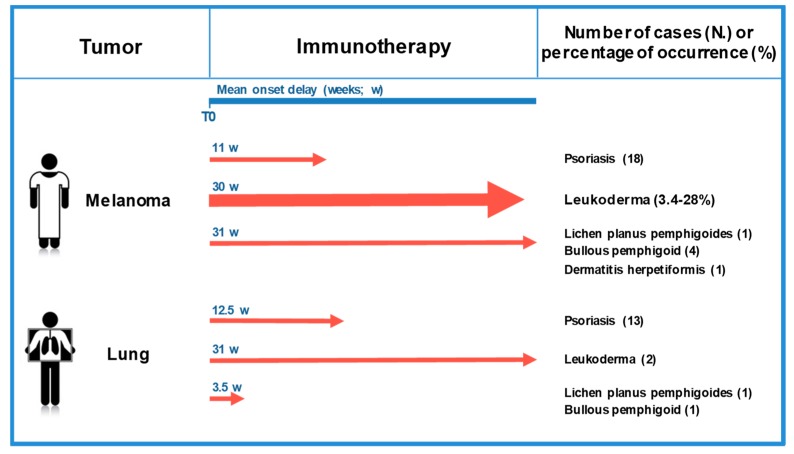
Cutaneous melanoma represents the most aggressive form of skin cancer, whereas vitiligo is an autoimmune disorder that leads to progressive destruction of skin melanocytes. However, vitiligo has been associated with cutaneous melanoma since the 1970s. Most of the antigens recognized by the immune system are expressed by both melanoma cells and normal melanocytes, explaining why the autoimmune response against melanocytes that led to vitiligo could be also present in melanoma patients. Leukoderma has been also observed as a side effect of melanoma immunotherapy and has always been associated with a favorable prognosis. In this review, we discuss several characteristics of the immune system responses shared by melanoma and vitiligo patients, as well as the significance of occurrence of leukoderma during immunotherapy, with special attention to check-point inhibitors.
皮肤黑素瘤是最具侵袭性的皮肤癌,而白癜风是一种自身免疫性疾病,导致皮肤黑素细胞进行性破坏。然而,自 20 世纪 70 年代以来,白癜风就与皮肤黑素瘤有关。大多数免疫系统识别的抗原既由黑素瘤细胞表达,也由正常黑素细胞表达,这解释了为什么导致白癜风的针对黑素细胞的自身免疫反应也可能存在于黑素瘤患者中。白癜风也已被观察到是黑色素瘤免疫治疗的副作用,并且一直与良好的预后相关。在这篇综述中,我们讨论了黑素瘤和白癜风患者的免疫系统反应的几个特征,以及免疫治疗期间发生白癜风的意义,特别关注检查点抑制剂。