Neuhofer Daniela, Spencer Sade M, Chioma Vivian C, Beloate Lauren N, Schwartz Danielle, Kalivas Peter W
Department of Neurosciences, Medical University of South Carolina, Charleston, South Carolina.
Department of Pharmacology, Medical Discovery Team on Addiction, University of Minnesota, Minneapolis, Minnesota.
Addict Biol. 2020 Nov;25(6):e12843. doi: 10.1111/adb.12843. Epub 2019 Nov 16.
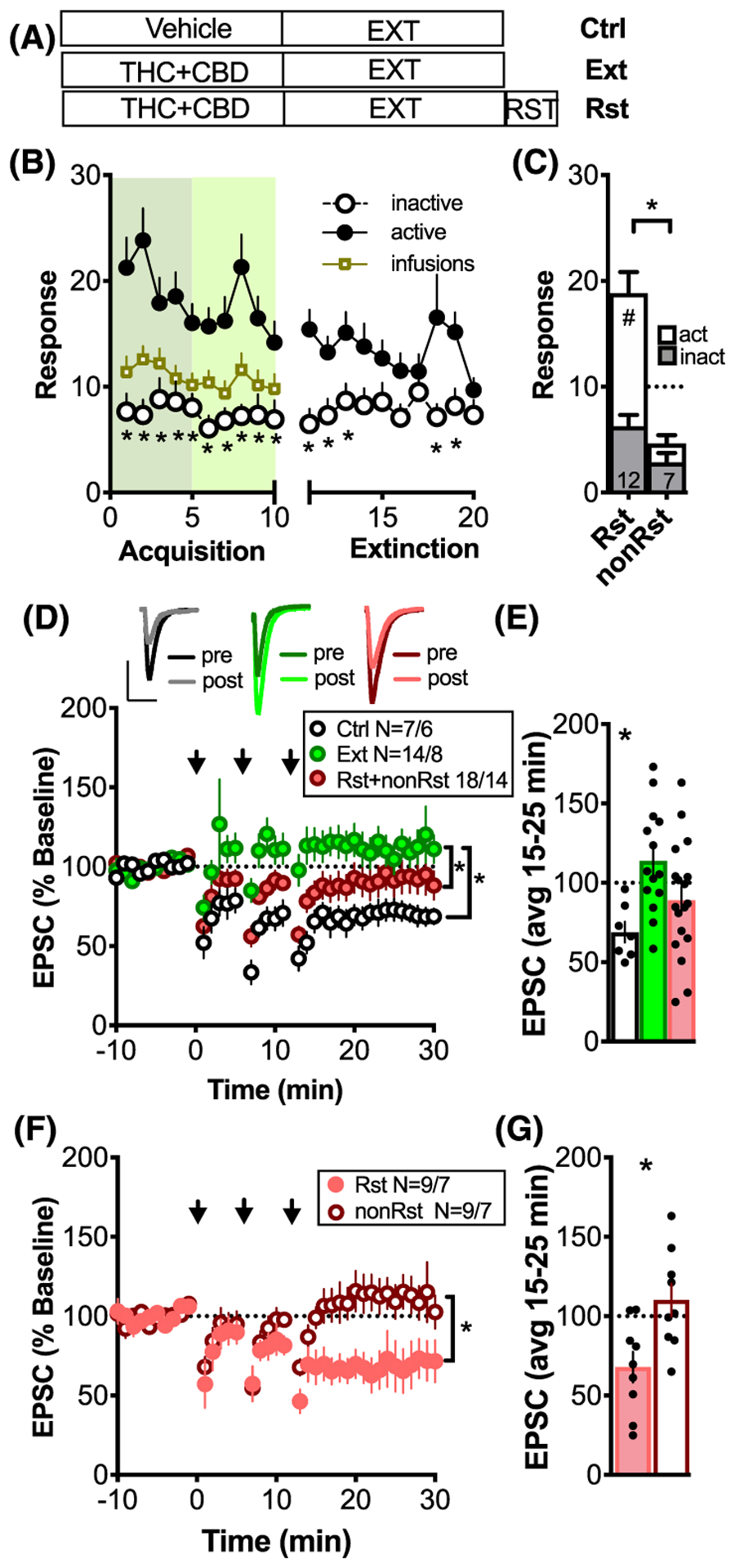
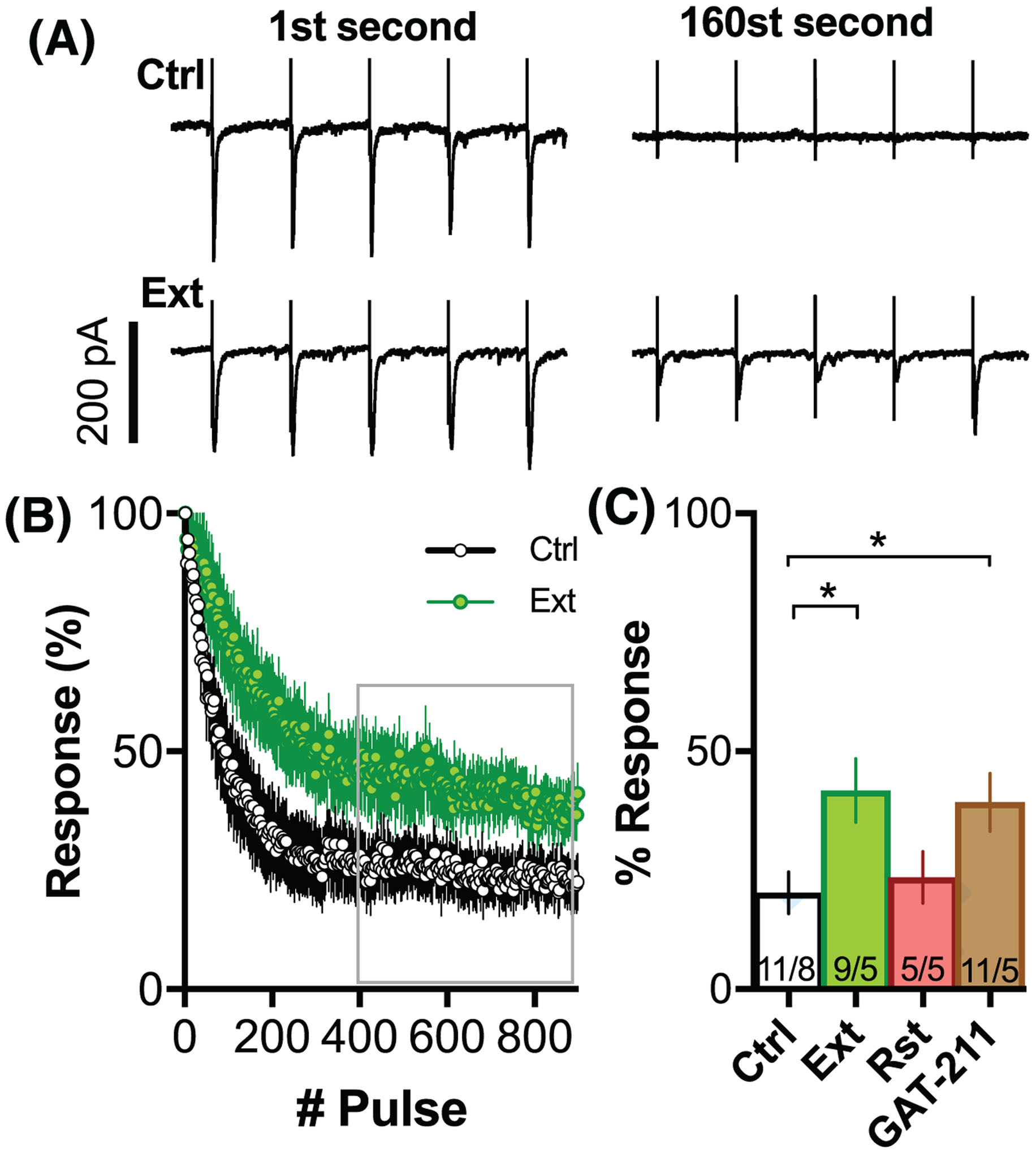
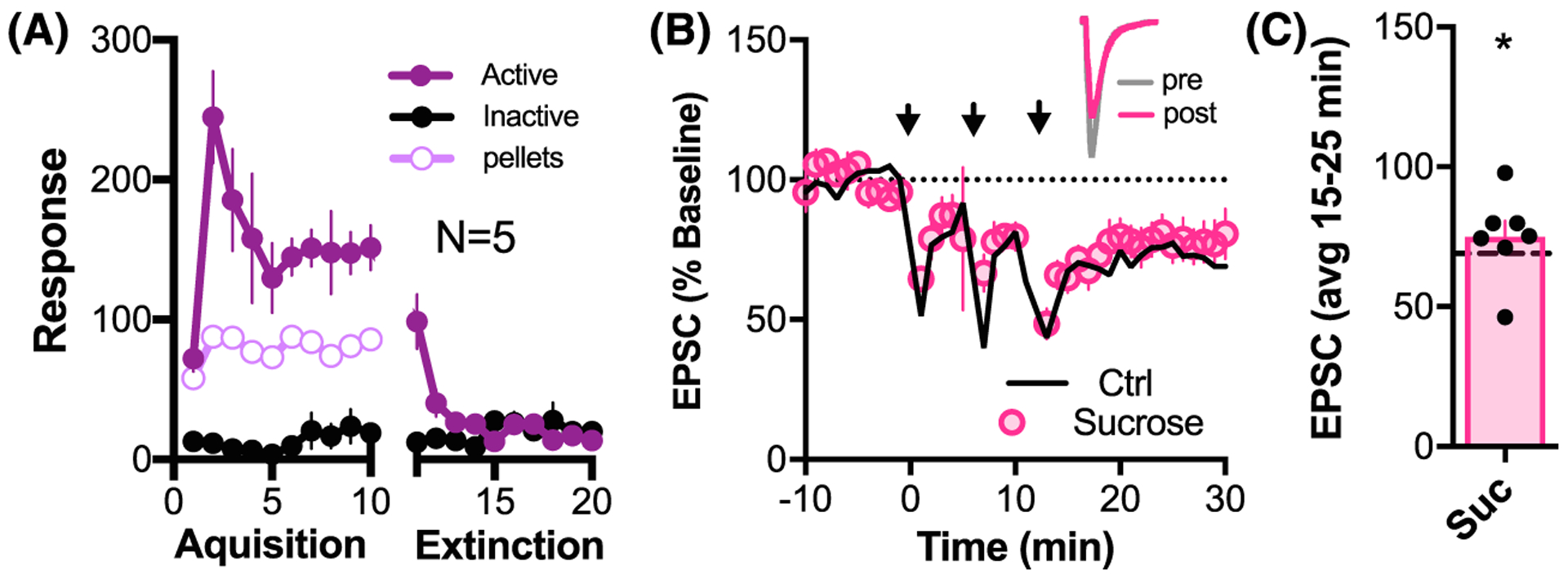
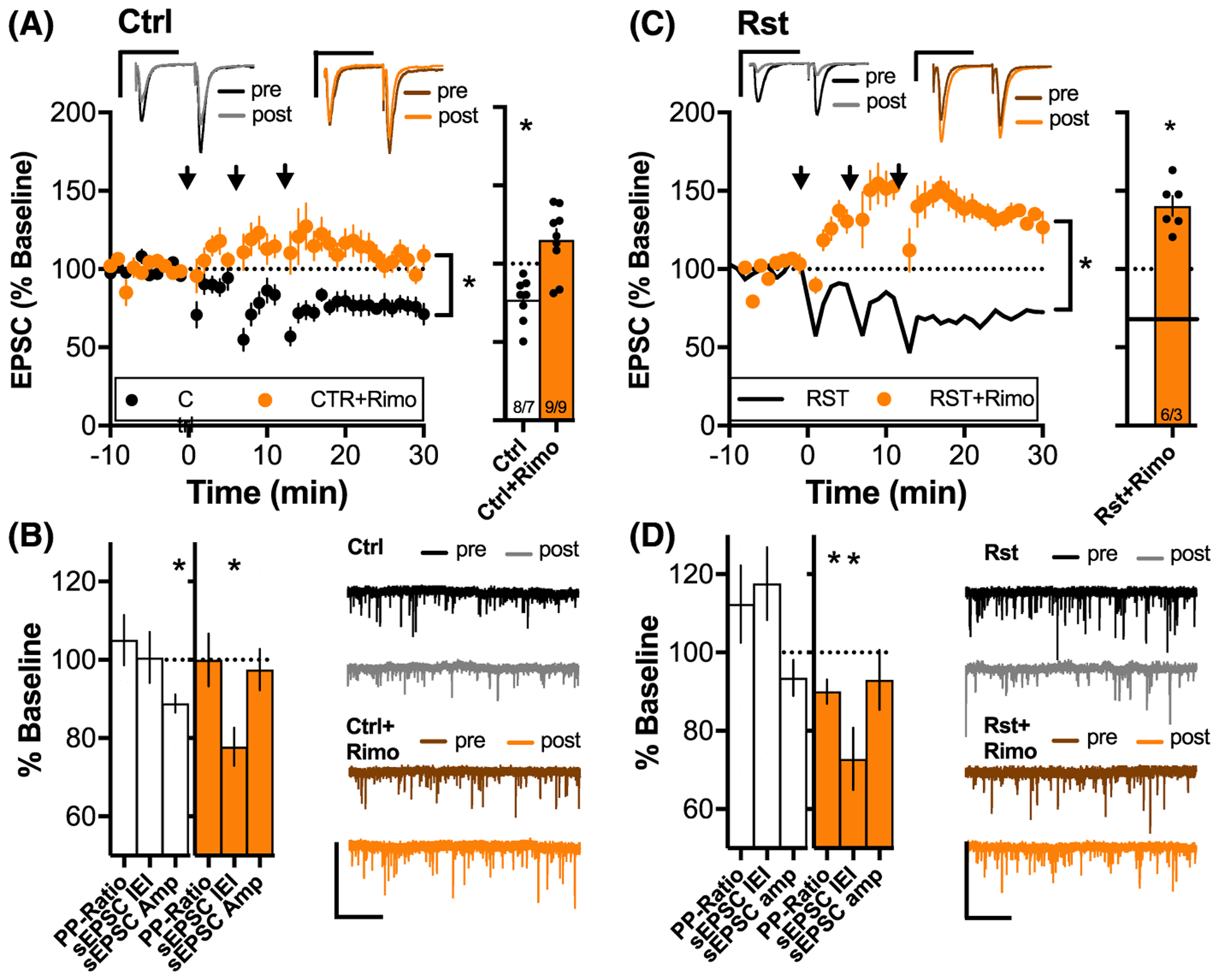
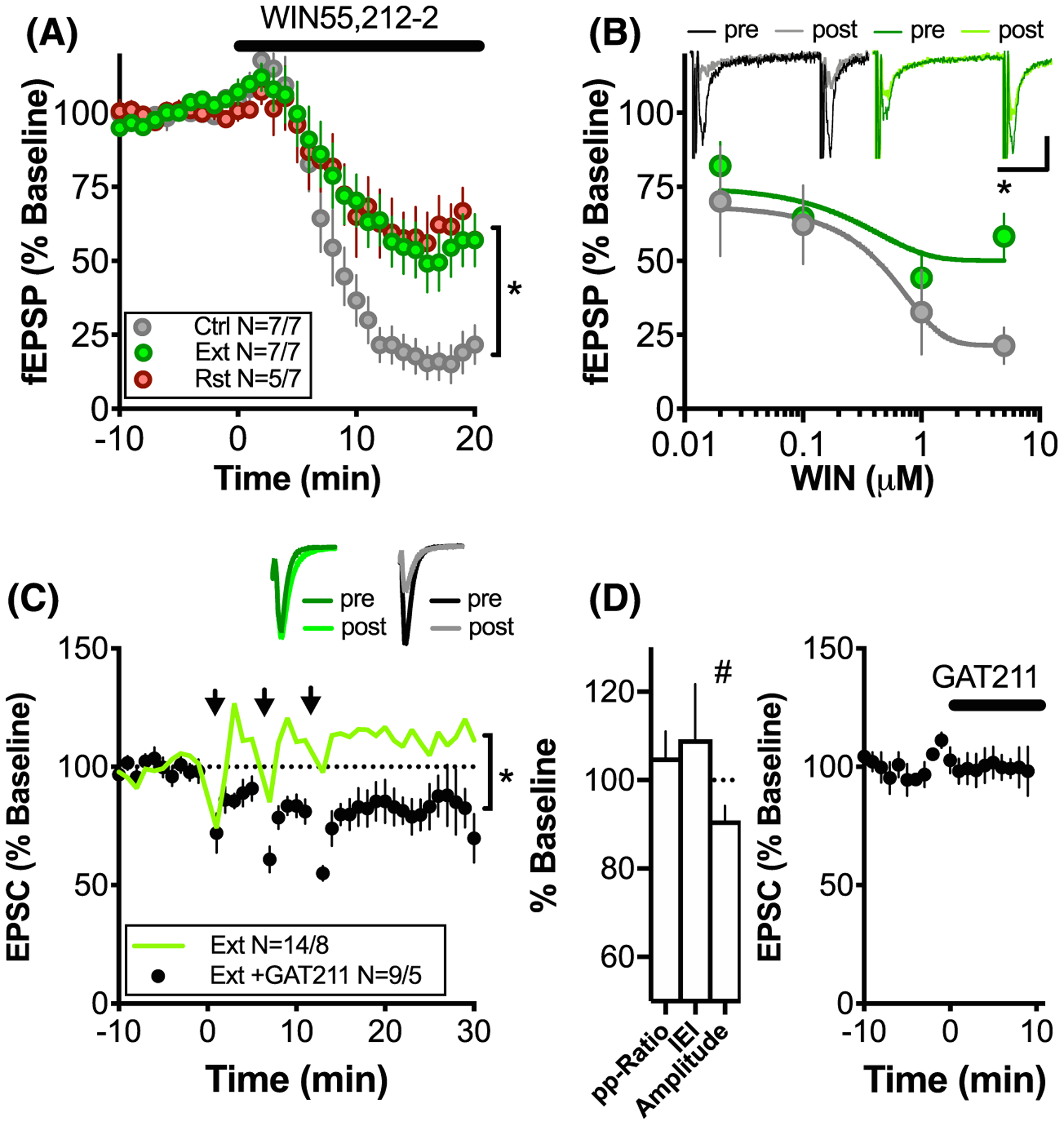
Glutamatergic plasticity in the nucleus accumbens core (NAcore) is a key neuronal process in appetitive learning and contributes to pathologies such as drug addiction. Understanding how this plasticity factors into cannabis addiction and relapse has been hampered by the lack of a rodent model of cannabis self-administration. We used intravenous self-administration of two constituents of cannabis, Δ -tetrahydrocannabinol (THC) and cannabidiol (CBD) to examine how contingent cannabis use and cue-induced cannabinoid-seeking alters glutamatergic neurotransmission and synaptic plasticity in NAcore. NMDA receptor (NMDAR)-dependent long-term depression (LTD) in the NAcore was lost after cannabinoid, but not sucrose self-administration. Surprisingly, when rats underwent cue-induced cannabinoid seeking, LTD was restored. Loss of LTD was accompanied by desensitization of cannabinoid receptor 1 (CB1R). CB1R are positioned to regulate synaptic plasticity by being expressed on glutamatergic terminals and negatively regulating presynaptic excitability and glutamate release. Supporting this possibility, LTD was restored by promoting CB1R signaling with the CB1 positive allosteric modulator GAT211. These data implicate NAcore CB1R as critical regulators of metaplasticity induced by cannabis self-administration and the cues predicting cannabis availability.
伏隔核核心区(NAcore)的谷氨酸能可塑性是食欲学习中的关键神经元过程,并且与药物成瘾等病理情况有关。由于缺乏大麻自我给药的啮齿动物模型,了解这种可塑性如何影响大麻成瘾和复发一直受到阻碍。我们通过静脉注射大麻的两种成分,Δ-四氢大麻酚(THC)和大麻二酚(CBD)来研究偶然使用大麻和线索诱导的大麻寻求行为如何改变NAcore中的谷氨酸能神经传递和突触可塑性。在大麻素自我给药后,NAcore中依赖N-甲基-D-天冬氨酸受体(NMDAR)的长时程抑制(LTD)消失,但蔗糖自我给药后并未消失。令人惊讶的是,当大鼠经历线索诱导的大麻寻求行为时,LTD恢复。LTD的丧失伴随着大麻素受体1(CB1R)的脱敏。CB1R通过在谷氨酸能终末表达并负向调节突触前兴奋性和谷氨酸释放来调节突触可塑性。支持这种可能性的是,通过用CB1正向变构调节剂GAT211促进CB1R信号传导,LTD得以恢复。这些数据表明,NAcore中的CB1R是大麻自我给药和预测大麻可得性的线索所诱导的元可塑性的关键调节因子。