Signalling Laboratory, The Babraham Institute, Babraham Research Campus, Cambridge CB22 3AT, UK.
Imaging Facility, The Babraham Institute, Babraham Research Campus, Cambridge CB22 3AT, UK.
Mol Cell. 2020 Jan 16;77(2):228-240.e7. doi: 10.1016/j.molcel.2019.10.016. Epub 2019 Nov 13.
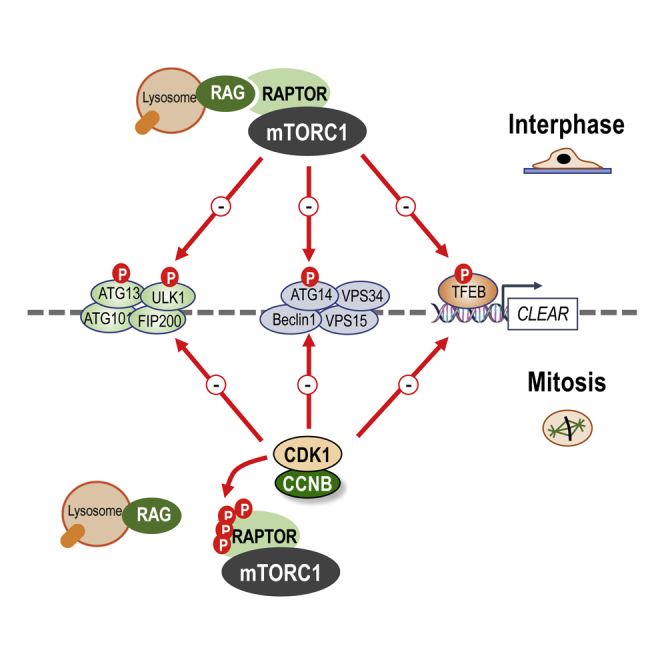
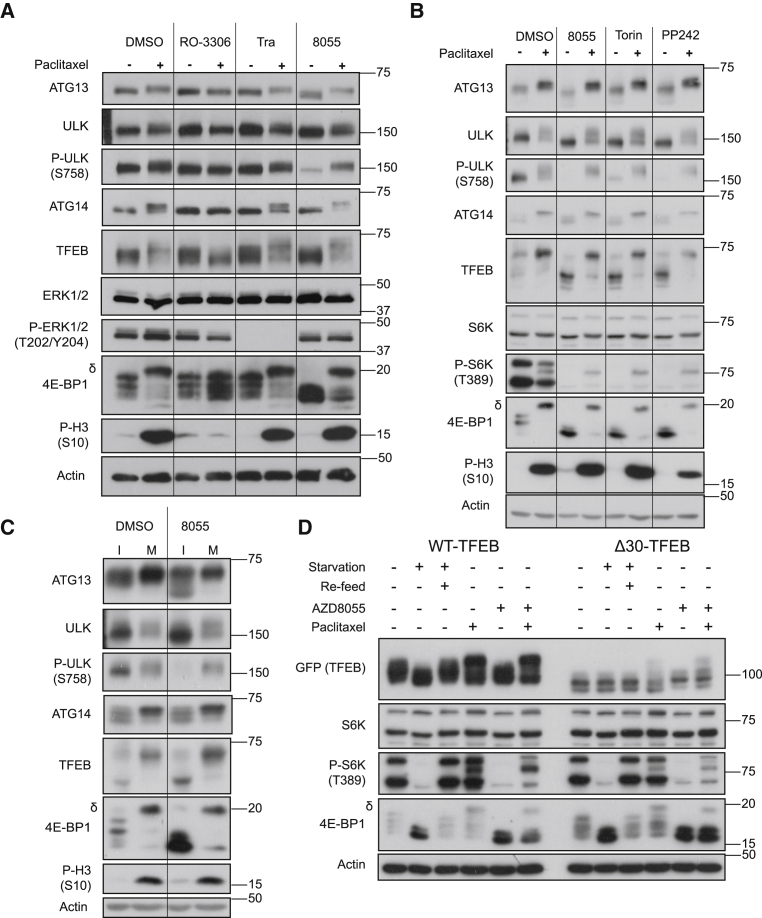
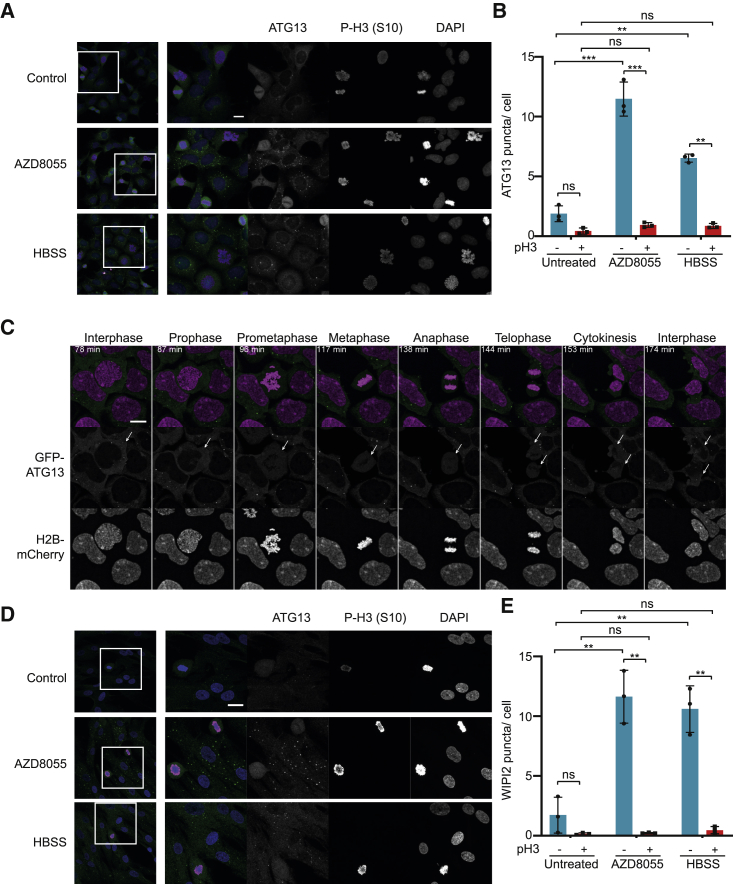
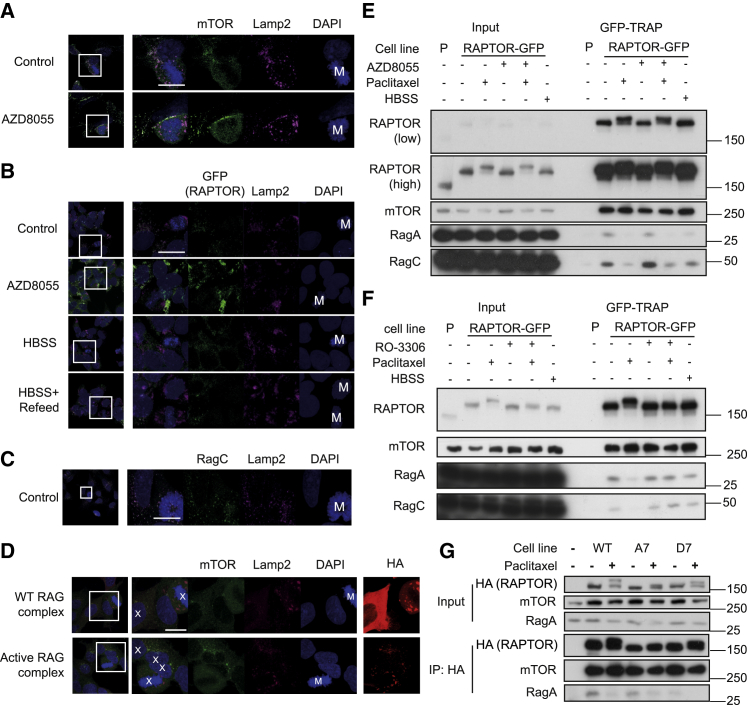
Since nuclear envelope breakdown occurs during mitosis in metazoan cells, it has been proposed that macroautophagy must be inhibited to maintain genome integrity. However, repression of macroautophagy during mitosis remains controversial and mechanistic detail limited to the suggestion that CDK1 phosphorylates VPS34. Here, we show that initiation of macroautophagy, measured by the translocation of the ULK complex to autophagic puncta, is repressed during mitosis, even when mTORC1 is inhibited. Indeed, mTORC1 is inactive during mitosis, reflecting its failure to localize to lysosomes due to CDK1-dependent RAPTOR phosphorylation. While mTORC1 normally represses autophagy via phosphorylation of ULK1, ATG13, ATG14, and TFEB, we show that the mitotic phosphorylation of these autophagy regulators, including at known repressive sites, is dependent on CDK1 but independent of mTOR. Thus, CDK1 substitutes for inhibited mTORC1 as the master regulator of macroautophagy during mitosis, uncoupling autophagy regulation from nutrient status to ensure repression of macroautophagy during mitosis.
由于核膜破裂发生在真核细胞的有丝分裂过程中,因此有人提出必须抑制巨自噬以维持基因组完整性。然而,有丝分裂过程中巨自噬的抑制仍然存在争议,其机制细节仅限于 CDK1 磷酸化 VPS34 的建议。在这里,我们表明,通过 ULK 复合物向自噬斑点的易位来测量的巨自噬的起始在有丝分裂期间受到抑制,即使 mTORC1 被抑制。事实上,mTORC1 在有丝分裂期间失活,反映了由于 CDK1 依赖性 RAPTOR 磷酸化,它无法定位到溶酶体。虽然 mTORC1 通常通过磷酸化 ULK1、ATG13、ATG14 和 TFEB 来抑制自噬,但我们表明这些自噬调节剂的有丝分裂磷酸化,包括在已知的抑制性位点,依赖于 CDK1,但不依赖于 mTOR。因此,CDK1 取代受抑制的 mTORC1 成为有丝分裂过程中巨自噬的主要调节剂,将自噬调节与营养状态解耦,以确保有丝分裂过程中巨自噬的抑制。