Barbara Davis Center for Diabetes, School of Medicine, University of Colorado, Aurora, CO
Computational and Statistical Analytics Division, Pacific Northwest National Laboratory, Richland, WA.
Diabetes. 2020 Feb;69(2):238-248. doi: 10.2337/db18-1263. Epub 2019 Nov 18.
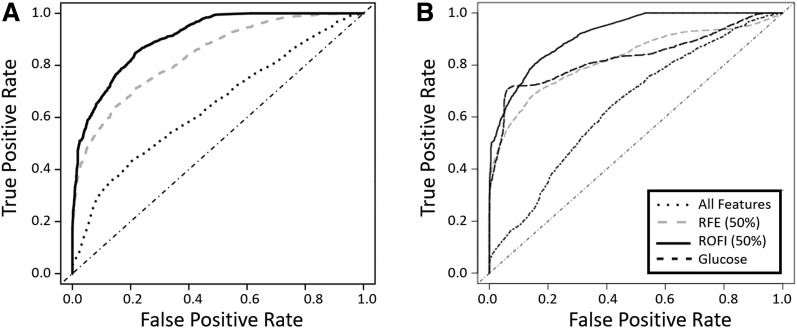
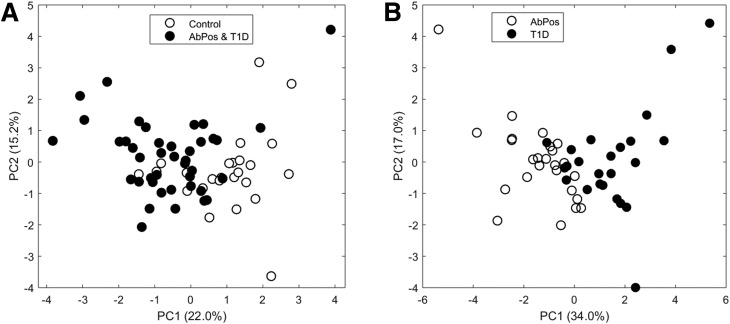
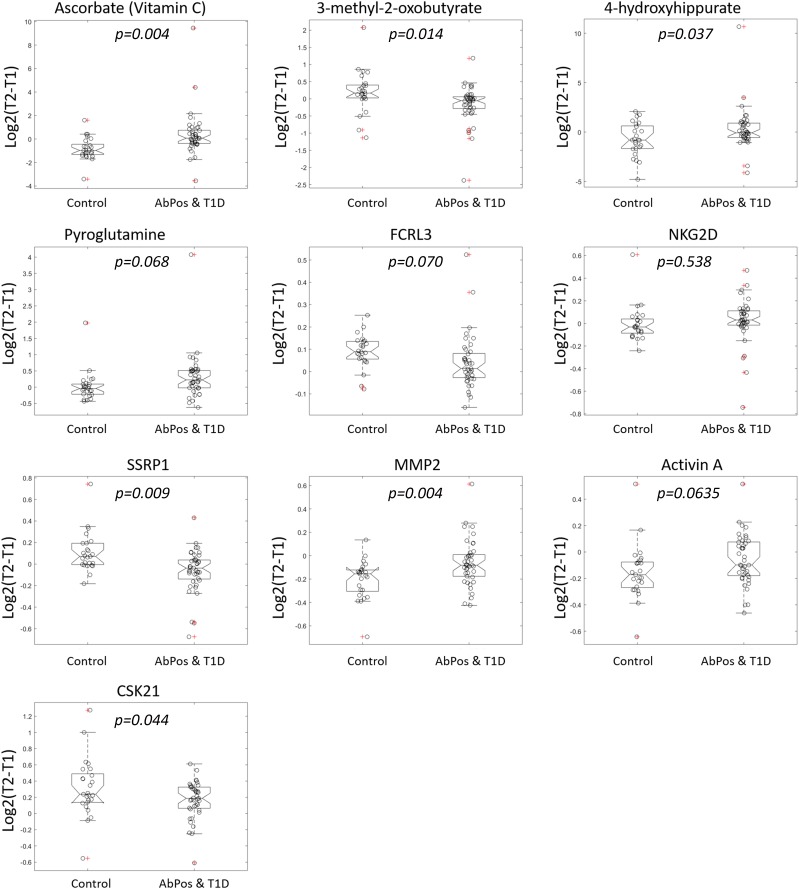
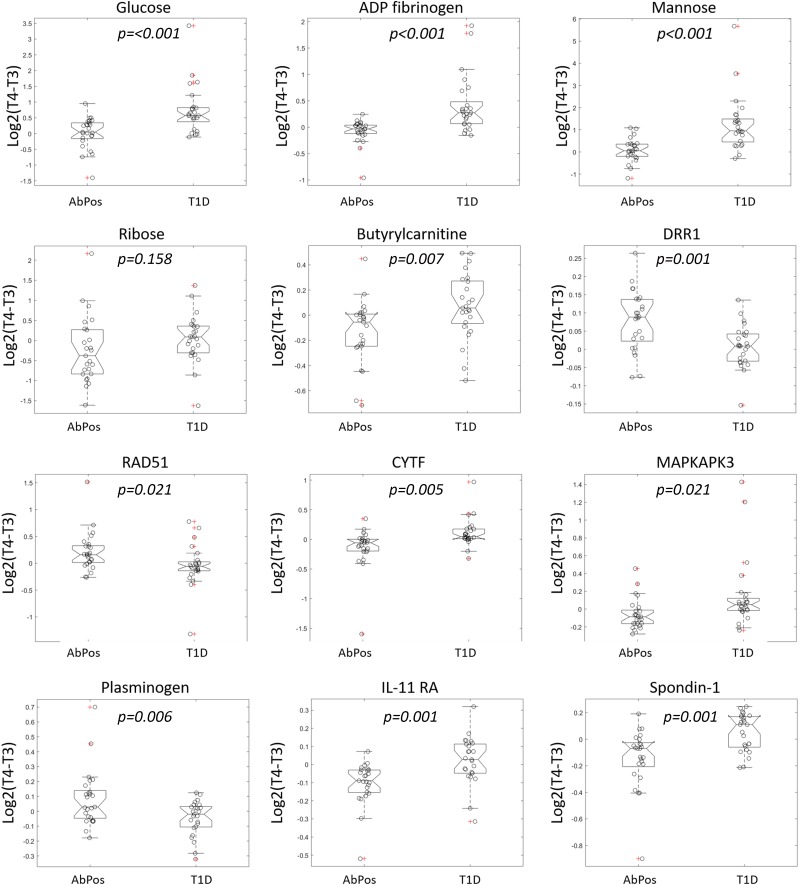
This study aims to model genetic, immunologic, metabolomics, and proteomic biomarkers for development of islet autoimmunity (IA) and progression to type 1 diabetes in a prospective high-risk cohort. We studied 67 children: 42 who developed IA (20 of 42 progressed to diabetes) and 25 control subjects matched for sex and age. Biomarkers were assessed at four time points: earliest available sample, just prior to IA, just after IA, and just prior to diabetes onset. Predictors of IA and progression to diabetes were identified across disparate sources using an integrative machine learning algorithm and optimization-based feature selection. Our integrative approach was predictive of IA (area under the receiver operating characteristic curve [AUC] 0.91) and progression to diabetes (AUC 0.92) based on standard cross-validation (CV). Among the strongest predictors of IA were change in serum ascorbate, 3-methyl-oxobutyrate, and the (rs2476601) polymorphism. Serum glucose, ADP fibrinogen, and mannose were among the strongest predictors of progression to diabetes. This proof-of-principle analysis is the first study to integrate large, diverse biomarker data sets into a limited number of features, highlighting differences in pathways leading to IA from those predicting progression to diabetes. Integrated models, if validated in independent populations, could provide novel clues concerning the pathways leading to IA and type 1 diabetes.
本研究旨在为胰岛自身免疫(IA)的发展和高危队列中向 1 型糖尿病的进展建立遗传、免疫、代谢组学和蛋白质组学生物标志物模型。我们研究了 67 名儿童:42 名发生了 IA(其中 20 名进展为糖尿病)和 25 名性别和年龄匹配的对照受试者。在四个时间点评估了生物标志物:最早的可用样本、IA 之前、IA 之后和糖尿病发病前。使用集成机器学习算法和基于优化的特征选择,在不同来源中识别了 IA 和进展为糖尿病的预测因子。我们的综合方法基于标准交叉验证(CV)预测 IA(接收者操作特征曲线下的面积 [AUC] 0.91)和向糖尿病的进展(AUC 0.92)。IA 最强的预测因子包括血清抗坏血酸、3-甲基-氧丁酸盐和(rs2476601)多态性的变化。血清葡萄糖、ADP 纤维蛋白原和甘露糖是预测糖尿病进展的最强预测因子之一。这项原理验证分析是首次将大型、多样化的生物标志物数据集整合到少数特征中的研究,突出了导致 IA 的途径与预测向糖尿病进展的途径之间的差异。如果在独立人群中得到验证,综合模型可能会为导致 IA 和 1 型糖尿病的途径提供新的线索。