Institute for Systems Genetics and Department of Biochemistry and Molecular Pharmacology, NYU Langone Health, New York, NY, USA.
Memorial Sloan Kettering Cancer Center, New York, NY, USA.
Nucleic Acids Res. 2020 Jan 10;48(1):486-499. doi: 10.1093/nar/gkz1098.
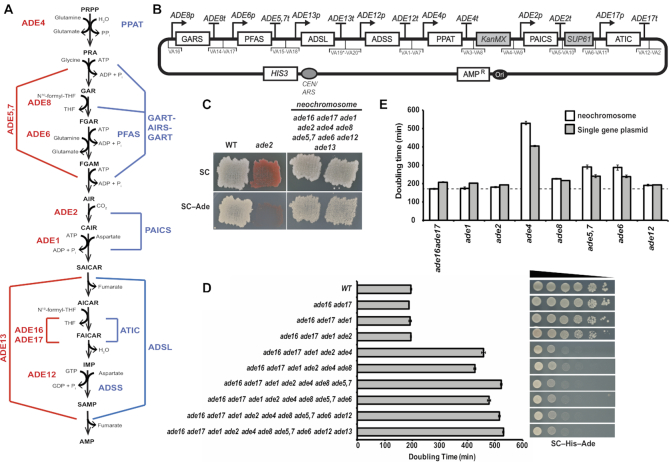
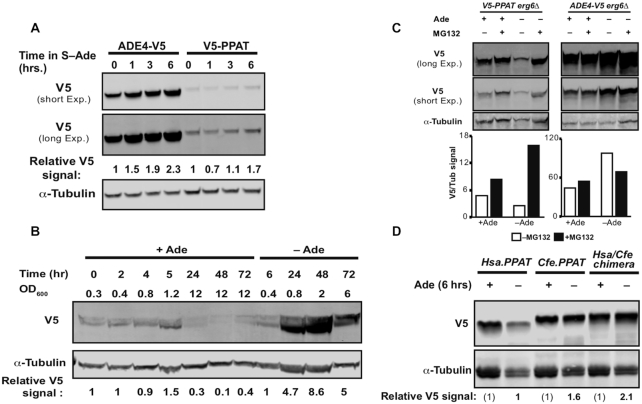
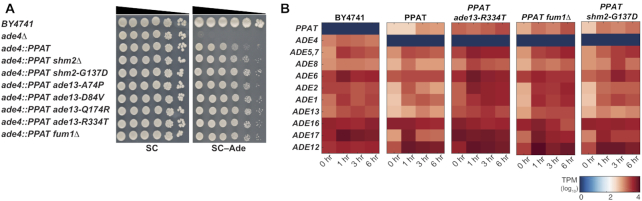
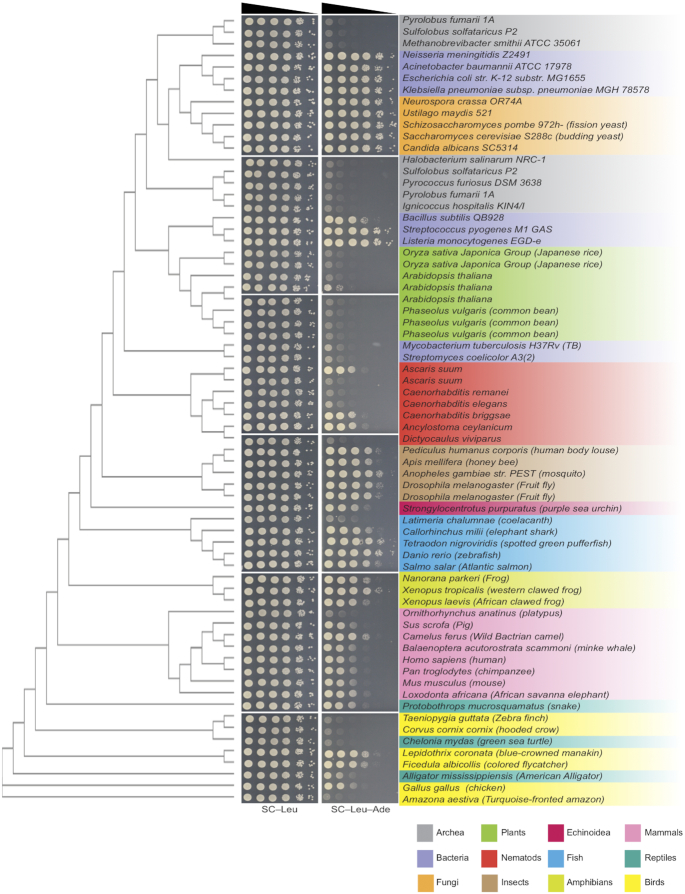
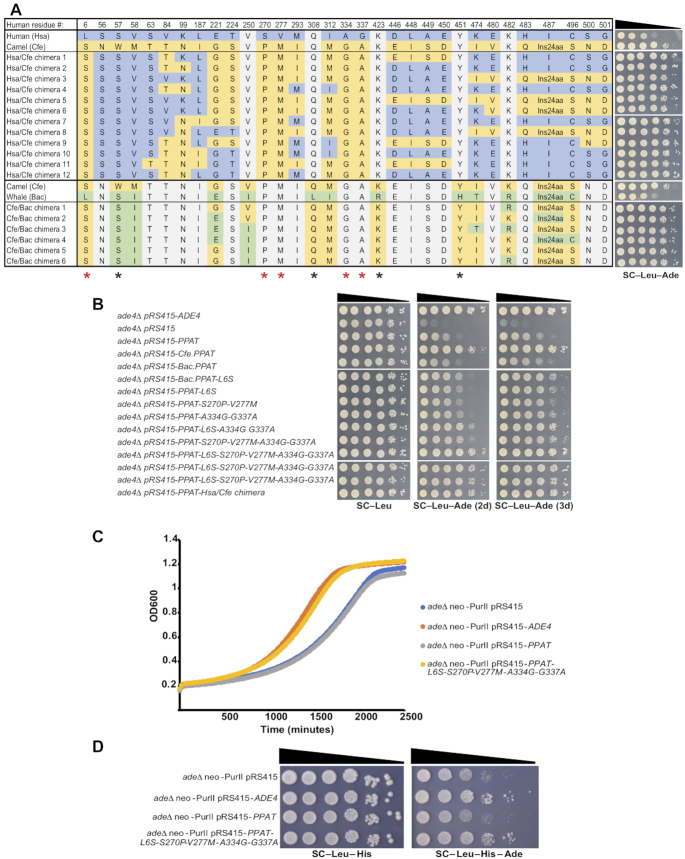
Cross-species pathway transplantation enables insight into a biological process not possible through traditional approaches. We replaced the enzymes catalyzing the entire Saccharomyces cerevisiae adenine de novo biosynthesis pathway with the human pathway. While the 'humanized' yeast grew in the absence of adenine, it did so poorly. Dissection of the phenotype revealed that PPAT, the human ortholog of ADE4, showed only partial function whereas all other genes complemented fully. Suppressor analysis revealed other pathways that play a role in adenine de-novo pathway regulation. Phylogenetic analysis pointed to adaptations of enzyme regulation to endogenous metabolite level 'setpoints' in diverse organisms. Using DNA shuffling, we isolated specific amino acids combinations that stabilize the human protein in yeast. Thus, using adenine de novo biosynthesis as a proof of concept, we suggest that the engineering methods used in this study as well as the debugging strategies can be utilized to transplant metabolic pathway from any origin into yeast.
跨物种途径移植使我们能够深入了解通过传统方法无法实现的生物学过程。我们用人源途径替换了整个酿酒酵母腺嘌呤从头生物合成途径中的酶。虽然“人源化”酵母在没有腺嘌呤的情况下生长,但生长情况很差。表型分析表明,人源 ADE4 同源物 PPAT 仅表现出部分功能,而其他所有基因则完全互补。抑制因子分析揭示了其他在腺嘌呤从头途径调节中起作用的途径。系统发育分析指出,酶调节适应了不同生物体中内源性代谢物水平的“设定点”。使用 DNA 改组,我们分离出了使人类蛋白在酵母中稳定的特定氨基酸组合。因此,我们用人从头合成腺嘌呤作为概念验证,建议在这项研究中使用的工程方法以及调试策略可用于将代谢途径从任何来源移植到酵母中。