A Martin, College of Medicine and Public Health, Flinders University, Adelaide, Australia.
E Sun, College of Medicine and Public Health, Flinders University, Adelaide, Australia.
J Endocrinol. 2019 Nov 29;244(1):R1-R15. doi: 10.1530/JOE-19-0399.
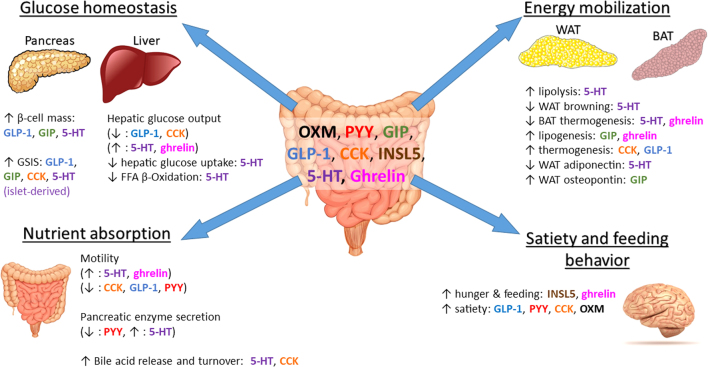
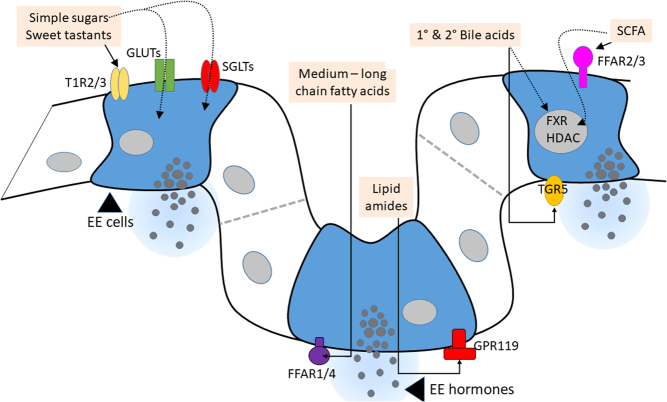
The homoeostatic regulation of metabolism is highly complex and involves multiple inputs from both the nervous and endocrine systems. The gut is the largest endocrine organ in our body and synthesises and secretes over 20 different hormones from enteroendocrine cells that are dispersed throughout the gut epithelium. These hormones include GLP-1, PYY, GIP, serotonin, and CCK, each of whom play pivotal roles in maintaining energy balance and glucose homeostasis. Some are now the basis of several clinically used glucose-lowering and weight loss therapies. The environment in which these enteroendocrine cells exist is also complex, as they are exposed to numerous physiological inputs including ingested nutrients, circulating factors and metabolites produced from neighbouring gut microbiome. In this review, we examine the diverse means by which gut-derived hormones carry out their metabolic functions through their interactions with different metabolically important organs including the liver, pancreas, adipose tissue and brain. Furthermore, we discuss how nutrients and microbial metabolites affect gut hormone secretion and the mechanisms underlying these interactions.
代谢的体内平衡调节非常复杂,涉及来自神经系统和内分泌系统的多种输入。肠道是我们体内最大的内分泌器官,从分布在肠上皮中的肠内分泌细胞中合成和分泌 20 多种不同的激素。这些激素包括 GLP-1、PYY、GIP、血清素和 CCK,它们在维持能量平衡和葡萄糖稳态方面都起着关键作用。其中一些已成为几种临床应用的降血糖和减肥疗法的基础。这些肠内分泌细胞所处的环境也很复杂,因为它们会受到多种生理输入的影响,包括摄入的营养物质、循环因子和来自邻近肠道微生物组的代谢产物。在这篇综述中,我们研究了肠道来源的激素通过与包括肝脏、胰腺、脂肪组织和大脑在内的不同代谢重要器官相互作用来执行其代谢功能的多种方式。此外,我们还讨论了营养素和微生物代谢物如何影响肠激素的分泌以及这些相互作用的机制。