Respiratory Division, Department of Internal Medicine, Tokai University School of Medicine, Isehara, Kanagawa, 259-1193, Japan.
Department of Radiation Oncology, Tokai University School of Medicine, Isehara, Kanagawa, 259-1193, Japan.
Respir Res. 2019 Nov 21;20(1):263. doi: 10.1186/s12931-019-1235-3.
Although development of immune checkpoint inhibitors and various molecular target agents has extended overall survival time (OS) in advanced non-small cell lung cancer (NSCLC), a complete cure remains rare. We aimed to identify features and treatment modalities of complete remission (CR) cases in stages III and IV NSCLC by analyzing long-term survivors whose OS exceeded 3 years.
From our hospital database, 1,699 patients, registered as lung cancer between 1 Mar 2004 and 30 Apr 2011, were retrospectively examined. Stage III or IV histologically or cytologically confirmed NSCLC patients with chemotherapy initiated during this period were enrolled. A Cox proportion hazards regression model was used. Data collection was closed on 13 Feb 2017.
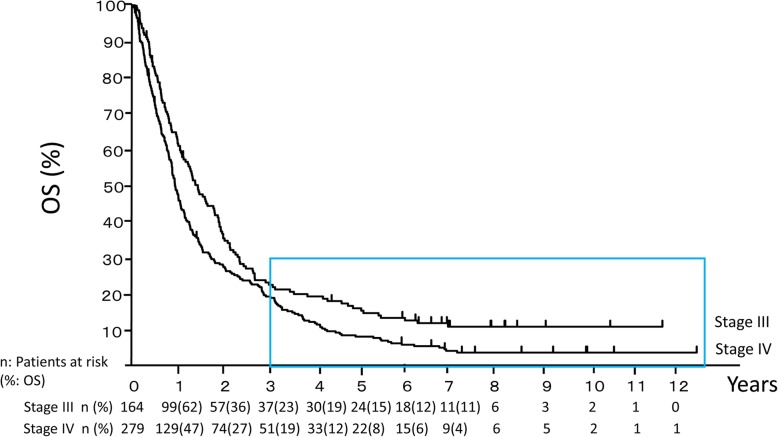
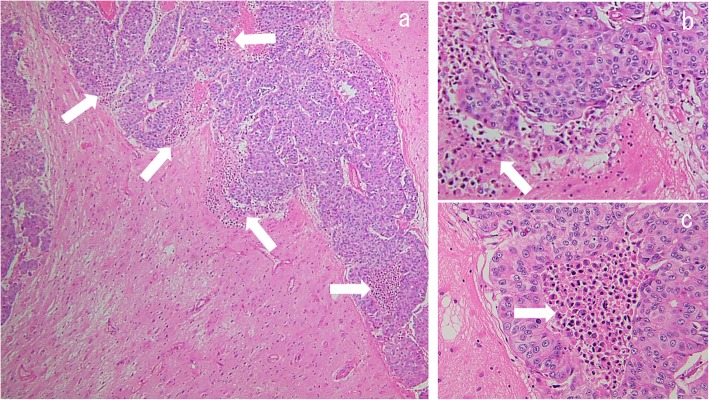
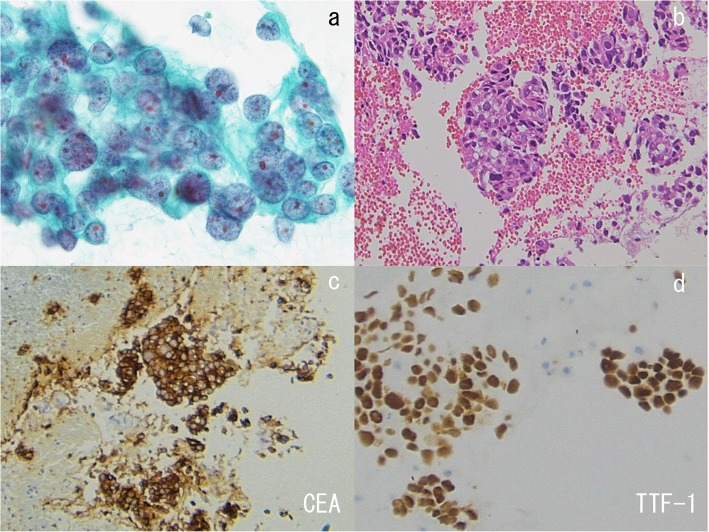
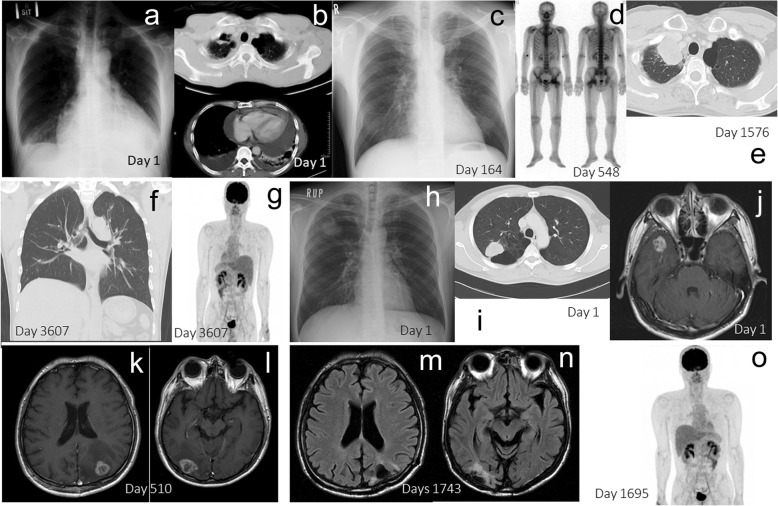
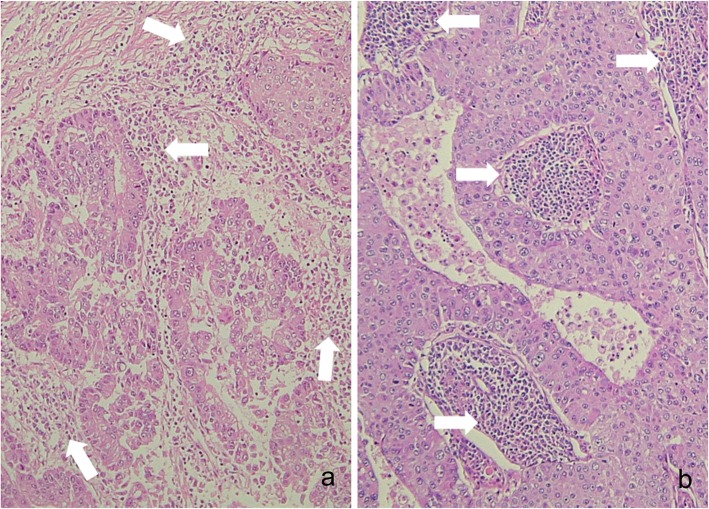
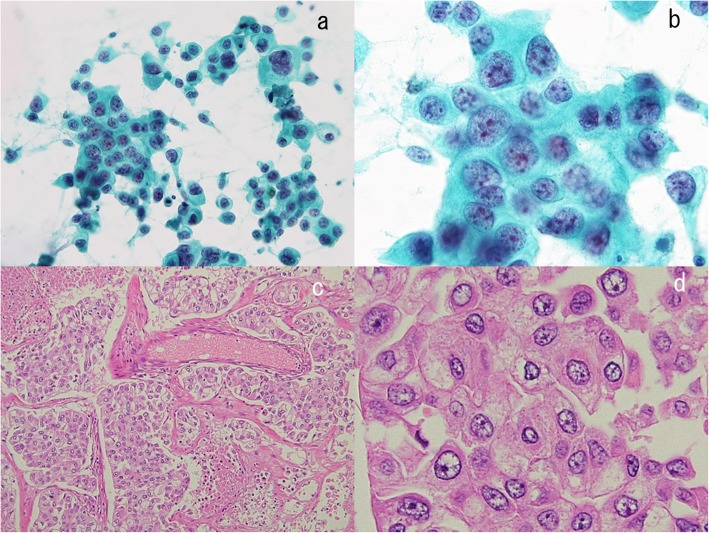
There were 164 stage III and 279 stage IV patients, including 37 (22.6%) and 51 (18.3%) long-term survivors and 12 (7.3%) and 5 (1.8%) CR patients, respectively. The long-term survivors were divided into three groups: 3 ≤ OS < 5 years, 5 years ≤ OS with tumor, and 5 years ≤ OS without tumor (CR). The median OS of these groups were 1,405, 2,238, and 2,876 days in stage III and 1,368, 2,503, and 2,643 days in stage IV, respectively. The mean chemotherapy cycle numbers were 16, 20, and 10 in stage III and 24, 25, and 5 in stage IV, respectively. In the stage III CR group, all patients received chemoradiation, all oligometastases were controlled by radiation, and none had brain metastases. Compared with non-CR patients, the stage IV CR patients had smaller primary tumors and fewer metastases, which were independent prognostic factors for OS among long-term survivors. The 80% stage IV CR patients received radiation or surgery for controlling primary tumors, and the surgery rate for oligometastases was high. Pathological findings in the stage IV CR patients revealed that numerous inflammatory cells existed around and inside resected lung and brain tumors, indicating strong immune response.
Multiple line chemotherapies with primary and oligometastatic controls by surgery and/or radiation might achieve cure in certain advanced NSCLC. Cure strategies must be changed according to stage III or IV. This study was retrospectively registered on 16 Jun 2019 in UMIN Clinical Trials Registry (number UMIN000037078).
尽管免疫检查点抑制剂和各种分子靶向药物的发展延长了晚期非小细胞肺癌(NSCLC)患者的总生存时间(OS),但完全治愈仍然很少见。我们旨在通过分析 OS 超过 3 年的长期生存者,确定 III 期和 IV 期 NSCLC 完全缓解(CR)病例的特征和治疗方式。
我们从医院数据库中回顾性检查了 1699 名于 2004 年 3 月 1 日至 2011 年 4 月 30 日期间被登记为肺癌的患者。招募了在此期间开始化疗的 III 期或 IV 期组织学或细胞学证实的 NSCLC 患者。使用 Cox 比例风险回归模型。数据收集于 2017 年 2 月 13 日结束。
有 164 例 III 期和 279 例 IV 期患者,其中 37 例(22.6%)和 51 例(18.3%)为长期生存者,12 例(7.3%)和 5 例(1.8%)为 CR 患者。长期生存者分为三组:3 年<OS<5 年,5 年<OS 伴肿瘤,5 年<OS 无肿瘤(CR)。这些组的中位 OS 分别为 III 期 1405 天、2238 天和 2876 天,IV 期分别为 1368 天、2503 天和 2643 天。III 期 CR 组所有患者均接受放化疗,所有寡转移灶均通过放疗控制,无脑转移。与非 CR 患者相比,IV 期 CR 患者的原发肿瘤较小,转移灶较少,是长期生存者 OS 的独立预后因素。80%的 IV 期 CR 患者接受放疗或手术控制原发肿瘤,寡转移灶手术率较高。IV 期 CR 患者的病理发现切除的肺和脑肿瘤周围和内部存在大量炎性细胞,表明存在强烈的免疫反应。
针对特定的晚期 NSCLC,采用多线化疗并通过手术和/或放疗控制原发和寡转移灶,可能实现治愈。治愈策略必须根据 III 期或 IV 期进行改变。本研究于 2019 年 6 月 16 日在 UMIN 临床试验注册处(注册号 UMIN000037078)进行了回顾性注册。