Strang Laboratory of Apoptosis and Cancer Biology, The Rockefeller University, New York, NY 10065.
Laboratory of Developmental Neurobiology, The Rockefeller University, New York, NY 10065.
Proc Natl Acad Sci U S A. 2019 Dec 3;116(49):24639-24650. doi: 10.1073/pnas.1911921116. Epub 2019 Nov 21.
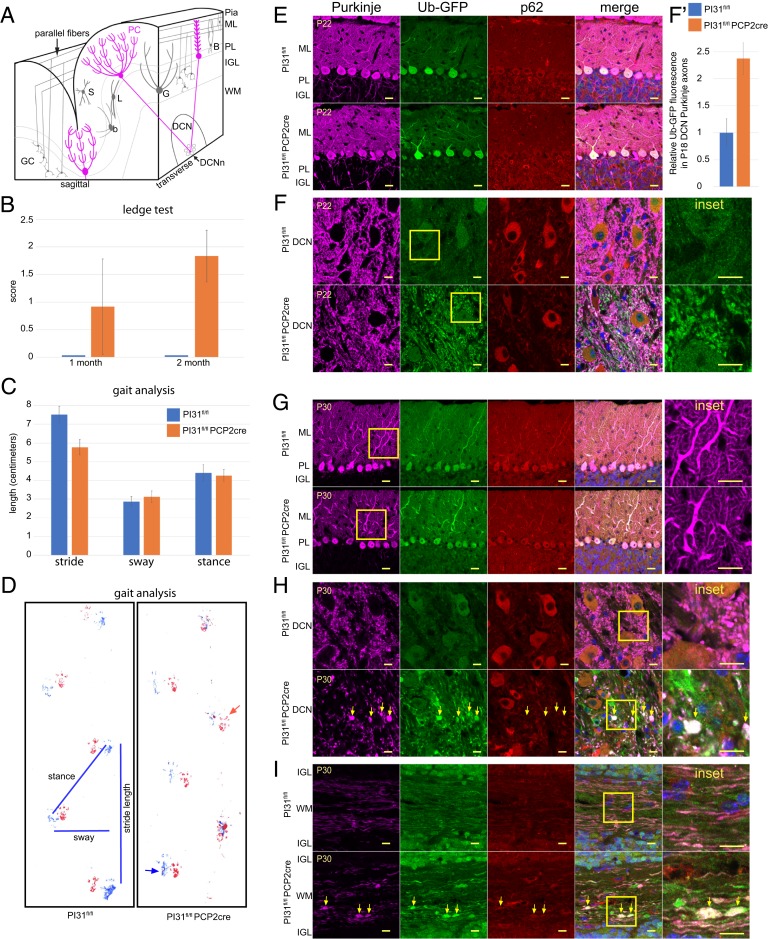
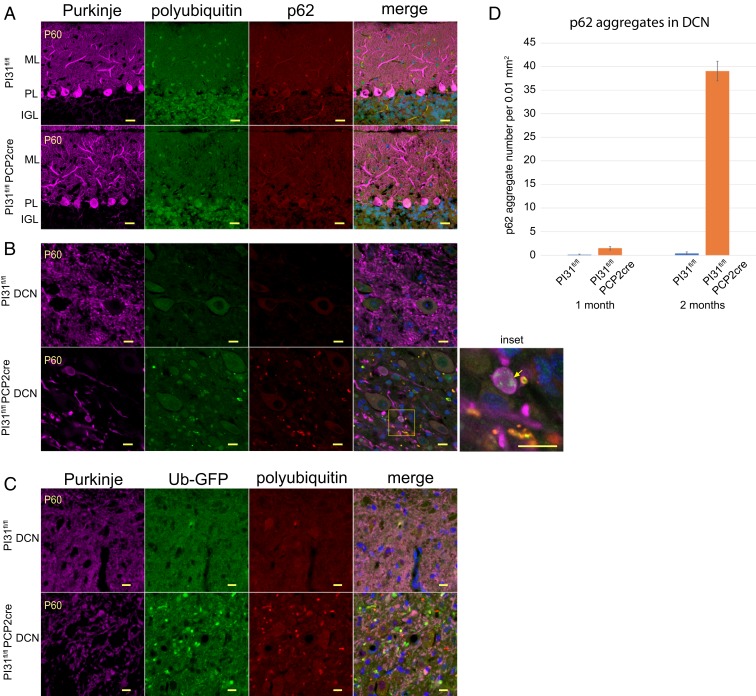
Proteasome-mediated degradation of intracellular proteins is essential for cell function and survival. The proteasome-binding protein PI31 (Proteasomal Inhibitor of 31kD) promotes 26S assembly and functions as an adapter for proteasome transport in axons. As localized protein synthesis and degradation is especially critical in neurons, we generated a conditional loss of PI31 in spinal motor neurons (MNs) and cerebellar Purkinje cells (PCs). A cKO of PI31 in these neurons caused axon degeneration, neuronal loss, and progressive spinal and cerebellar neurological dysfunction. For both MNs and PCs, markers of proteotoxic stress preceded axonal degeneration and motor dysfunction, indicating a critical role for PI31 in neuronal homeostasis. The time course of the loss of MN and PC function in developing mouse central nervous system suggests a key role for PI31 in human neurodegenerative diseases.
蛋白酶体介导的细胞内蛋白质降解对于细胞功能和存活至关重要。蛋白酶体结合蛋白 PI31(31kD 蛋白酶体抑制剂)促进 26S 组装,并作为轴突中蛋白酶体运输的接头发挥作用。由于局部蛋白质合成和降解在神经元中尤为关键,我们在脊髓运动神经元 (MNs) 和小脑浦肯野细胞 (PCs) 中生成了条件性 PI31 缺失。这些神经元中的 PI31 敲除导致轴突变性、神经元丢失以及进行性脊髓和小脑神经功能障碍。对于 MNs 和 PCs,蛋白毒性应激标志物先于轴突变性和运动功能障碍出现,表明 PI31 在神经元稳态中具有关键作用。在发育中的小鼠中枢神经系统中 MN 和 PC 功能丧失的时间过程表明 PI31 在人类神经退行性疾病中具有关键作用。