Department of Molecular Biosciences, John Ring LaMontagne Center for Infectious Disease, Institute for Cellular and Molecular Biology, University of Texas at Austin, Austin, TX 78712, USA.
Center for Advanced Biotechnology and Medicine, Department of Molecular Biology and Biochemistry, Rutgers, The State University of New Jersey, Piscataway, NJ 08854, USA.
Nucleic Acids Res. 2020 Jan 10;48(1):304-315. doi: 10.1093/nar/gkz1094.
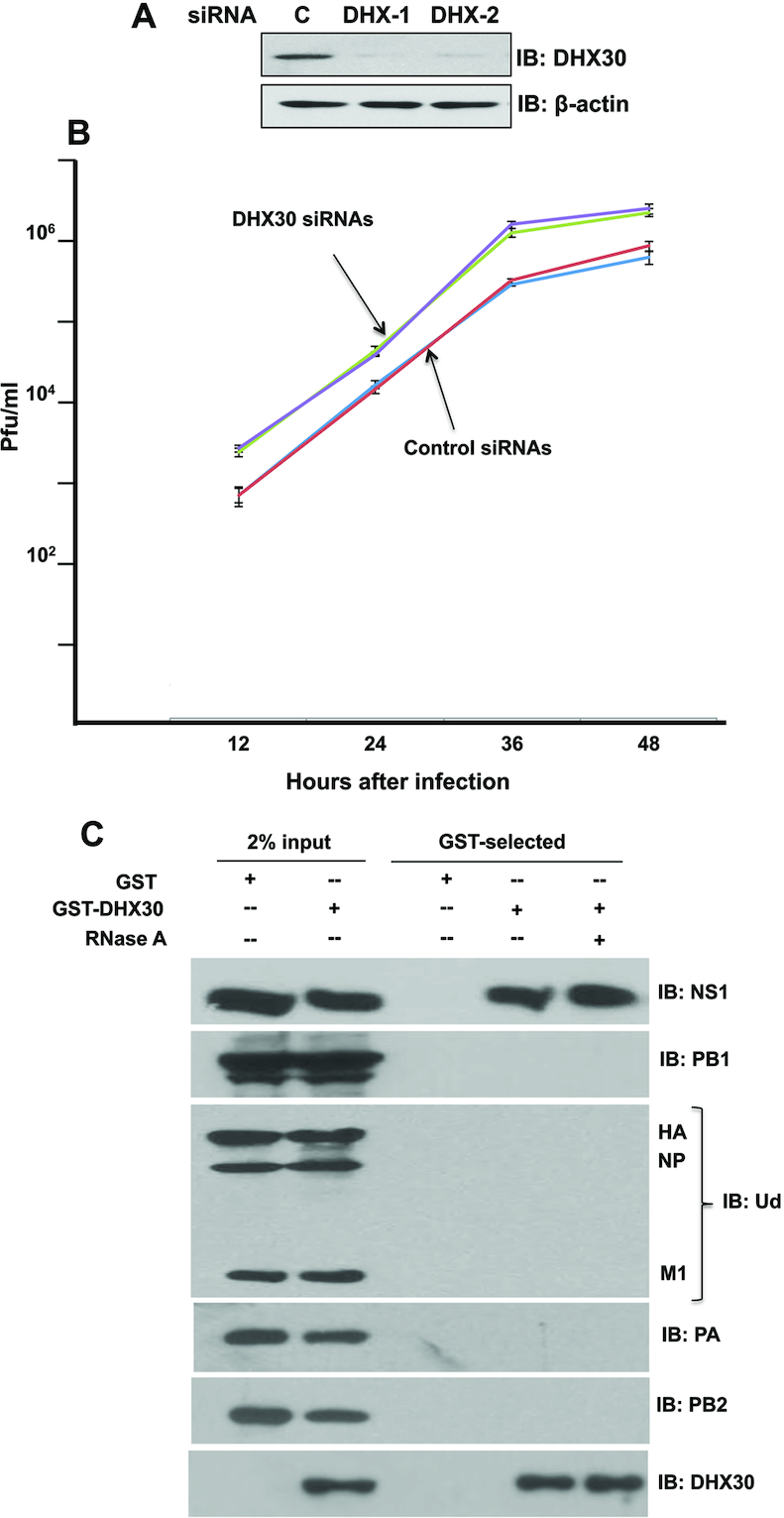
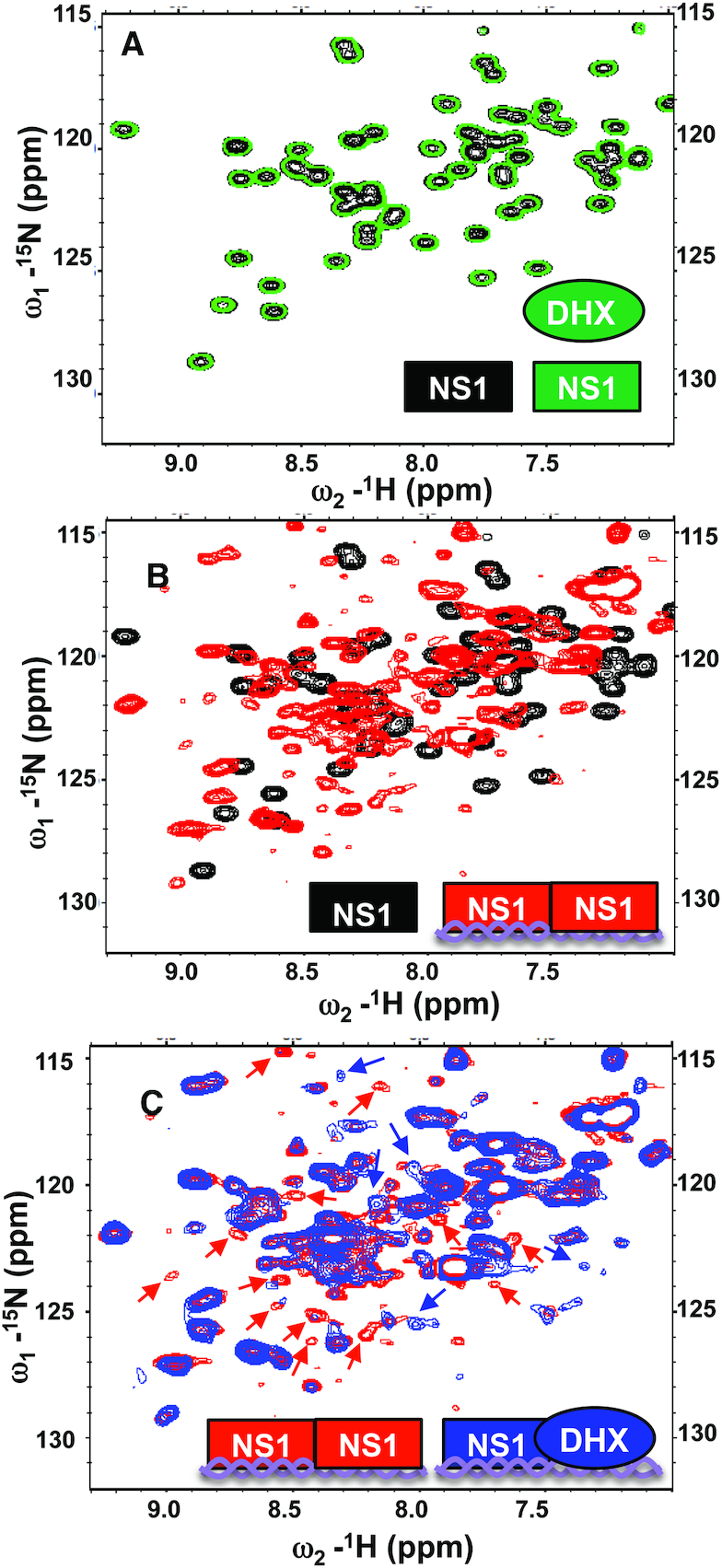
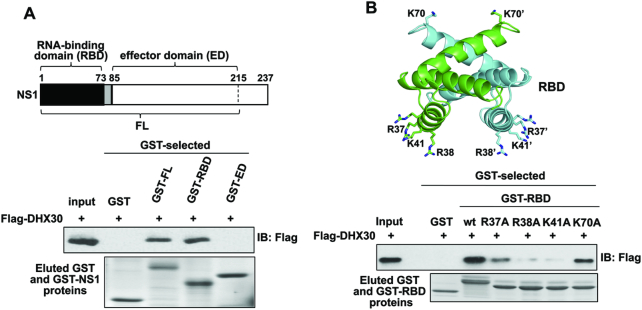
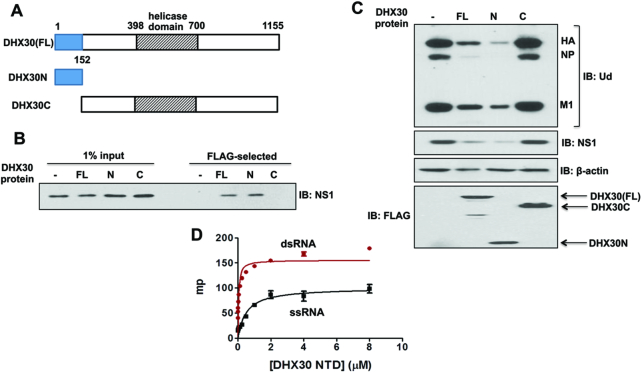
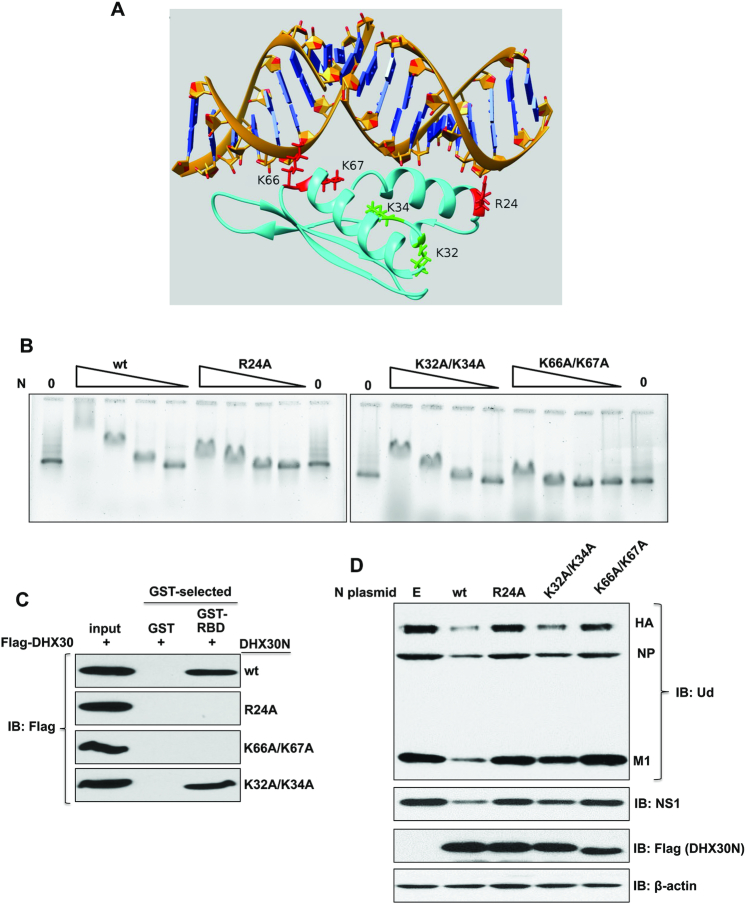
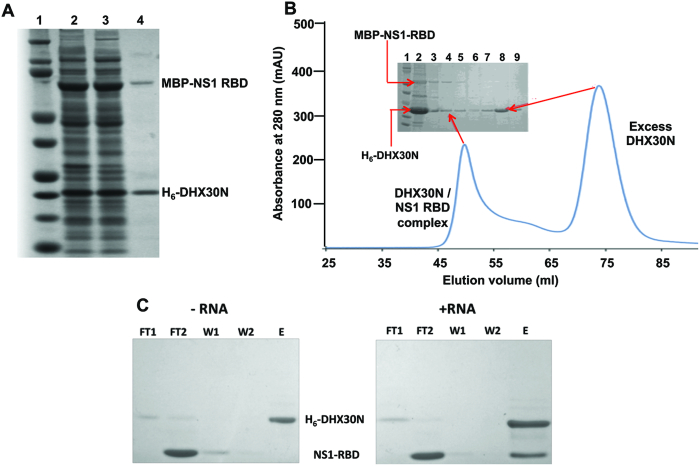
Influenza A viruses cause widespread human respiratory disease. The viral multifunctional NS1 protein inhibits host antiviral responses. This inhibition results from the binding of specific cellular antiviral proteins at various positions on the NS1 protein. Remarkably, binding of several proteins also requires the two amino-acid residues in the NS1 N-terminal RNA-binding domain (RBD) that are required for binding double-stranded RNA (dsRNA). Here we focus on the host restriction factor DHX30 helicase that is countered by the NS1 protein, and establish why the dsRNA-binding activity of NS1 is required for its binding to DHX30. We show that the N-terminal 152 amino-acid residue segment of DHX30, denoted DHX30N, possesses all the antiviral activity of DHX30 and contains a dsRNA-binding domain, and that the NS1-DHX30 interaction in vivo requires the dsRNA-binding activity of both DHX30N and the NS1 RBD. We demonstrate why this is the case using bacteria-expressed proteins: the DHX30N-NS1 RBD interaction in vitro requires the presence of a dsRNA platform that binds both NS1 RBD and DHX30N. We propose that a similar dsRNA platform functions in interactions of the NS1 protein with other proteins that requires these same two amino-acid residues required for NS1 RBD dsRNA-binding activity.
甲型流感病毒可引起广泛的人类呼吸道疾病。病毒多功能 NS1 蛋白抑制宿主抗病毒反应。这种抑制作用是由于 NS1 蛋白上的特定细胞抗病毒蛋白在不同位置与 NS1 蛋白结合所致。值得注意的是,几种蛋白质的结合也需要 NS1 氨基末端 RNA 结合域(RBD)中的两个氨基酸残基,这两个残基对于结合双链 RNA(dsRNA)是必需的。在这里,我们重点关注被 NS1 蛋白拮抗的宿主限制因子 DHX30 解旋酶,并确定 NS1 蛋白结合 DHX30 所需的 dsRNA 结合活性的原因。我们表明,DHX30 的氨基末端 152 个氨基酸残基片段,称为 DHX30N,具有 DHX30 的所有抗病毒活性,并包含一个 dsRNA 结合域,并且 NS1-DHX30 体内相互作用需要 DHX30N 和 NS1 RBD 的 dsRNA 结合活性。我们使用细菌表达的蛋白质证明了为什么会这样:体外 DHX30N-NS1 RBD 相互作用需要存在一个 dsRNA 平台,该平台结合 NS1 RBD 和 DHX30N。我们提出,类似的 dsRNA 平台在 NS1 蛋白与其他需要 NS1 RBD dsRNA 结合活性的两个相同氨基酸残基的蛋白质相互作用中起作用。