Department of Gastrointestinal Surgery, Kanagawa Cancer Center, Yokohama, Kanagawa, 241-8515, Japan.
Department of Surgery, Yokohama City University, Yokohama, Kanagawa, 236-0004, Japan.
J Cancer Res Clin Oncol. 2020 Jan;146(1):75-86. doi: 10.1007/s00432-019-03087-8. Epub 2019 Nov 21.
The enzymes gamma-glutamyl hydrolase (GGH) and folylpolyglutamate synthetase (FPGS) regulate intracellular folate concentrations needed for cell proliferation, DNA synthesis, and repair. High GGH expression affects 5-FU thymidylate synthase (TS) inhibition and is a risk factor for various malignancies. Here, the clinical significance of GGH and FPGS expression was investigated in Stage II/III gastric cancer patients undergoing postoperative adjuvant chemotherapy with S-1.
Surgical specimens of cancer tissue and adjacent normal mucosa, obtained from 253 patients with previously untreated gastric cancer, were examined. GGH and FPGS mRNA expression was measured by qPCR to evaluate their clinicopathological significance in gastric cancer patients after curative resection.
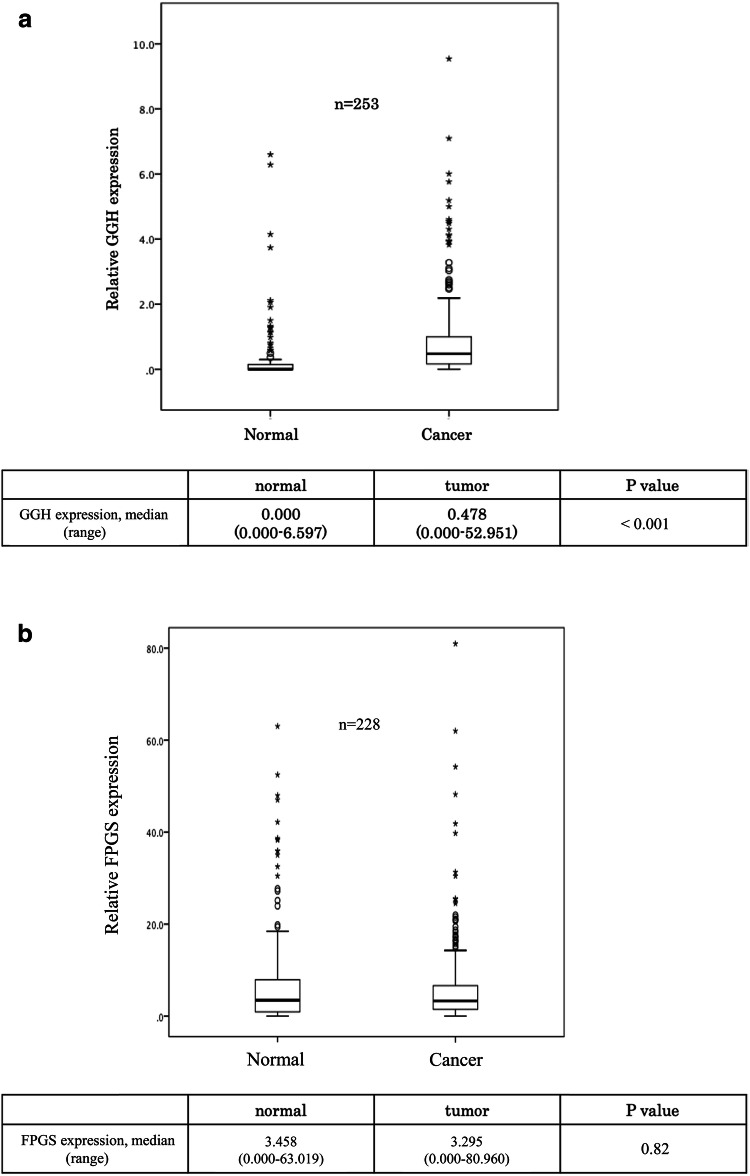
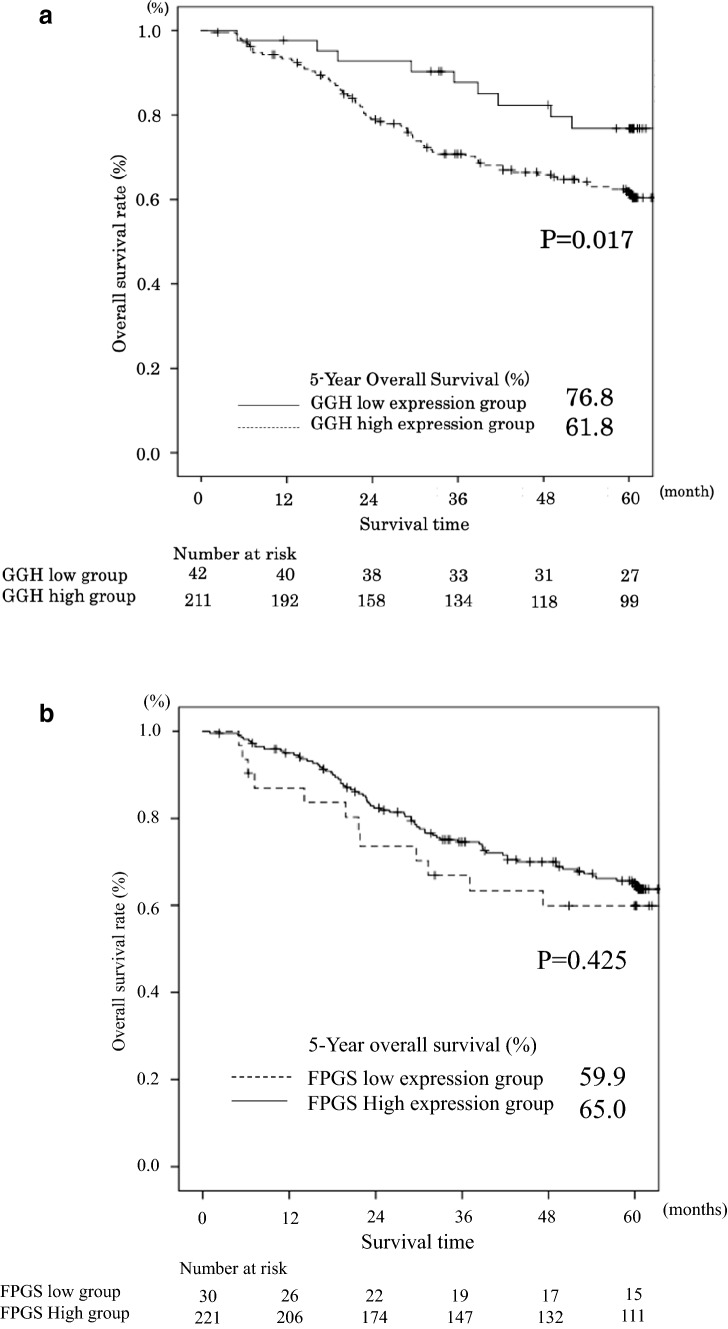
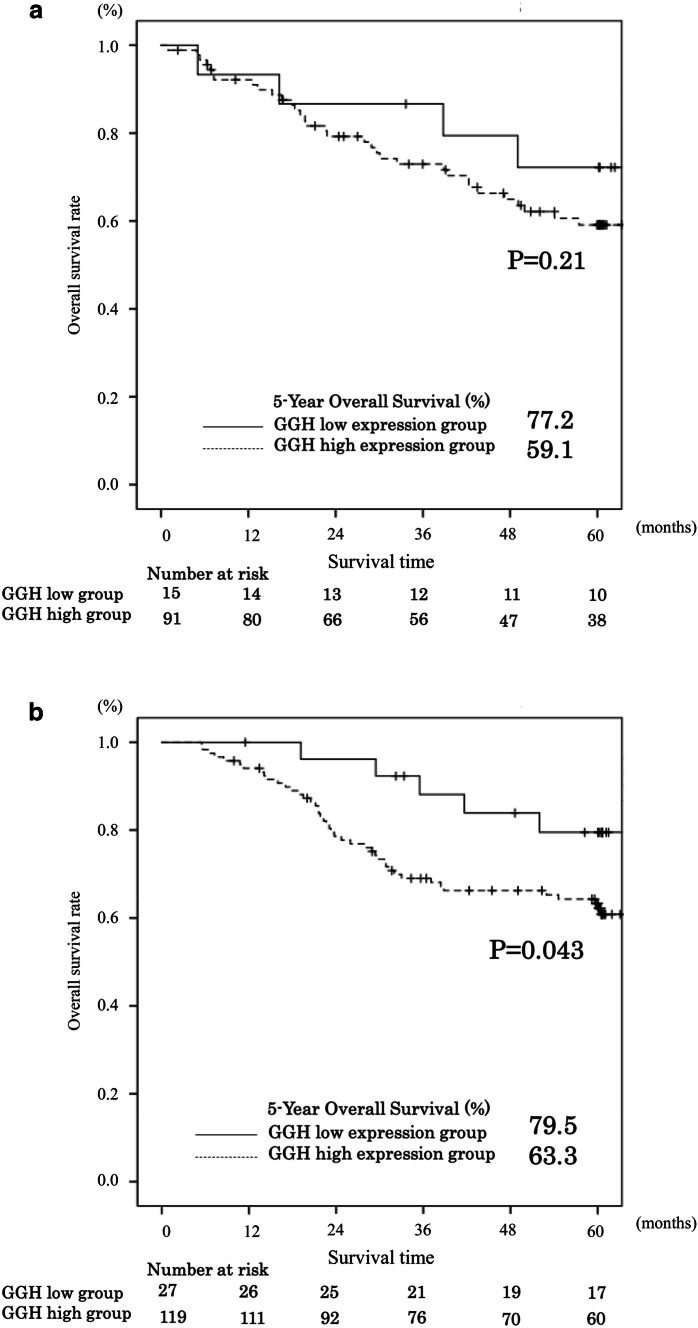
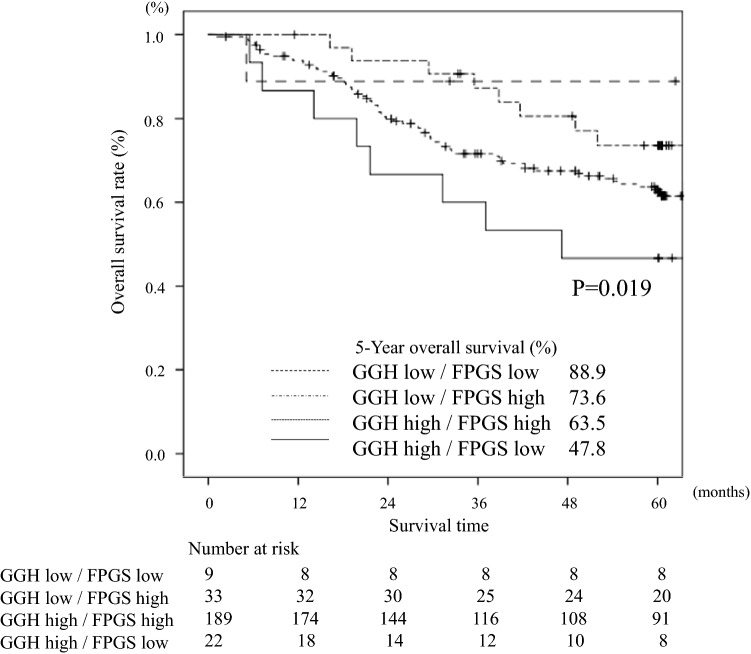
While FPGS expression showed no significant differences between the cancerous and normal samples, GGH expression was higher in cancer tissue than in adjacent normal mucosa. High GGH expression was correlated with age, histological type, and vascular invasion. Overall survival (OS) of patients with high GGH mRNA expression was significantly poorer than of patients with low GGH expression. Multivariate analysis showed that high GGH expression was an independent prognostic factor of OS (HR: 2.58, 95% CI 1.29-5.16). Patients who received S-1 adjuvant treatment showed a significantly poor OS between high GGH/low FPGS and low GGH/high FPGS. Patients without adjuvant treatment showed no significant difference.
GGH expression was significantly higher in gastric cancer tissue than in adjacent normal mucosa. High GGH and low FPGS expression is a useful independent predictor of poor outcomes in stage II/III gastric cancer patients undergoing postoperative adjuvant chemotherapy with S-1.
γ-谷氨酰水解酶(GGH)和叶酸多聚谷氨酸合成酶(FPGS)调节细胞内叶酸浓度,这对于细胞增殖、DNA 合成和修复是必需的。高 GGH 表达影响 5-FU 胸苷酸合成酶(TS)的抑制作用,是多种恶性肿瘤的危险因素。本研究旨在探讨 II/III 期胃癌患者接受术后 S-1 辅助化疗时,GGH 和 FPGS 表达的临床意义。
对 253 例未经治疗的胃癌患者的手术标本进行研究,包括肿瘤组织和相邻正常黏膜。采用 qPCR 检测 GGH 和 FPGS mRNA 表达,评估其在根治性切除术后胃癌患者中的临床病理意义。
FPGS 表达在肿瘤和正常组织之间无显著差异,而 GGH 表达在肿瘤组织中高于相邻正常黏膜。高 GGH 表达与年龄、组织学类型和血管侵犯有关。高 GGH mRNA 表达患者的总生存(OS)显著差于低 GGH 表达患者。多因素分析显示,高 GGH 表达是 OS 的独立预后因素(HR:2.58,95%CI 1.29-5.16)。接受 S-1 辅助治疗的患者中,高 GGH/低 FPGS 和低 GGH/高 FPGS 患者的 OS 显著较差,而未接受辅助治疗的患者则无显著差异。
GGH 在胃癌组织中的表达明显高于相邻正常黏膜。高 GGH 和低 FPGS 表达是接受 S-1 术后辅助化疗的 II/III 期胃癌患者预后不良的有用独立预测因子。