Department of Neurology, Max Planck Institute for Human Cognitive and Brain Sciences, 04103, Leipzig, Germany.
Collaborative Research Centre 1052'Obesity Mechanisms', Subproject A1, Faculty of Medicine, Leipzig University, 04103, Leipzig, Germany.
Sci Rep. 2019 Nov 22;9(1):17373. doi: 10.1038/s41598-019-53578-4.
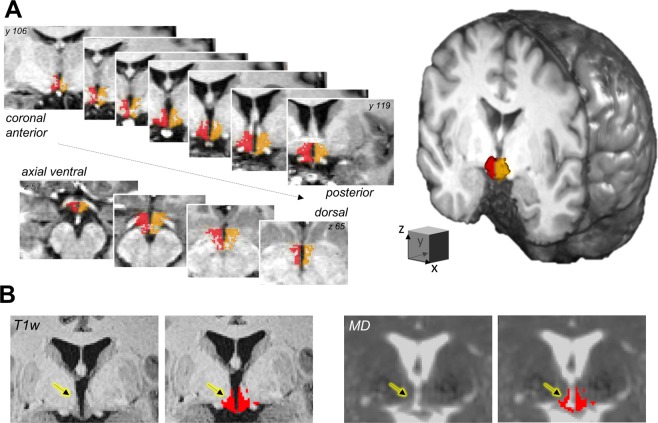
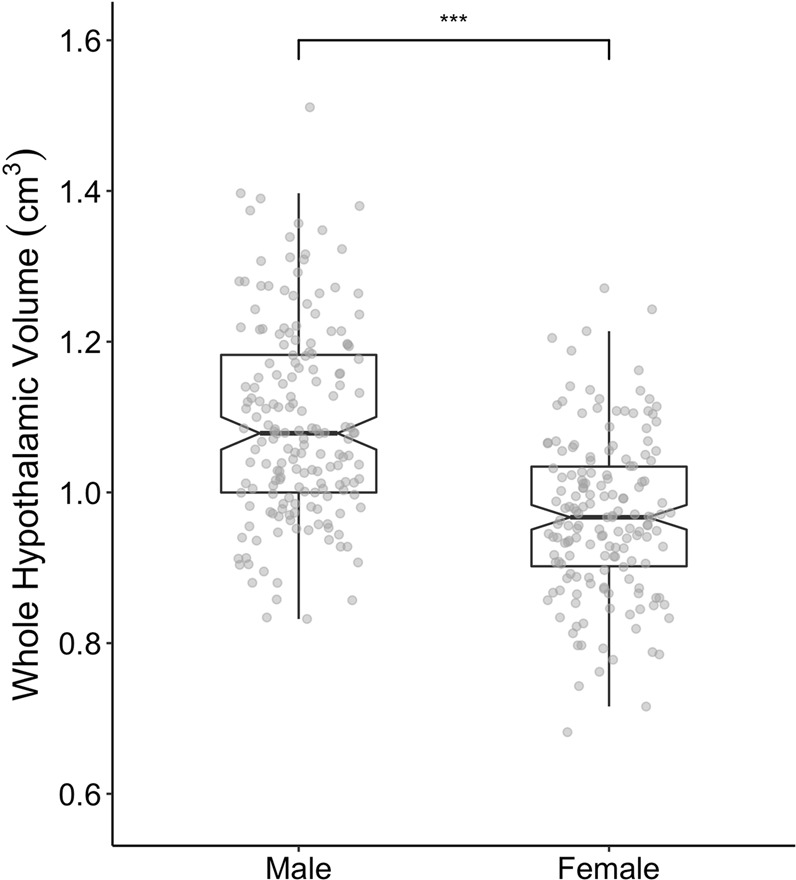
Animal studies suggest that obesity-related diets induce structural changes in the hypothalamus, a key brain area involved in energy homeostasis. Whether this translates to humans is however largely unknown. Using a novel multimodal approach with manual segmentation, we here show that a higher body mass index (BMI) selectively predicted higher proton diffusivity within the hypothalamus, indicative of compromised microstructure in the underlying tissue, in a well-characterized population-based cohort (n = 338, 48% females, age 21-78 years, BMI 18-43 kg/m²). Results were independent from confounders and confirmed in another independent sample (n = 236). In addition, while hypothalamic volume was not associated with obesity, we identified a sexual dimorphism and larger hypothalamic volumes in the left compared to the right hemisphere. Using two large samples of the general population, we showed that a higher BMI specifically relates to altered microstructure in the hypothalamus, independent from confounders such as age, sex and obesity-associated co-morbidities. This points to persisting microstructural changes in a key regulatory area of energy homeostasis occurring with excessive weight. Our findings may help to better understand the pathomechanisms of obesity and other eating-related disorders.
动物研究表明,与肥胖相关的饮食会引起下丘脑的结构变化,而下丘脑是参与能量平衡的关键大脑区域。然而,这种变化是否适用于人类在很大程度上尚不清楚。本研究采用一种新的多模态方法,通过手动分割,我们发现,在一个特征明确的基于人群的队列中(n=338,48%为女性,年龄 21-78 岁,BMI 为 18-43kg/m²),较高的体重指数(BMI)选择性地预测了较高的质子扩散率,这表明下丘脑中的组织结构受损。结果不受混杂因素的影响,并在另一个独立样本(n=236)中得到了证实。此外,尽管下丘脑体积与肥胖无关,但我们发现了一种性别二态性,即左半脑比右半脑的下丘脑体积更大。通过两个大型的普通人群样本,我们发现,较高的 BMI 与下丘脑的微观结构改变有关,这与年龄、性别和肥胖相关的合并症等混杂因素无关。这表明,在过度肥胖的情况下,能量平衡的关键调节区域持续存在微观结构变化。我们的发现有助于更好地理解肥胖和其他与饮食相关的疾病的发病机制。