Department of Orthodontics, Nanjing Stomatological Hospital, Medical School of Nanjing University, Nanjing, China.
Central Laboratory of Stomatology, Nanjing Stomatological Hospital, Medical School of Nanjing University, Nanjing, China.
Sci Rep. 2019 Nov 22;9(1):17369. doi: 10.1038/s41598-019-53910-y.
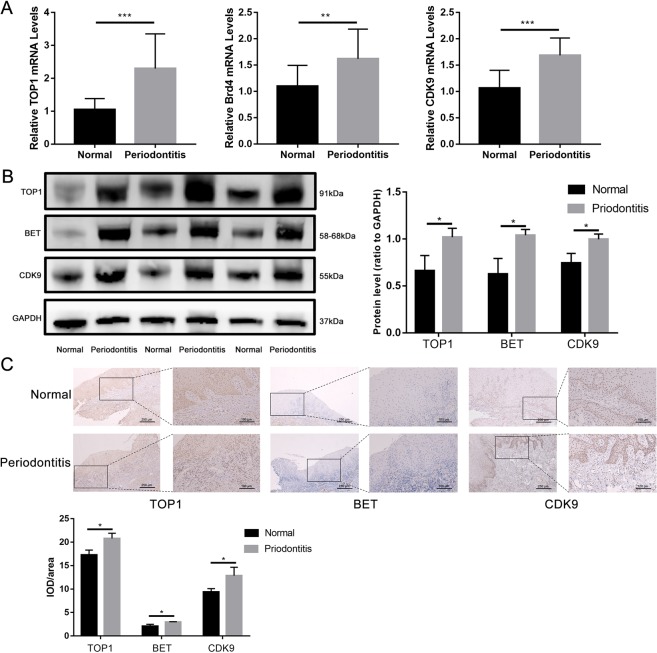
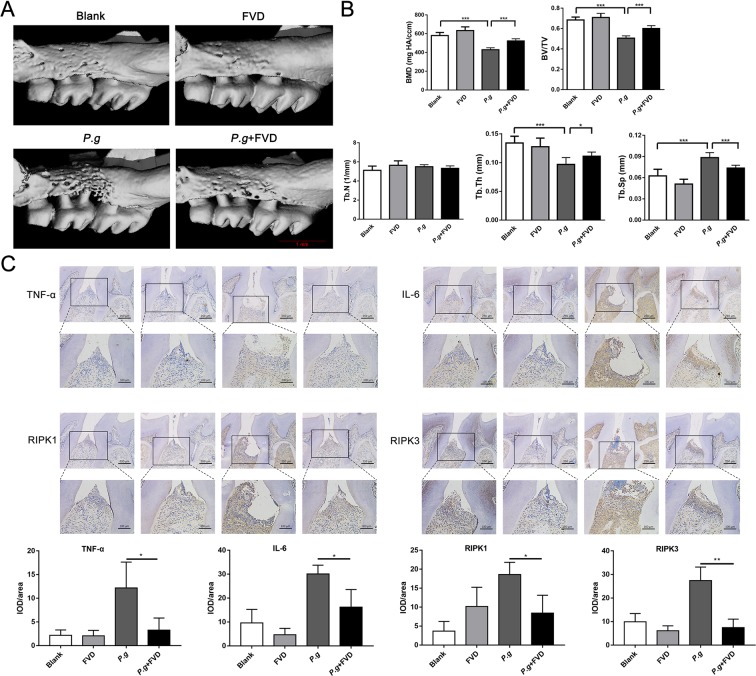
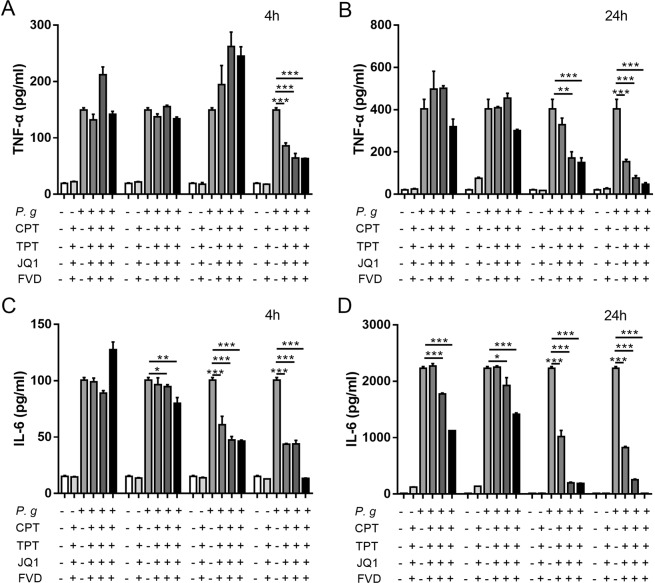
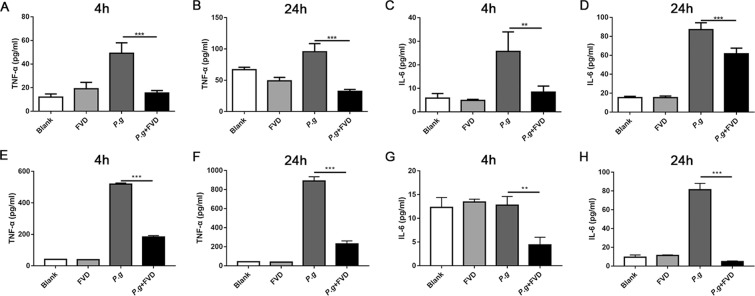
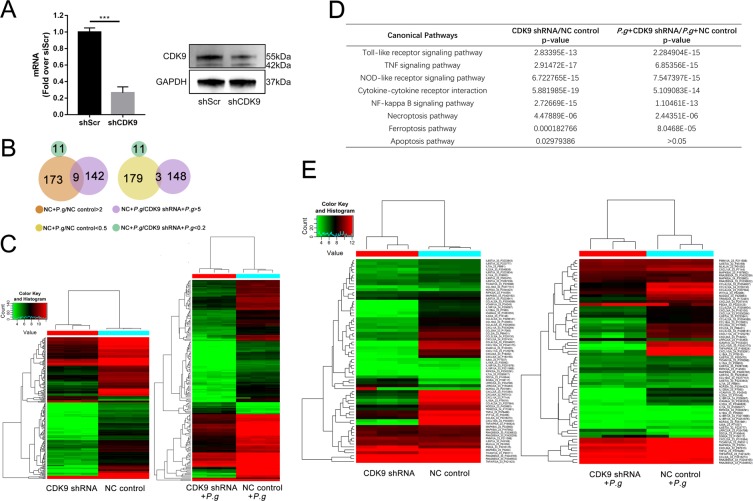
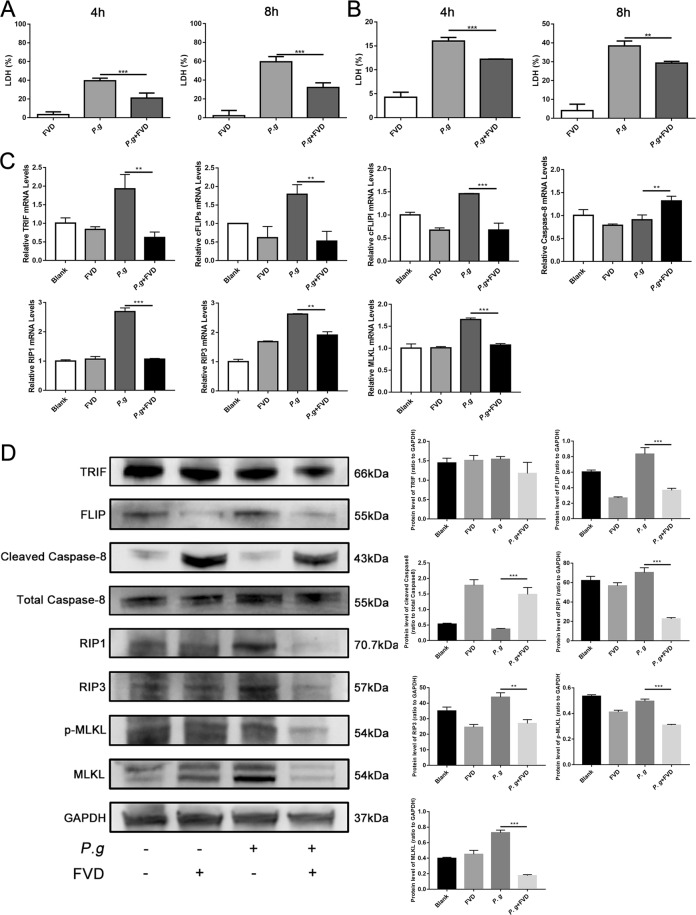
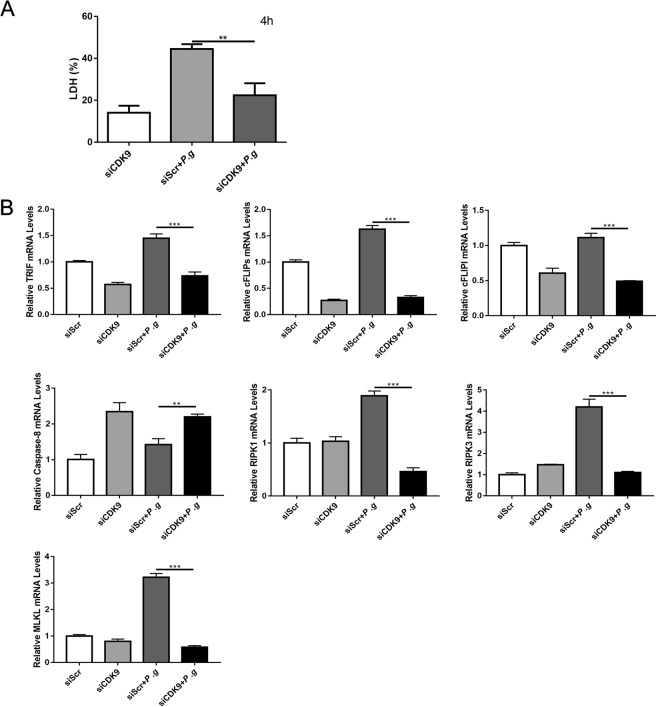
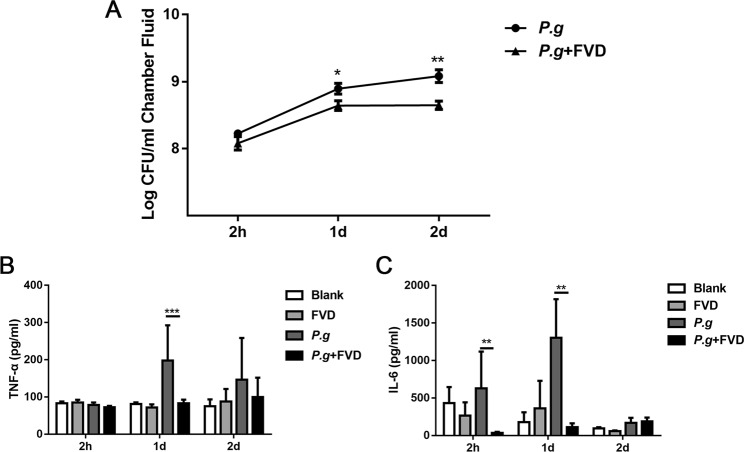
Cyclin-dependent kinase 9 (CDK9), one crucial molecule in promoting the transition from transcription pausing to elongation, is a critical modulator of cell survival and death. However, the pathological function of CDK9 in bacterial inflammatory diseases has never been explored. CDK9 inhibition or knock-down attenuated Porphyromonas gingivalis-triggered inflammatory gene expression. Gene-expression microarray analysis of monocytes revealed that knock-down of CDK9 not only affected inflammatory responses, but also impacted cell death network, especially the receptor-interacting protein kinase 3 (RIPK3)-mixed lineage kinase domain-like (MLKL)-mediated necroptosis after P. gingivalis infection. Inhibition of CDK9 significantly decreased necroptosis with downregulation of both MLKL and phosphorylated MLKL. By regulating caspase-8 and cellular FLICE inhibitory protein (cFLIP), key molecules in regulating cell survival and death, CDK9 affected not only the classic RIPK1-RIPK3-mediated necroptosis, but also the alternate TIR-domain-containing adapter-inducing interferon-β-RIPK3-mediated necroptosis. CDK9 inhibition dampened pro-inflammatory gene production in the acute infection process in the subcutaneous chamber model in vivo. Moreover, CDK9 inhibition contributed to the decreased periodontal bone loss and inflammatory response induced by P. gingivalis in the periodontal micro-environment. In conclusion, by modulating the RIPK3-MLKL-mediated necroptosis, CDK9 inhibition provided a novel mechanism to impact the progress of bacterial infection in the periodontal milieu.
细胞周期蛋白依赖性激酶 9(CDK9)是促进转录暂停向延伸转变的关键分子之一,是细胞存活和死亡的关键调节剂。然而,CDK9 在细菌性炎症疾病中的病理功能从未被探索过。CDK9 的抑制或敲低减弱了牙龈卟啉单胞菌引发的炎症基因表达。单核细胞的基因表达微阵列分析显示,CDK9 的敲低不仅影响炎症反应,还影响细胞死亡网络,特别是牙龈卟啉单胞菌感染后受体相互作用蛋白激酶 3(RIPK3)-混合谱系激酶结构域样(MLKL)介导的坏死。CDK9 的抑制显著减少了坏死,同时下调了 MLKL 和磷酸化 MLKL。通过调节细胞存活和死亡的关键分子半胱天冬酶-8 和细胞 FLICE 抑制蛋白(cFLIP),CDK9 不仅影响了经典的 RIPK1-RIPK3 介导的坏死,还影响了替代的 TIR 结构域包含衔接诱导干扰素-β-RIPK3 介导的坏死。CDK9 的抑制在体内皮下室模型的急性感染过程中减弱了促炎基因的产生。此外,CDK9 的抑制有助于减少牙龈卟啉单胞菌在牙周微环境中引起的牙周骨丢失和炎症反应。总之,通过调节 RIPK3-MLKL 介导的坏死,CDK9 的抑制为影响牙周环境中细菌感染的进展提供了一种新的机制。