Liang Yu-Ling, Wu Chin-Han, Kang Chieh-Yi, Lin Chang-Ni, Shih Neng-Yao, Lin Sheng-Hsiang, Chen Yeong-Chang, Hsu Keng-Fu
Department of Obstetrics and Gynecology, National Cheng Kung University Hospital, College of Medicine, National Cheng Kung University, Tainan, Taiwan.
Department of Dental Technology, Shu Zen Junior College of Medicine and Management.
J Cancer. 2019 Oct 15;10(24):6025-6036. doi: 10.7150/jca.34886. eCollection 2019.
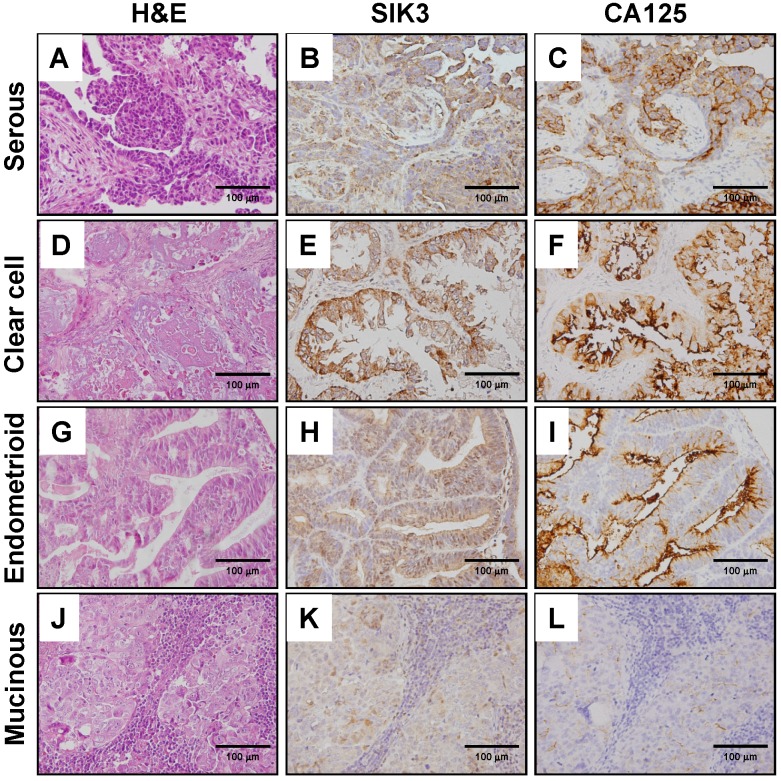
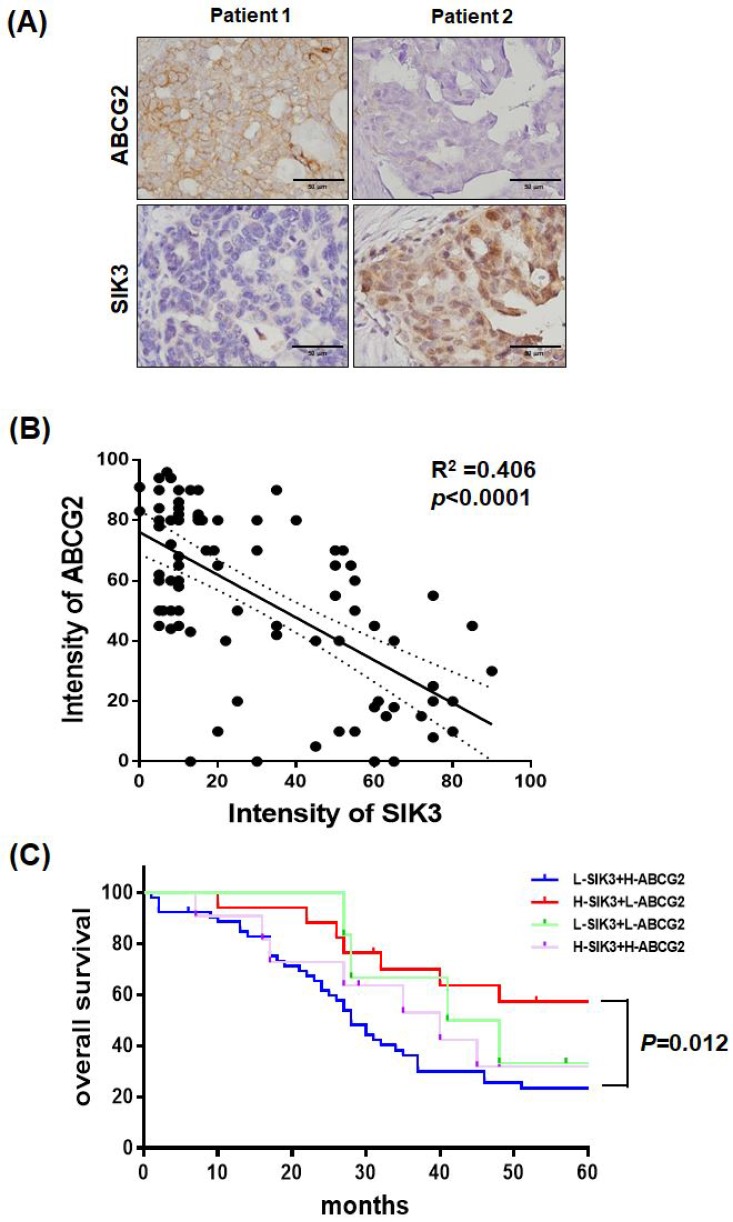
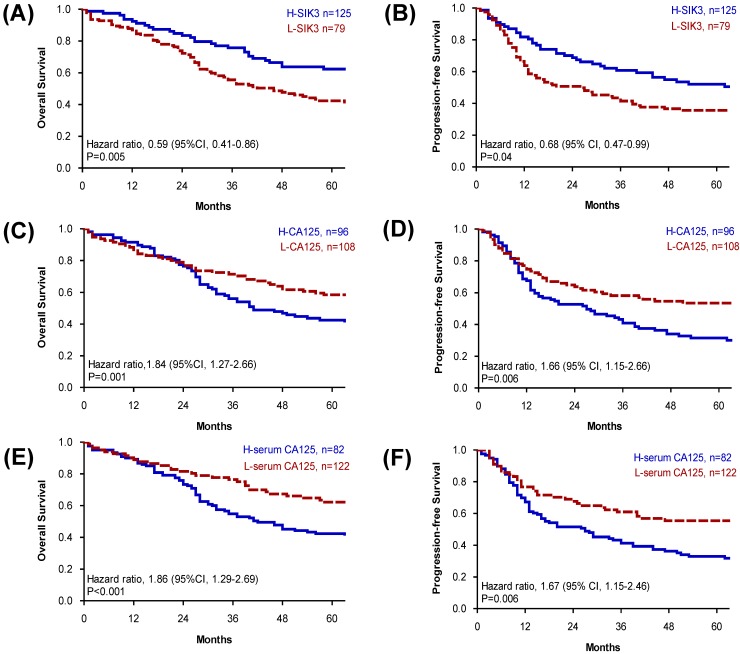
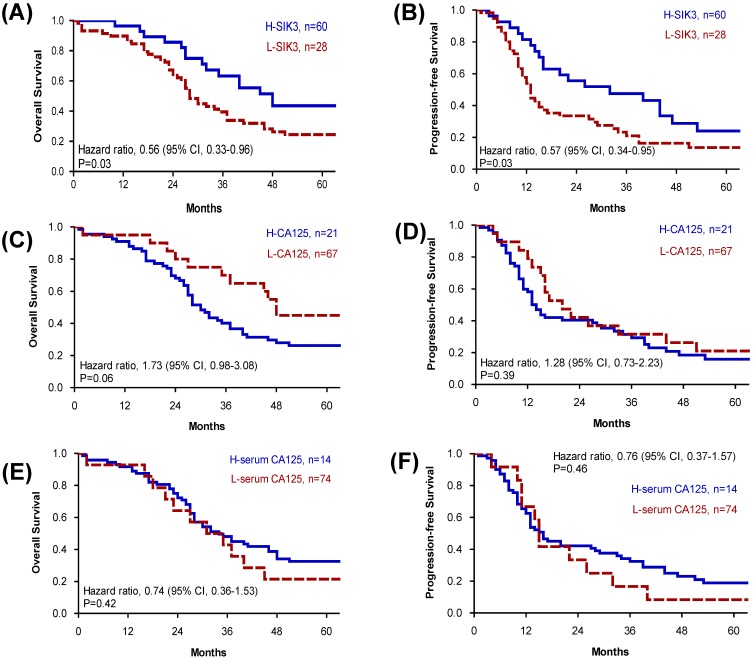
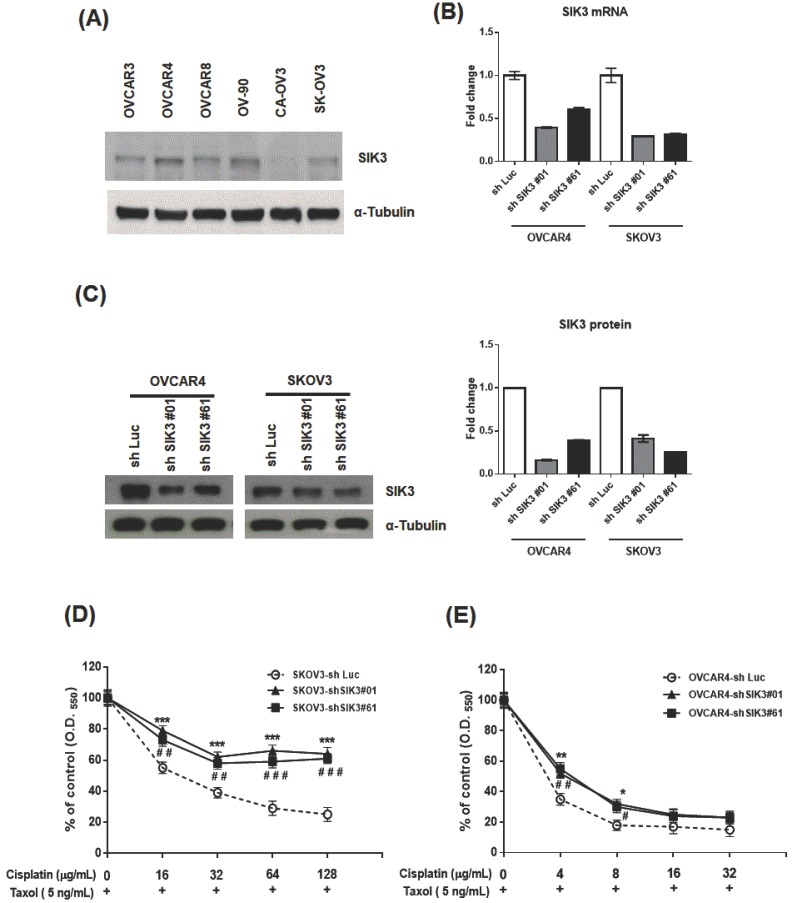
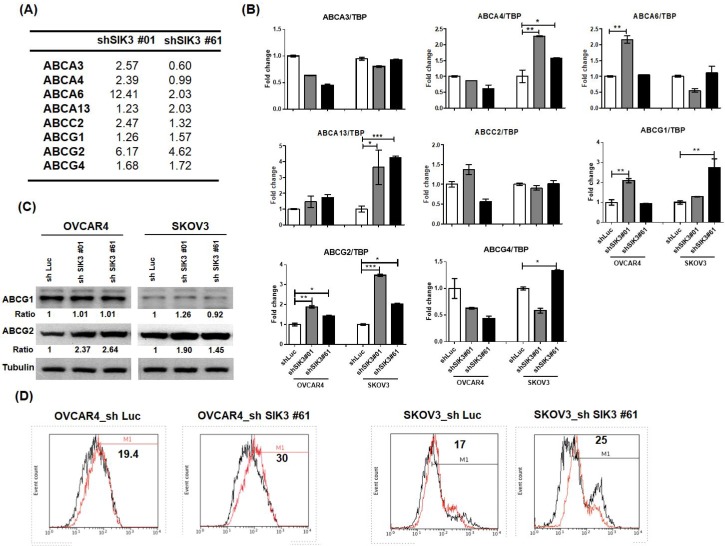
Epithelial ovarian cancer (EOC) has a high tumor-associated mortality rate among gynecological cancers. Although CA125 is a well-studied biomarker for ovarian cancer, it is also elevated under numerous conditions, resulting in decreased specificity. Recently, we identified a novel tumor-associated antigen, salt-inducible kinase 3 (SIK3), during tumorigenesis in ovarian cancer. However, the association between SIK3 expression and patient outcomes in ovarian cancer remains unclear. We collected EOC samples from 204 patients and examined tumor SIK3 expression by immunohistochemistry (IHC) and CA125 expression in tumors and serum. The expression levels of SIK3 and CA125 were correlated with patient survival. SIK3 expression was silenced with SIK3-specific shRNAs to investigate the possible mechanisms related to chemoresistance in serous-type ovarian cancer cell lines OVCAR4 and SKOV3. In advanced-stage serous ovarian cancer, patients with low SIK3 expression have poorer overall survival (OS) and progression-free survival (PFS) than patients with high SIK3 expression. Ovarian cancer cells with SIK3 knockdown display increased chemoresistance to Taxol plus cisplatin treatment, which is associated with the upregulation of the ABCG2 transporter. In addition, in serous ovarian cancer, SIK3 expression is inversely correlated to ABCG2 expression, and patients with low SIK3 and high ABCG2 expression have worse prognosis than patients with high SIK3 and low ABCG2 expression. Our results demonstrated that serous EOC patients with low SIK3 expression have poor prognosis, which is associated with chemoresistance mediated by ABCG2 upregulation. SIK3 and ABCG2 expression levels may be potential prognostic markers to predict the outcome in serous EOC patients.
上皮性卵巢癌(EOC)在妇科癌症中具有较高的肿瘤相关死亡率。尽管CA125是一种针对卵巢癌进行了充分研究的生物标志物,但它在许多情况下也会升高,导致特异性降低。最近,我们在卵巢癌的肿瘤发生过程中鉴定出一种新的肿瘤相关抗原,即盐诱导激酶3(SIK3)。然而,SIK3表达与卵巢癌患者预后之间的关联仍不清楚。我们收集了204例患者的EOC样本,并通过免疫组织化学(IHC)检测肿瘤SIK3表达以及肿瘤和血清中的CA125表达。SIK3和CA125的表达水平与患者生存率相关。用SIK3特异性短发夹RNA(shRNAs)使SIK3表达沉默,以研究与浆液性卵巢癌细胞系OVCAR4和SKOV3中化疗耐药相关的可能机制。在晚期浆液性卵巢癌中,SIK3低表达患者的总生存期(OS)和无进展生存期(PFS)比SIK3高表达患者更差。敲低SIK3的卵巢癌细胞对紫杉醇加顺铂治疗显示出化疗耐药性增加,这与ABCG2转运蛋白的上调有关。此外,在浆液性卵巢癌中,SIK3表达与ABCG2表达呈负相关,SIK3低表达且ABCG2高表达的患者比SIK3高表达且ABCG2低表达的患者预后更差。我们的结果表明,SIK3低表达的浆液性EOC患者预后较差,这与ABCG2上调介导的化疗耐药有关。SIK3和ABCG2表达水平可能是预测浆液性EOC患者预后的潜在标志物。