DeMeester Kristen E, Liang Hai, Zhou Junhui, Wodzanowski Kimberly A, Prather Benjamin L, Santiago Cintia C, Grimes Catherine L
Department of Chemistry and Biochemistry, University of Delaware, Newark, Delaware.
Cutaneous Microbiome and Inflammation Section, Dermatology Branch, National Institute of Arthritis and Musculoskeletal and Skin Diseases, Bethesda, Maryland.
Curr Protoc Chem Biol. 2019 Dec;11(4):e74. doi: 10.1002/cpch.74.
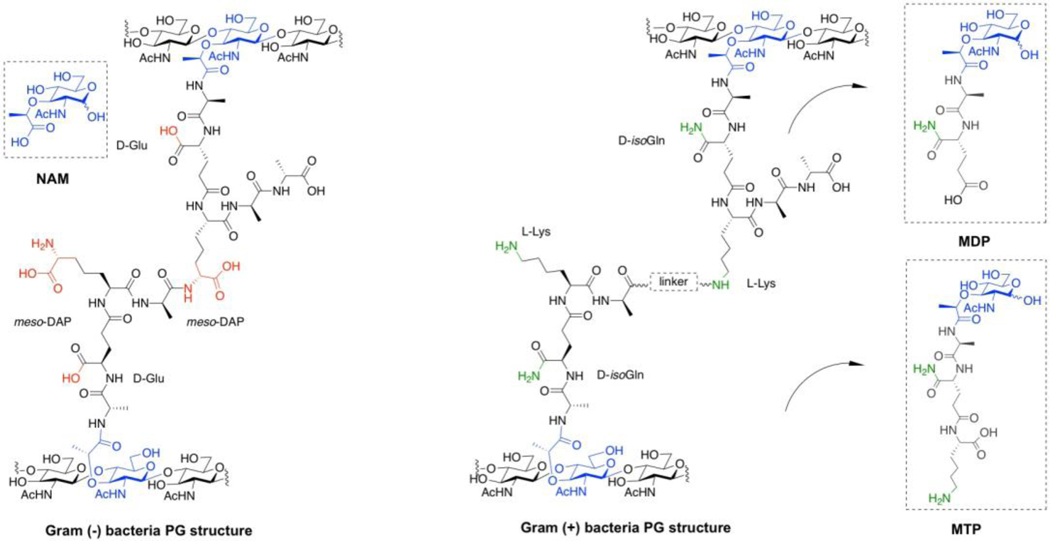
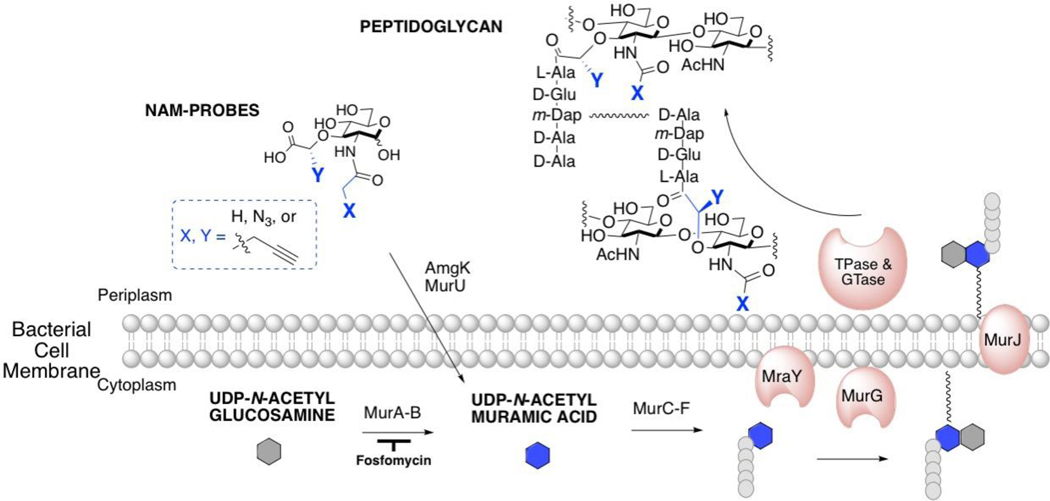
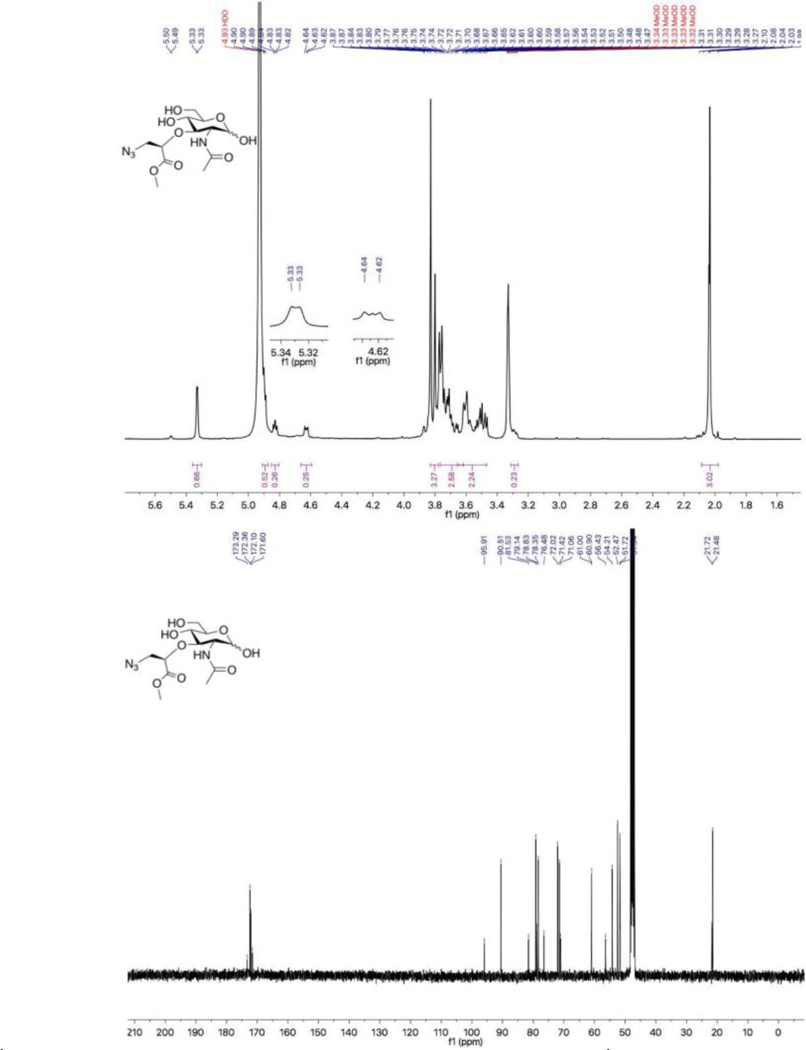
Bacterial cells utilize small carbohydrate building blocks to construct peptidoglycan (PG), a highly conserved mesh-like polymer that serves as a protective coat for the cell. PG production has long been a target for antibiotics, and its breakdown is a source for human immune recognition. A key component of bacterial PG, N-acetyl muramic acid (NAM), is a vital element in many synthetically derived immunostimulatory compounds. However, the exact molecular details of these structures and how they are generated remain unknown due to a lack of chemical probes surrounding the NAM core. A robust synthetic strategy to generate bioorthogonally tagged NAM carbohydrate units is implemented. These molecules serve as precursors for PG biosynthesis and recycling. Escherichia coli cells are metabolically engineered to incorporate the bioorthogonal NAM probes into their PG network. The probes are subsequently modified using copper-catalyzed azide-alkyne cycloaddition to install fluorophores directly into the bacterial PG, as confirmed by super-resolution microscopy and high-resolution mass spectrometry. Here, synthetic notes for key elements of this process to generate the sugar probes as well as streamlined user-friendly metabolic labeling strategies for both microbiology and immunological applications are described. © 2019 by John Wiley & Sons, Inc. Basic Protocol 1: Synthesis of peracetylated 2-azido glucosamine Basic Protocol 2: Synthesis of 2-azido and 2-alkyne NAM Basic Protocol 3: Synthesis of 3-azido NAM methyl ester Basic Protocol 4: Incorporation of NAM probes into bacterial peptidoglycan Basic Protocol 5: Confirmation of bacterial cell wall remodeling by mass spectrometry.
细菌细胞利用小的碳水化合物构建单元来构建肽聚糖(PG),这是一种高度保守的网状聚合物,作为细胞的保护涂层。长期以来,PG的产生一直是抗生素的作用靶点,其分解是人类免疫识别的来源。细菌PG的一个关键成分,N - 乙酰胞壁酸(NAM),是许多合成衍生的免疫刺激化合物中的重要元素。然而,由于缺乏围绕NAM核心的化学探针,这些结构的确切分子细节以及它们是如何产生的仍然未知。本文实施了一种强大的合成策略来生成生物正交标记的NAM碳水化合物单元。这些分子作为PG生物合成和循环利用的前体。对大肠杆菌细胞进行代谢工程改造,使其将生物正交NAM探针整合到其PG网络中。随后使用铜催化的叠氮化物 - 炔烃环加成反应对探针进行修饰,以将荧光团直接安装到细菌PG中,这通过超分辨率显微镜和高分辨率质谱得到证实。本文描述了生成糖探针这一过程关键要素的合成说明,以及适用于微生物学和免疫学应用的简化且用户友好的代谢标记策略。© 2019 John Wiley & Sons, Inc. 基本方案1:全乙酰化2 - 叠氮基葡萄糖胺的合成 基本方案2:2 - 叠氮基和2 - 炔基NAM的合成 基本方案3:3 - 叠氮基NAM甲酯的合成 基本方案4:将NAM探针整合到细菌肽聚糖中 基本方案5:通过质谱确认细菌细胞壁重塑