Experimental Neurology, Building 89, Goethe University Medical Faculty, Theodor Stern Kai 7, 60590 Frankfurt am Main, Germany.
Faculty of Biosciences, Goethe-University, 60438, Frankfurt am Main, Germany.
Int J Mol Sci. 2019 Nov 21;20(23):5854. doi: 10.3390/ijms20235854.
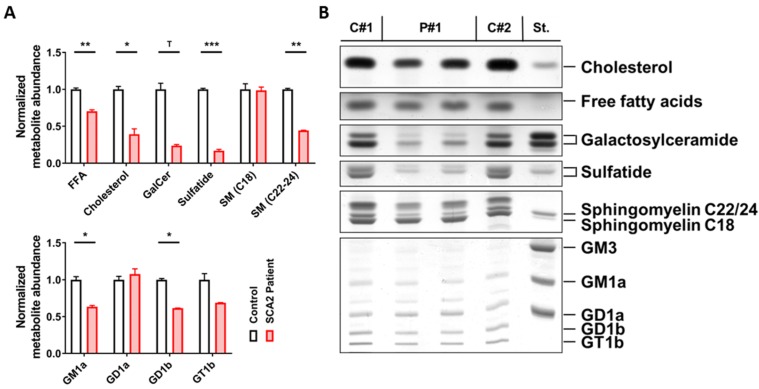
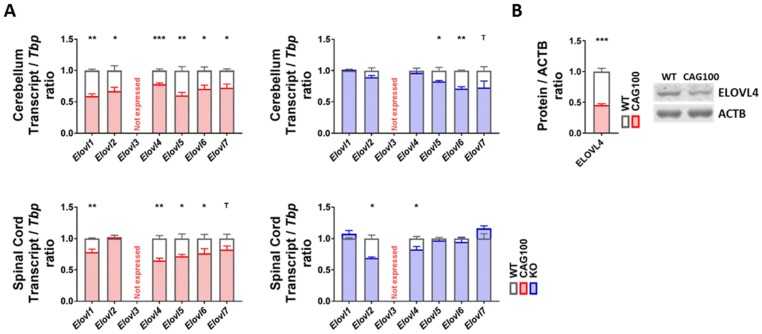
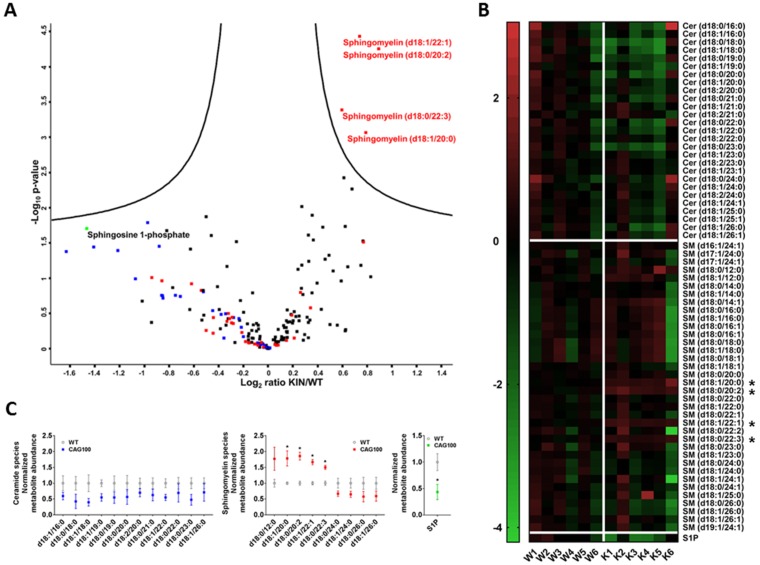
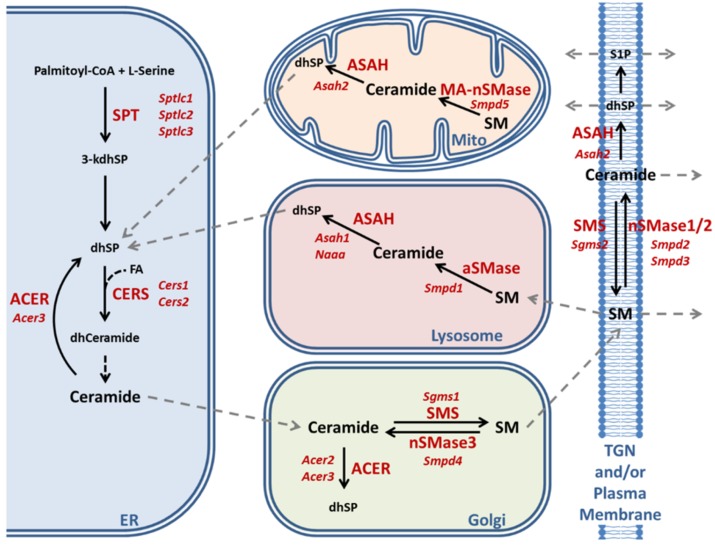
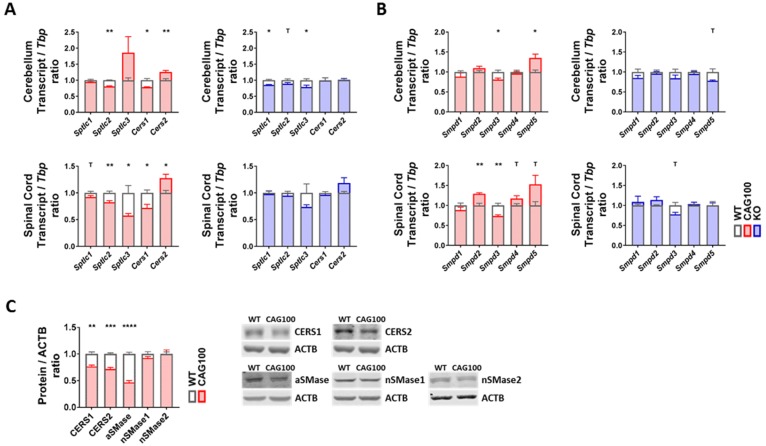
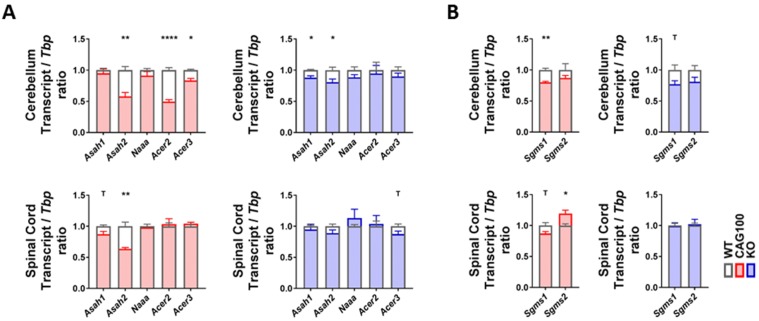
Ataxin-2 (human gene symbol ) acts during stress responses, modulating mRNA translation and nutrient metabolism. Ataxin-2 knockout mice exhibit progressive obesity, dyslipidemia, and insulin resistance. Conversely, the progressive ATXN2 gain of function due to the fact of polyglutamine (polyQ) expansions leads to a dominantly inherited neurodegenerative process named spinocerebellar ataxia type 2 (SCA2) with early adipose tissue loss and late muscle atrophy. We tried to understand lipid dysregulation in a SCA2 patient brain and in an authentic mouse model. Thin layer chromatography of a patient cerebellum was compared to the lipid metabolome of -CAG100-Knockin (KIN) mouse spinocerebellar tissue. The human pathology caused deficits of sulfatide, galactosylceramide, cholesterol, C22/24-sphingomyelin, and gangliosides GM1a/GD1b despite quite normal levels of C18-sphingomyelin. Cerebellum and spinal cord from the KIN mouse showed a consistent decrease of various ceramides with a significant elevation of sphingosine in the more severely affected spinal cord. Deficiency of C24/26-sphingomyelins contrasted with excess C18/20-sphingomyelin. Spinocerebellar expression profiling revealed consistent reductions of CERS protein isoforms, and , but upregulation of mRNA, as prominent anomalies in the ceramide-sphingosine metabolism. Reduction of mRNA correlated to deficient S1P levels. In addition, downregulations for the elongase mRNAs and ELOVL4 protein explain the deficit of very long-chain sphingomyelin. Reduced ASMase protein levels correlated to the accumulation of long-chain sphingomyelin. Overall, a deficit of myelin lipids was prominent in SCA2 nervous tissue at prefinal stage and not compensated by transcriptional adaptation of several metabolic enzymes. Myelination is controlled by mTORC1 signals; thus, our human and murine observations are in agreement with the known role of ATXN2 yeast, nematode, and mouse orthologs as mTORC1 inhibitors and autophagy promoters.
ataxin-2(人类基因符号)在应激反应中发挥作用,调节 mRNA 翻译和营养代谢。ataxin-2 敲除小鼠表现出进行性肥胖、血脂异常和胰岛素抵抗。相反,由于多聚谷氨酰胺(polyQ)扩展导致渐进性 ATXN2 功能获得,导致一种称为脊髓小脑性共济失调 2 型(SCA2)的显性遗传性神经退行性过程,早期脂肪组织丢失和晚期肌肉萎缩。我们试图了解 SCA2 患者大脑和真实小鼠模型中的脂质失调。将患者小脑的薄层色谱与 -CAG100-Knockin(KIN)小鼠脊髓小脑组织的脂质代谢组进行比较。尽管 C18-神经酰胺水平相当正常,但人类病理学导致硫酸脑苷脂、半乳糖脑苷脂、胆固醇、C22/24-神经酰胺和神经节苷脂 GM1a/GD1b 缺乏。KIN 小鼠的小脑和脊髓显示各种神经酰胺一致减少,受影响更严重的脊髓中神经酰胺显著升高。C24/26-神经酰胺缺乏与 C18/20-神经酰胺过量形成对比。脊髓小脑表达谱显示 CERS 蛋白同工型和 的一致减少,但 在神经酰胺-神经酰胺代谢中作为突出异常上调 mRNA。 mRNA 的减少与 S1P 水平不足相关。此外,伸长酶 mRNAs 和 ELOVL4 蛋白的下调解释了非常长链神经酰胺的缺乏。ASMase 蛋白水平降低与长链神经酰胺的积累相关。总体而言,SCA2 神经组织在终末期前明显缺乏髓鞘脂质,并且几种代谢酶的转录适应性不能代偿。髓鞘形成受 mTORC1 信号控制;因此,我们的人类和小鼠观察结果与已知的 ATXN2 酵母、线虫和小鼠同源物作为 mTORC1 抑制剂和自噬促进剂的作用一致。