European Commission, Joint Research Centre Geel, Retieseweg 111, 2440, Geel, Belgium.
Anal Bioanal Chem. 2020 Jan;412(2):463-472. doi: 10.1007/s00216-019-02255-6. Epub 2019 Nov 25.
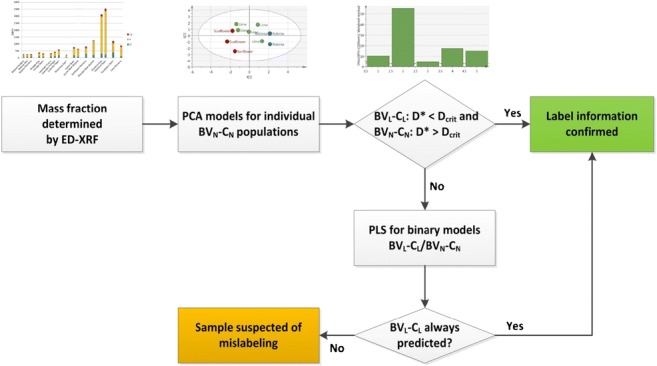
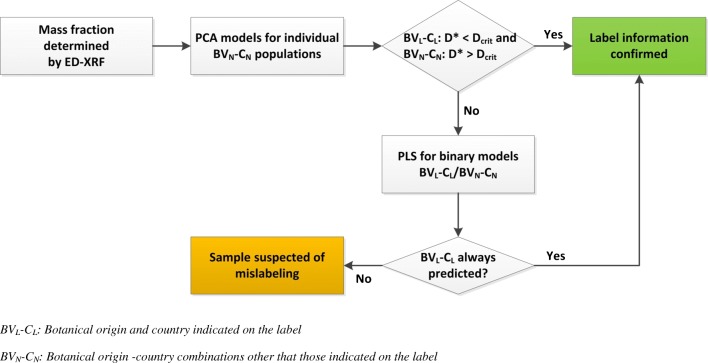
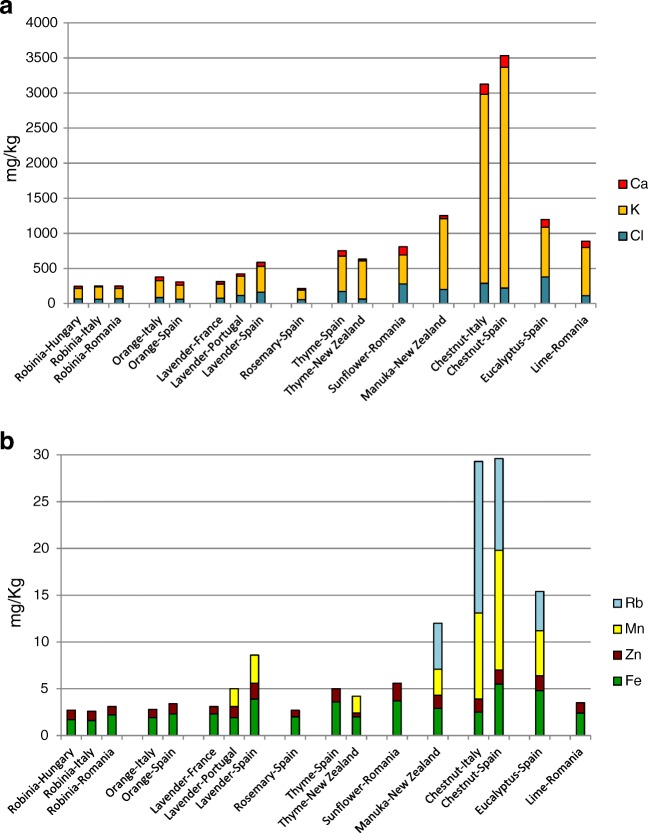
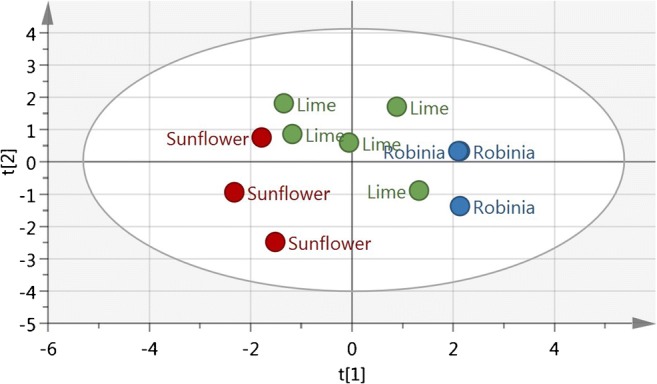
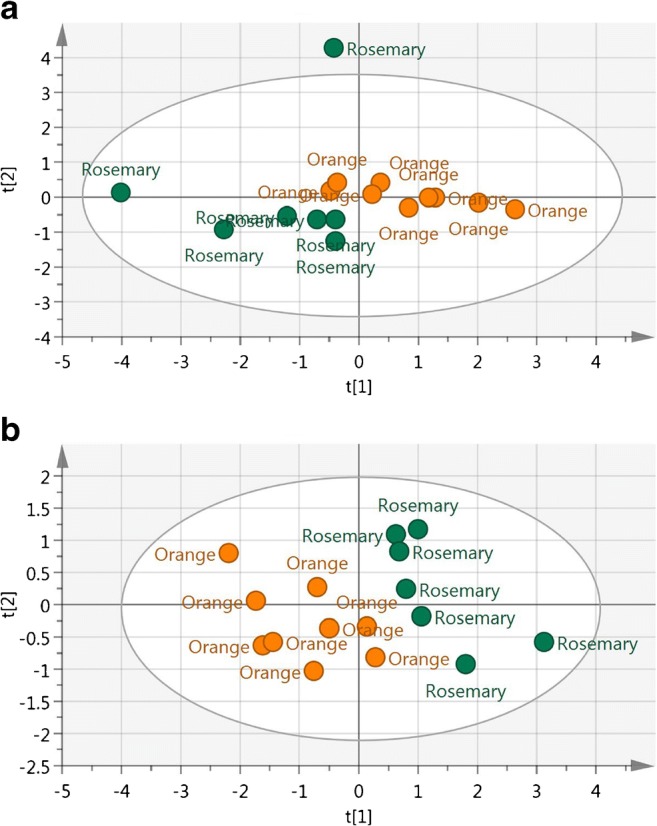
Honey is one of the food commodities most frequently affected by fraud. Although addition of extraneous sugars is the most common type of fraud, analytical methods are also needed to detect origin masking and misdescription of botanical variety. In this work, multivariate analysis of the content of certain macro- and trace elements, determined by energy-dispersive X-ray fluorescence (ED-XRF) without any type of sample treatment, were used to classify honeys according to botanical variety and geographical origin. Principal component analysis (PCA) and partial least squares-discriminant analysis (PLS-DA) were used to create classification models for nine different botanical varieties-orange, robinia, lavender, rosemary, thyme, lime, chestnut, eucalyptus and manuka-and seven different geographical origins-Italy, Romania, Spain, Portugal, France, Hungary and New Zealand. Although characterised by 100% sensitivity, PCA models lacked specificity. The PLS-DA models constructed for specific combinations of botanical variety-country (BV-C) allowed the successful classification of honey samples, which was verified by external validation samples. Graphical abstract.
蜂蜜是最常受到欺诈影响的食品商品之一。虽然添加外来糖是最常见的欺诈类型,但也需要分析方法来检测产地掩盖和植物品种的错误描述。在这项工作中,使用能量色散 X 射线荧光(ED-XRF)测定的某些宏量和微量元素的多元分析,无需任何类型的样品处理,根据植物品种和地理来源对蜂蜜进行分类。主成分分析(PCA)和偏最小二乘判别分析(PLS-DA)用于为九种不同的植物品种(橙、刺槐、薰衣草、迷迭香、百里香、酸橙、栗、桉树和麦卢卡)和七种不同的地理起源(意大利、罗马尼亚、西班牙、葡萄牙、法国、匈牙利和新西兰)创建分类模型。尽管 PCA 模型的灵敏度达到 100%,但特异性不足。针对特定植物品种-国家组合(BV-C)构建的 PLS-DA 模型允许成功分类蜂蜜样品,这通过外部验证样品得到了验证。