Ogwu Matthew Chidozie, Izah Sylvester Chibueze
Goodnight Family Department of Sustainable Development, Appalachian State University, 212 Living Learning Center, 305 Bodenheimer Drive, Boone, NC 28608, USA.
Department of Community Medicine, Faculty of Clinical Sciences, Bayelsa Medical University, Yenagoa 569101, Nigeria.
Antibiotics (Basel). 2025 Mar 1;14(3):255. doi: 10.3390/antibiotics14030255.
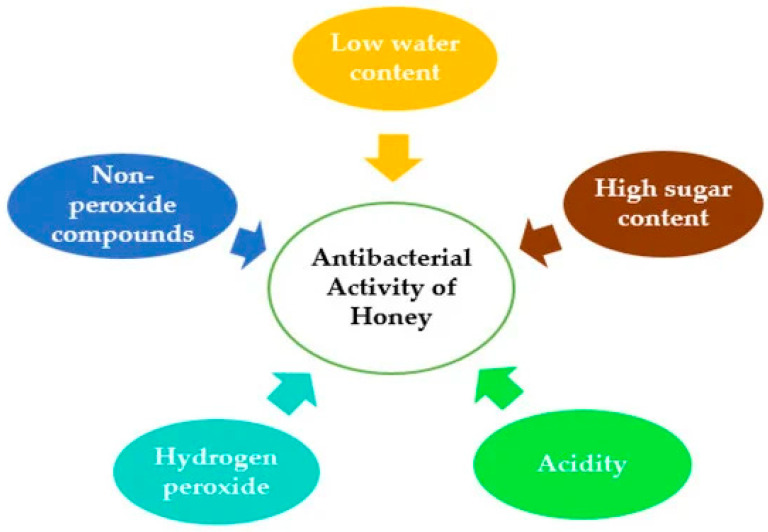
Honey, a natural product with a rich history of medicinal use, has gained increasing recognition for its potent antimicrobial properties, particularly against antibiotic-resistant pathogens. This review focuses on the antimicrobial mechanisms of honey, including its efficacy against resistant bacteria, such as Methicillin-resistant and . The antimicrobial action of honey is multifactorial, involving hydrogen peroxide production, phenolic compounds, high sugar concentrations, and the presence of bee defensin-1. The composition of honey varies based on its floral source, which can influence its antimicrobial strength. Certain types, such as Manuka honey, are particularly effective in clinical applications due to their higher levels of bioactive compounds. Honey has also been shown to disrupt bacterial biofilms, a major factor in antibiotic resistance, enhancing its therapeutic potential in treating chronic wounds and infections, especially in patients with compromised immune systems. Moreover, honey's ability to improve wound healing, reduce inflammation, and promote tissue regeneration highlights its broad therapeutic profile. As antibiotic resistance continues to challenge modern healthcare, honey offers a promising complementary treatment in antimicrobial therapy. Research into its specific bioactive components and potential synergistic effects with other natural agents, like ginger and propolis, could expand its applications. Standardizing honey products for medical use and establishing clinical guidelines are essential for optimizing its therapeutic benefits. As scientific understanding of honey's antimicrobial mechanisms deepens, its integration into healthcare systems as an adjunct therapy is expected to increase, offering a natural and effective alternative in the fight against infectious diseases.
蜂蜜是一种有着悠久药用历史的天然产物,其强大的抗菌特性,尤其是对耐抗生素病原体的抗菌特性,已得到越来越多的认可。本综述聚焦于蜂蜜的抗菌机制,包括其对耐药细菌(如耐甲氧西林细菌等)的疗效。蜂蜜的抗菌作用是多因素的,涉及过氧化氢的产生、酚类化合物、高糖浓度以及蜜蜂防御素-1的存在。蜂蜜的成分因其花源而异,这会影响其抗菌强度。某些类型的蜂蜜,如麦卢卡蜂蜜,由于其较高水平的生物活性化合物,在临床应用中特别有效。蜂蜜还被证明能破坏细菌生物膜,而细菌生物膜是抗生素耐药性的一个主要因素,这增强了其在治疗慢性伤口和感染方面的治疗潜力,尤其是对免疫系统受损的患者。此外,蜂蜜改善伤口愈合、减轻炎症和促进组织再生的能力突出了其广泛的治疗特性。随着抗生素耐药性继续给现代医疗保健带来挑战,蜂蜜在抗菌治疗中提供了一种有前景的补充治疗方法。对其特定生物活性成分以及与其他天然物质(如姜和蜂胶)潜在协同作用的研究,可能会扩大其应用范围。将蜂蜜产品标准化用于医疗用途并制定临床指南,对于优化其治疗益处至关重要。随着对蜂蜜抗菌机制的科学理解不断加深,预计其作为辅助疗法融入医疗保健系统的情况将会增加,为抗击传染病提供一种天然且有效的替代方法。