Division of Blood Disorders, Rutgers Cancer Institute of New Jersey, New Brunswick, NJ, USA.
Department of Pharmaceutical Sciences, Northeastern University, Boston, MA, USA.
Leukemia. 2020 May;34(5):1291-1304. doi: 10.1038/s41375-019-0663-x. Epub 2019 Nov 26.
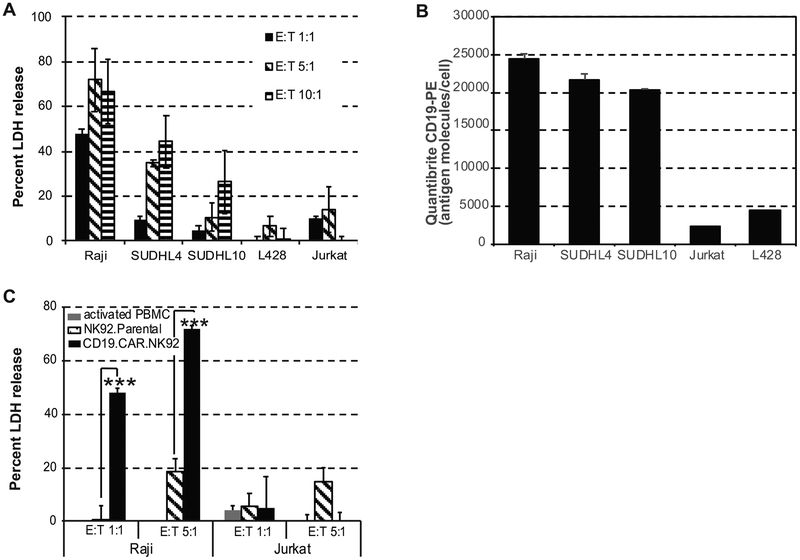
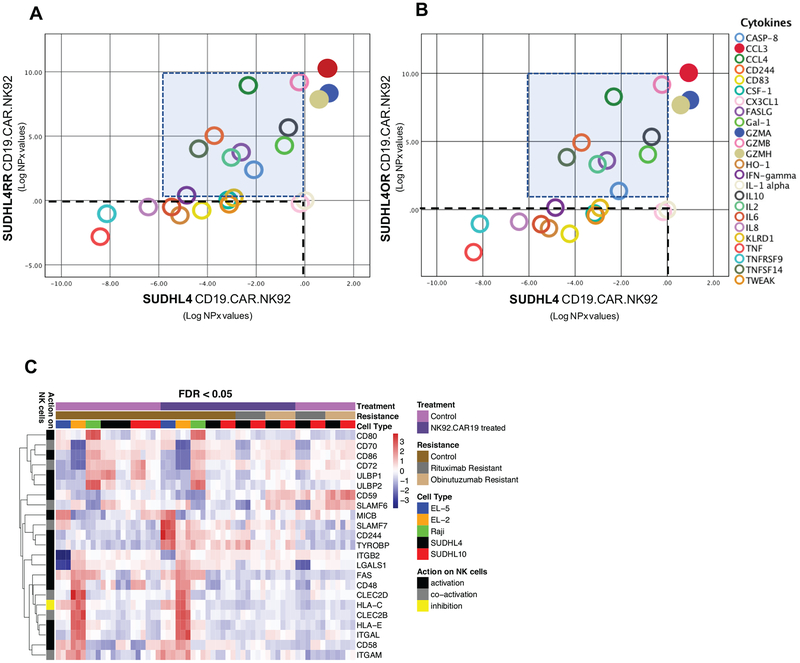
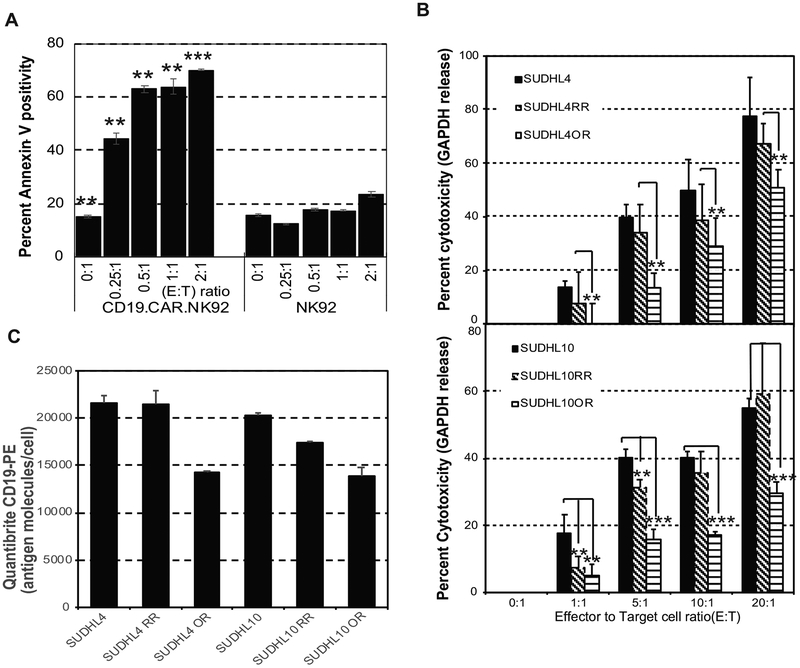
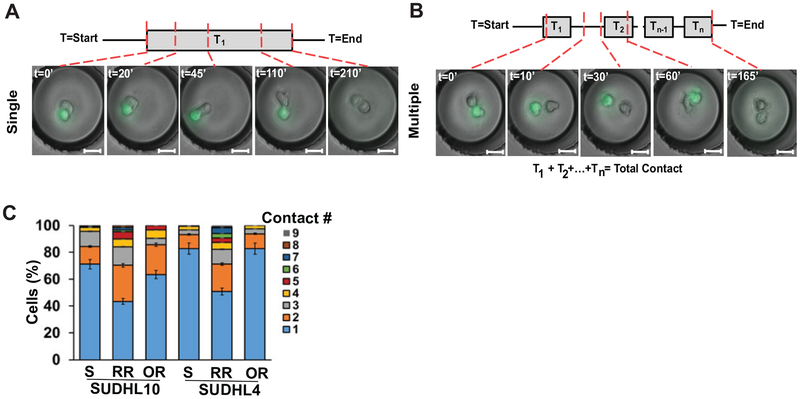
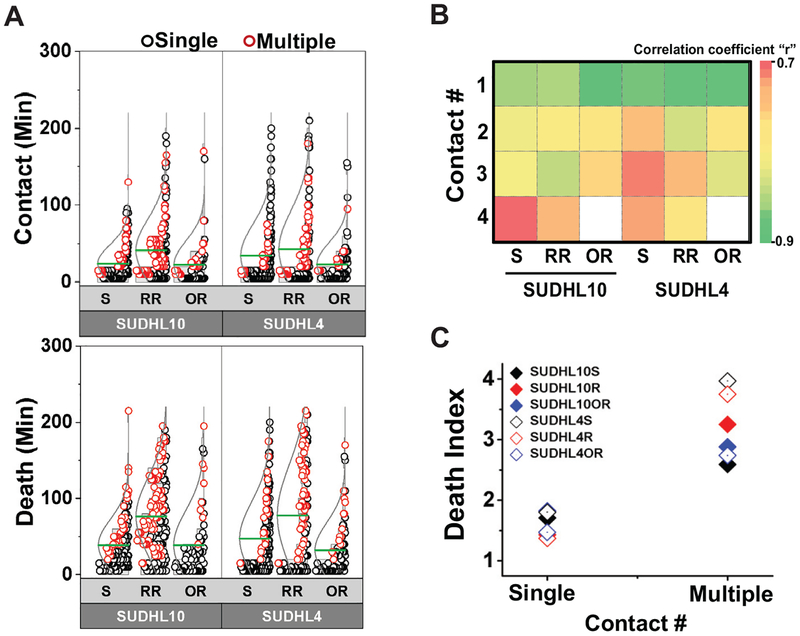
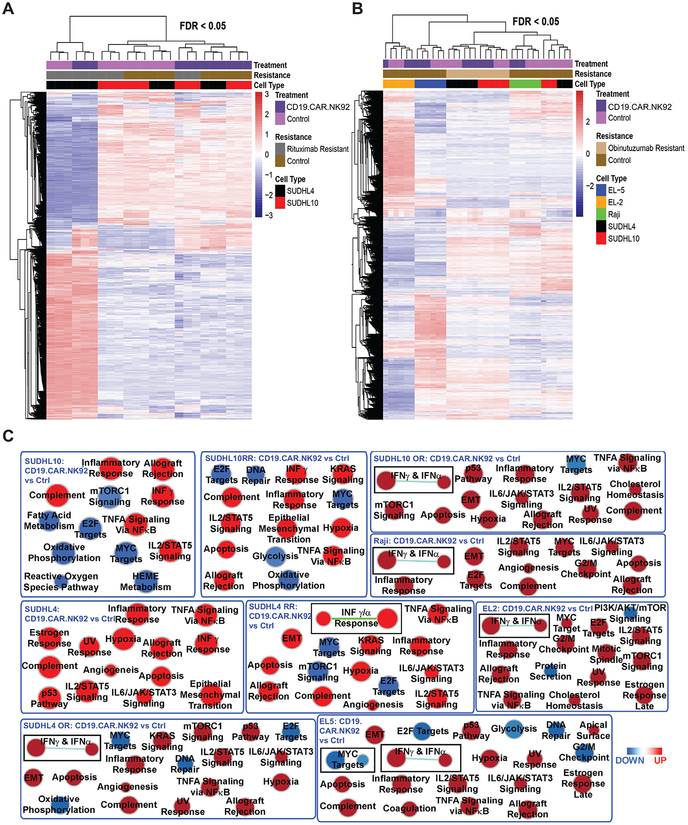
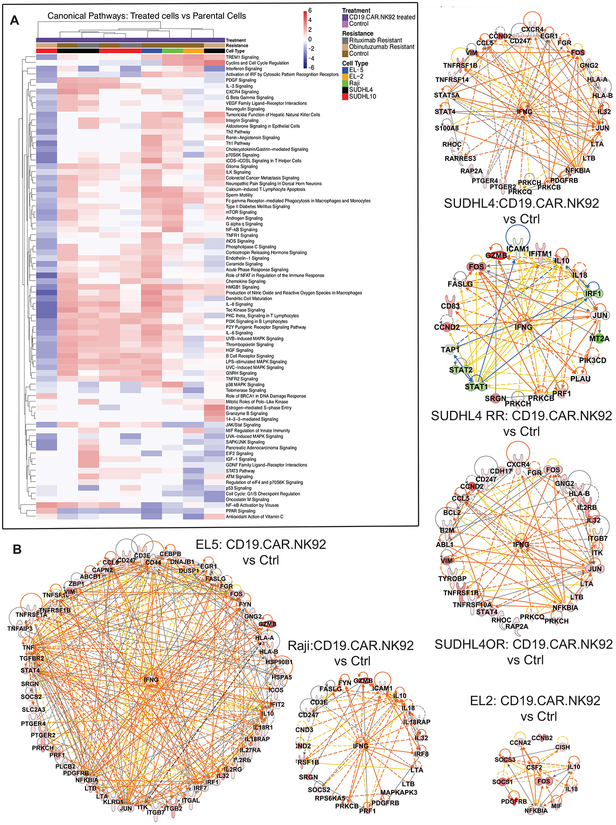
We investigated the cytolytic and mechanistic activity of anti-CD19 chimeric antigen receptor natural killer (CD19.CAR.NK92) therapy in lymphoma cell lines (diffuse large B-cell, follicular, and Burkitt lymphoma), including rituximab- and obinutuzumab-resistant cells, patient-derived cells, and a human xenograft model. CD19.CAR.NK92 therapy significantly increased cytolytic activity at E:T ratios (1:1-10:1) via LDH release and prominent induction of apoptosis in all cell lines, including in anti-CD20 resistant lymphoma cells. The kinetics of CD19.CAR.NK92 cell death measured via droplet-based single cell microfluidics analysis showed that most lymphoma cells were killed by single contact, with anti-CD20 resistant cell lines requiring significantly longer contact duration with NK cells. In addition, systems biology transcriptomic analyses of flow-sorted lymphoma cells co-cultured with CD19.CAR.NK92 revealed conserved activation of IFNγ signaling, execution of apoptosis, ligand binding, and immunoregulatory and chemokine signaling pathways. Furthermore, a 92-plex cytokine panel analysis showed increased secretion of granzymes, increased secretion of FASL, CCL3, and IL10 in anti-CD20 resistant SUDHL4 cells with induction of genes relevant to mTOR and G2/M checkpoint activation, which were noted in all anti-CD20 resistant cells co-cultured with CD19.CAR.NK92 cells. Collectively, CD19.CAR.NK92 was associated with potent anti-lymphoma activity across a host of sensitive and resistant lymphoma cells that involved distinct immuno-biologic mechanisms of cell death.
我们研究了抗 CD19 嵌合抗原受体自然杀伤(CD19.CAR.NK92)治疗在淋巴瘤细胞系(弥漫性大 B 细胞、滤泡性和伯基特淋巴瘤)中的细胞溶解和作用机制活性,包括利妥昔单抗和奥滨尤妥珠单抗耐药细胞、患者来源的细胞和人异种移植模型。CD19.CAR.NK92 治疗通过 LDH 释放显著增加了在 E:T 比(1:1-10:1)时的细胞溶解活性,并在所有细胞系中诱导明显的凋亡,包括在抗 CD20 耐药淋巴瘤细胞中。通过基于液滴的单细胞微流控分析测量的 CD19.CAR.NK92 细胞死亡动力学表明,大多数淋巴瘤细胞通过单次接触被杀死,而抗 CD20 耐药细胞系需要与 NK 细胞更长时间的接触。此外,与 CD19.CAR.NK92 共培养的流式分选淋巴瘤细胞的系统生物学转录组学分析显示 IFNγ 信号的保守激活、凋亡的执行、配体结合以及免疫调节和趋化因子信号通路。此外,92 plex 细胞因子面板分析显示,在 SUDHL4 抗 CD20 耐药细胞中,颗粒酶的分泌增加,FASL、CCL3 和 IL10 的分泌增加,同时诱导与 mTOR 和 G2/M 检查点激活相关的基因,这在所有与 CD19.CAR.NK92 细胞共培养的抗 CD20 耐药细胞中都有发现。总之,CD19.CAR.NK92 与多种敏感和耐药淋巴瘤细胞的强大抗淋巴瘤活性相关,涉及到不同的细胞死亡免疫生物学机制。