Personalized Genomic Medicine Research Center, Korea Research Institute of Bioscience and Biotechnology, Daejeon, 34141, Korea.
Genome Editing Research Center, Korea Research Institute of Bioscience and Biotechnology, 125 Gwahak-ro, Yuseong-gu, Daejeon, 34141, Korea.
Gastric Cancer. 2020 May;23(3):473-482. doi: 10.1007/s10120-019-01029-4. Epub 2019 Nov 26.
Although recent advances in high-throughput technology have provided many insights into gastric cancer (GC), few reliable biomarkers for diffuse-type GC have been identified. Here, we aim to identify a prognostic and predictive signature of diffuse-type GC heterogeneity.
We analyzed RNA-seq-based transcriptome data to identify a molecular signature in 150 gastric tissue samples including 107 diffuse-type GCs. The predictive value of the signature was verified using other diffuse-type GC samples in three independent cohorts (n = 466). Log-rank and Cox regression analyses were used to estimate the association between the signature and prognosis. The signature was also characterized by somatic variant analyses and tissue microarray analysis between diffuse-type GC subtypes.
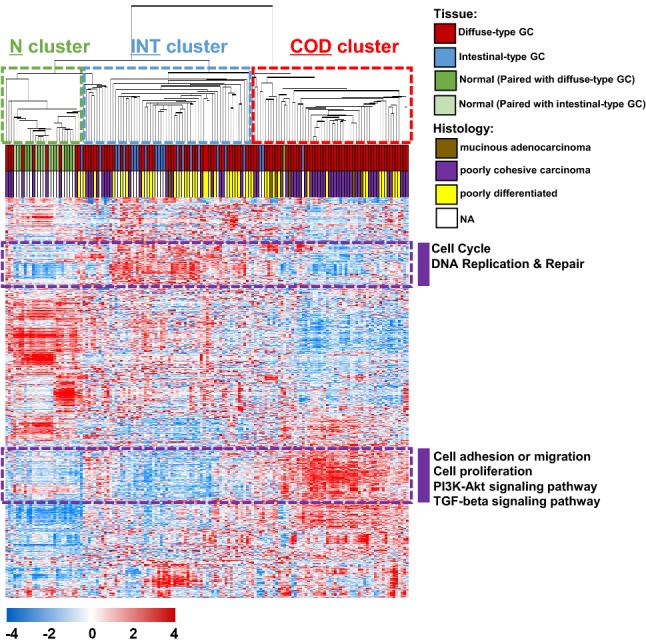
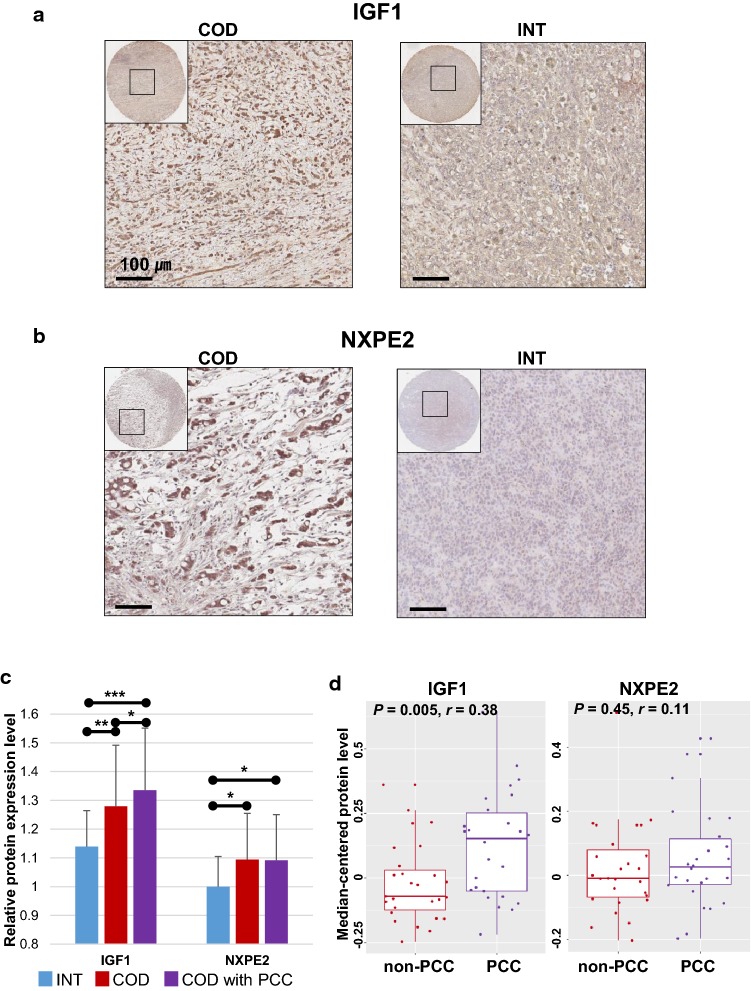
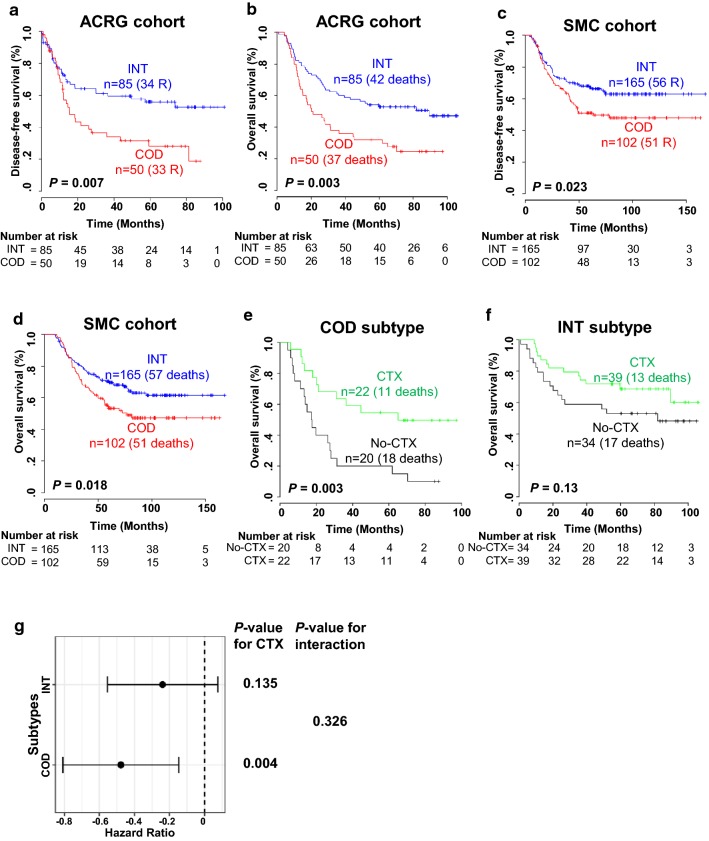
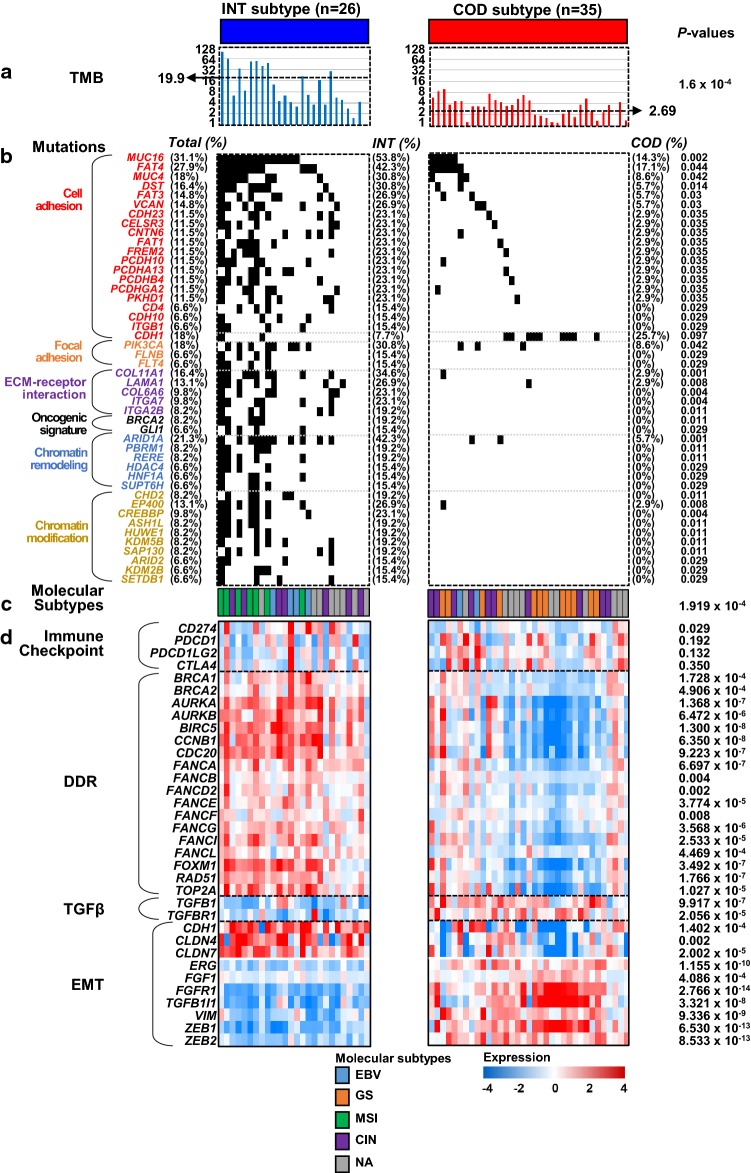
Transcriptomic profiling of RNA-seq data identified a signature which revealed distinct subtypes of diffuse-type GC: the intestinal-like (INT) and core diffuse-type (COD) subtypes. The signature showed high predictability and independent clinical utility in diffuse-type GC prognosis in other patient cohorts (HR 2.058, 95% CI 1.53-2.77, P = 1.76 × 10). Integrative mutational and gene expression analyses demonstrated that the COD subtype was responsive to chemotherapy, whereas the INT subtype was responsive to immunotherapy with an immune checkpoint inhibitor (ICI). Tissue microarray analysis showed the practical utility of IGF1 and NXPE2 for predicting diffuse-type GC heterogeneity.
We present a molecular signature that can identify diffuse-type GC patients who display different clinical behaviors as well as responses to chemotherapy or ICI treatment.
尽管高通量技术的最新进展为胃癌(GC)提供了许多见解,但很少有可靠的弥漫型 GC 生物标志物被发现。在这里,我们旨在确定弥漫型 GC 异质性的预后和预测特征。
我们分析了基于 RNA-seq 的转录组数据,以确定 150 个包括 107 个弥漫型 GC 的胃组织样本中的分子特征。该特征的预测价值通过在三个独立队列(n=466)中的其他弥漫型 GC 样本进行验证。对数秩和 Cox 回归分析用于估计特征与预后之间的关联。还通过弥漫型 GC 亚型之间的体细胞变异分析和组织微阵列分析来表征该特征。
RNA-seq 数据的转录组分析确定了一个特征,该特征揭示了弥漫型 GC 的不同亚型:肠型(INT)和核心弥漫型(COD)亚型。该特征在其他患者队列的弥漫型 GC 预后中具有较高的可预测性和独立的临床实用性(HR 2.058,95%CI 1.53-2.77,P=1.76×10)。整合突变和基因表达分析表明,COD 亚型对化疗有反应,而 INT 亚型对免疫检查点抑制剂(ICI)的免疫治疗有反应。组织微阵列分析显示 IGF1 和 NXPE2 对预测弥漫型 GC 异质性具有实际意义。
我们提出了一个分子特征,可以识别出具有不同临床行为以及对化疗或 ICI 治疗反应的弥漫型 GC 患者。