Department of Biological Sciences, Laboratory of Immunology and Infectious Disease Biology, Indian Institute of Science Education and Research (IISER) Bhopal, Bhopal, Madhya Pradesh, India.
Department of Surgery, Zoram Medical College, Falkawn, Mizoram, India.
mSystems. 2024 Oct 22;9(10):e0067324. doi: 10.1128/msystems.00673-24. Epub 2024 Sep 16.
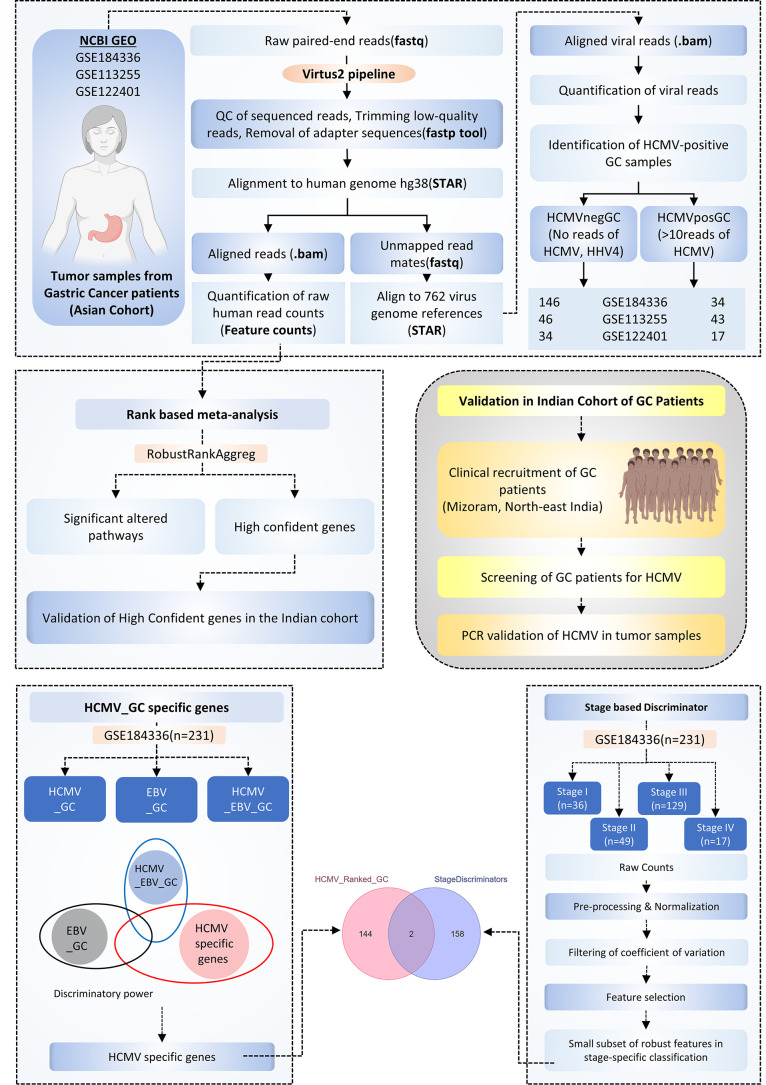
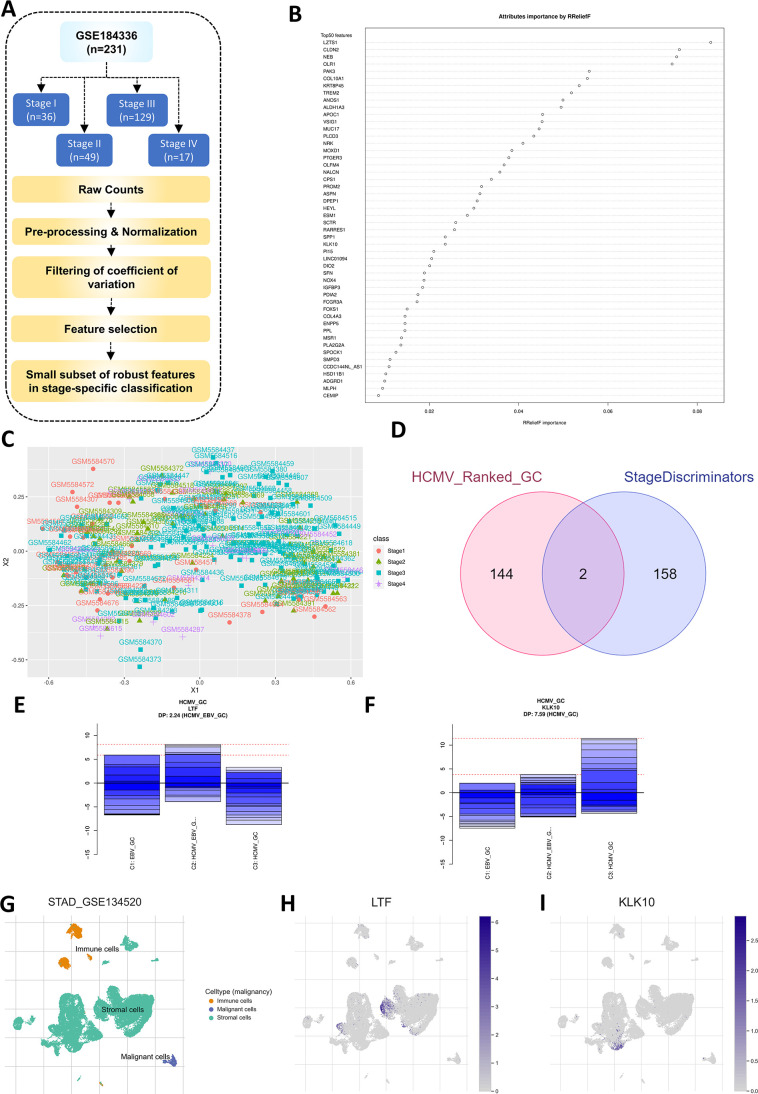
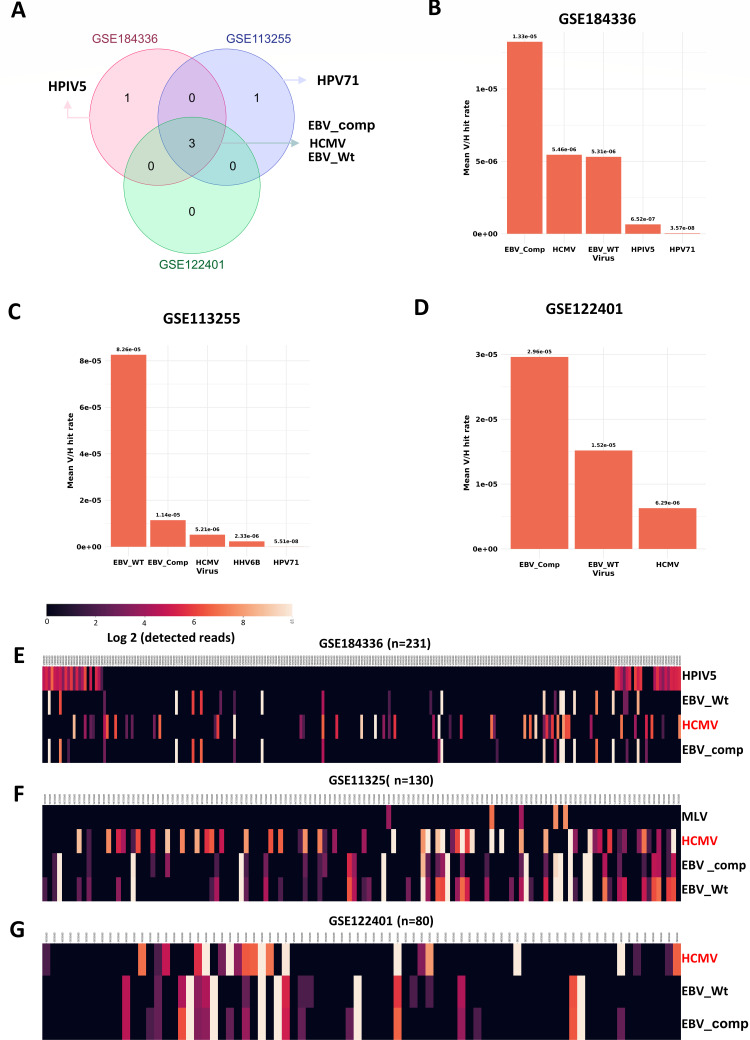
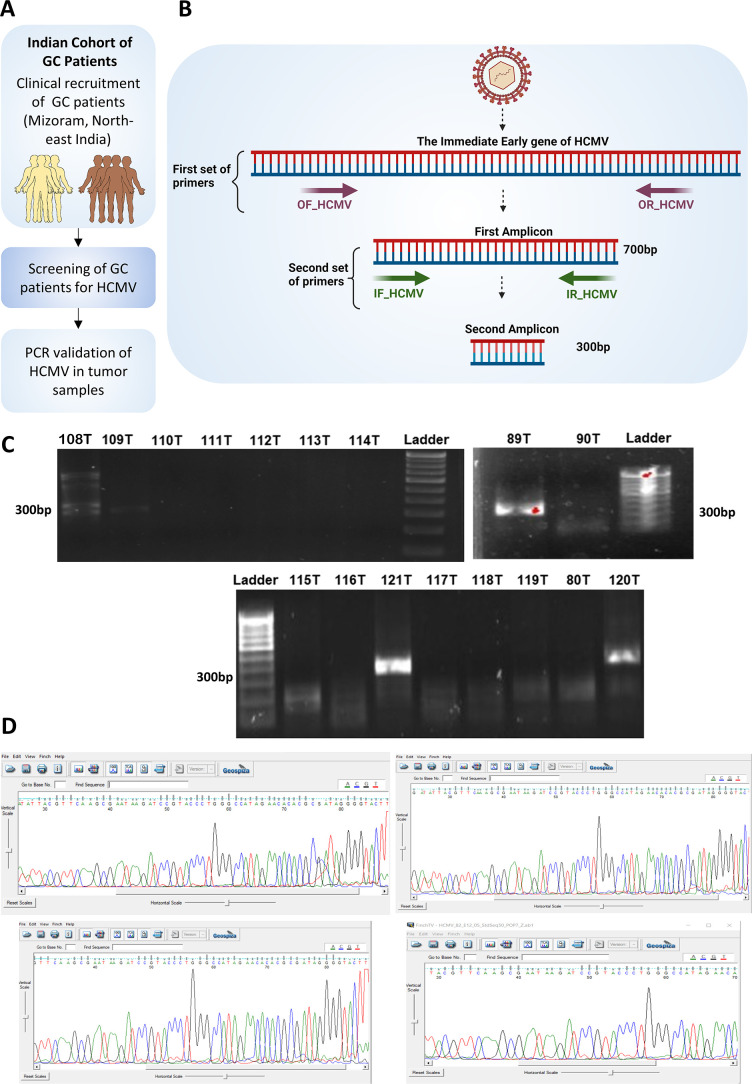
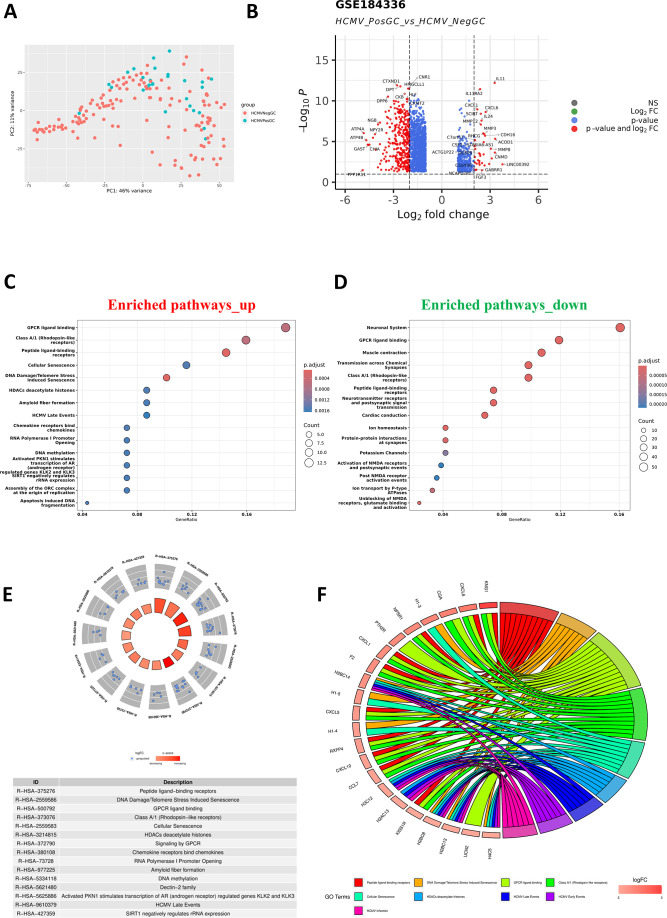
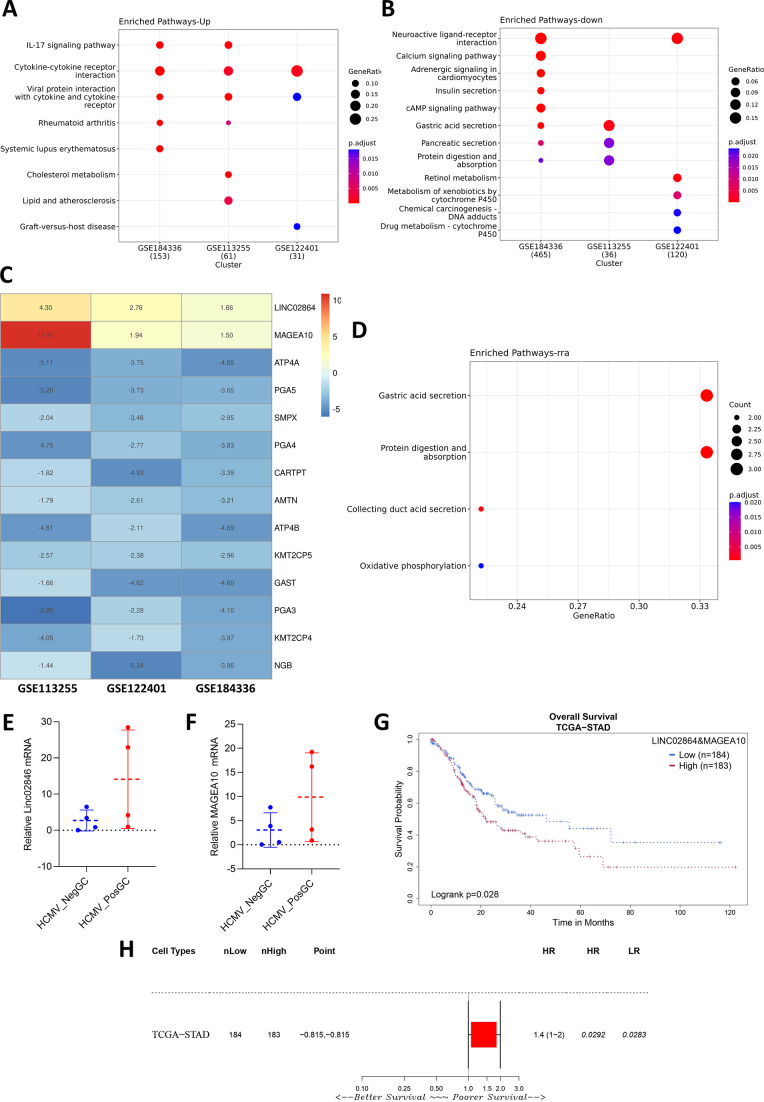
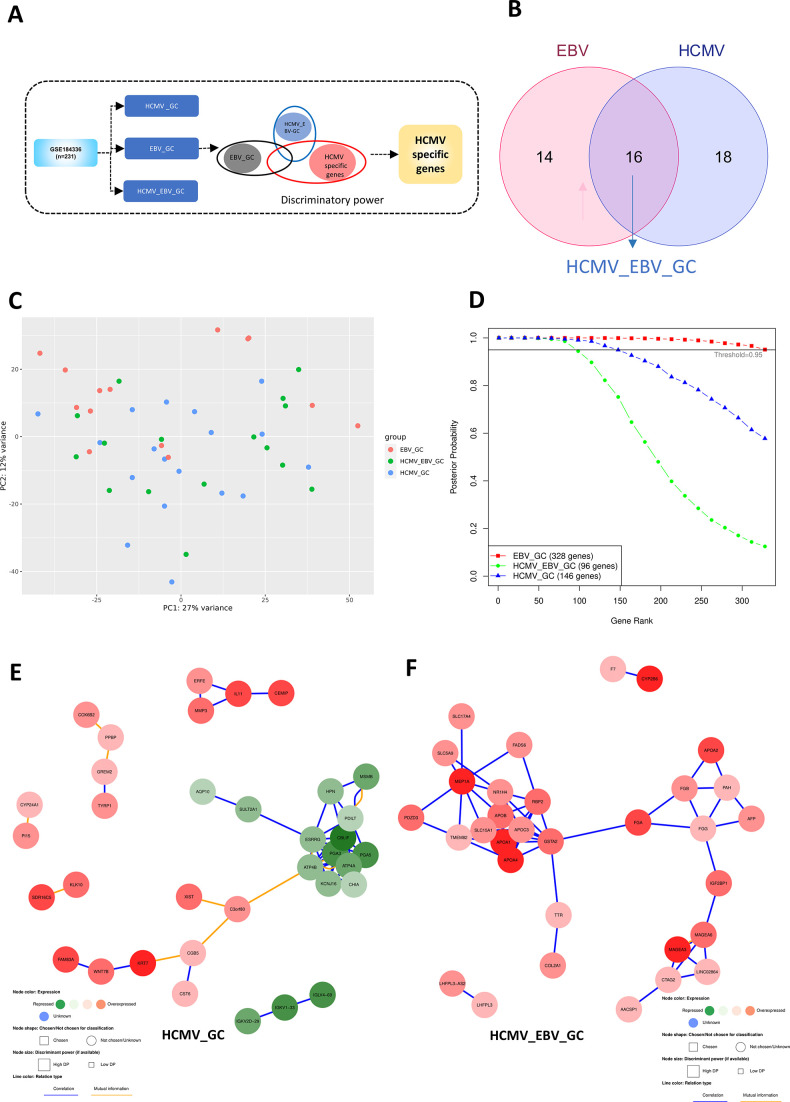
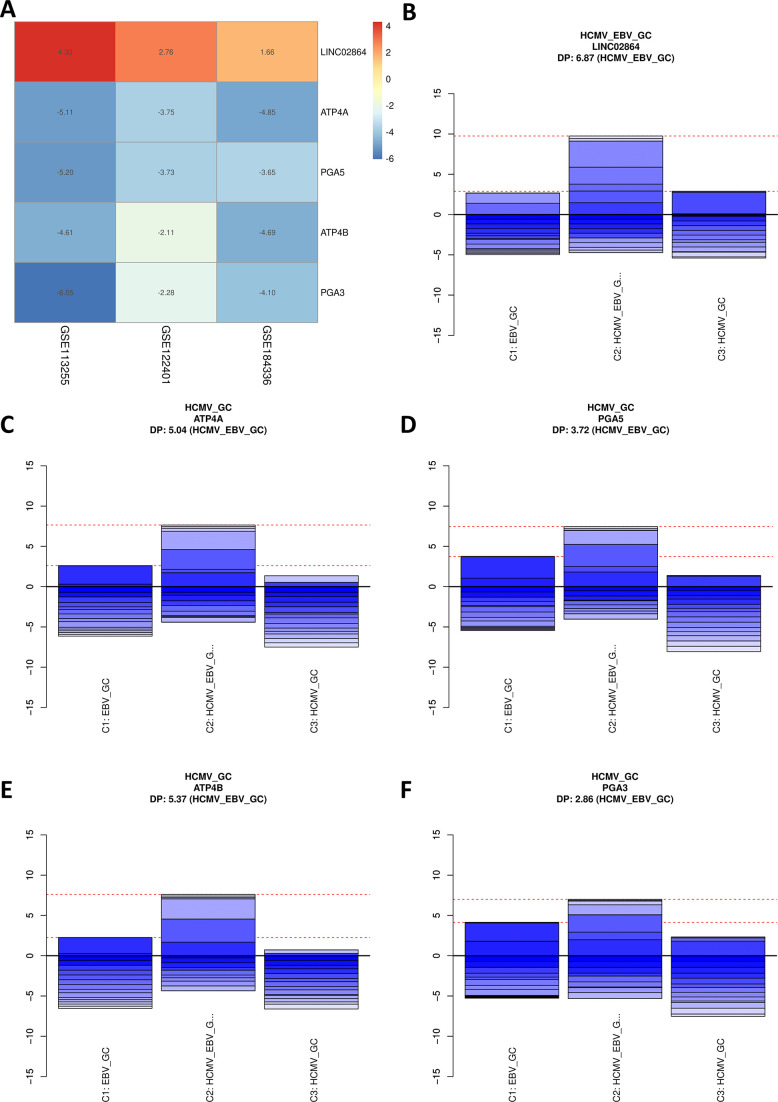
Gastric cancer (GC) prevalence is very high in the Asian population. Oncogenic viruses play a crucial role in the progression of different types of cancers. Through reanalysis of clinical RNA-seq data sets derived from Asian GC patients, this study identified the presence of human cytomegalovirus (HCMV) in Asian GC tumors, next to the well-studied association of EBV. Clinical recruitment of the Indian GC cohort and screening for HCMV presence identified a 14.28% occurrence, similar to that observed in the bioinformatics analysis. A combinatorial approach of rank-based meta-analysis and ranking of groups based on an expectation-maximization algorithm identified that the upregulated LINC02864 and MAGEA10 correlated with poor survival of GC patients and downregulated tumor suppressor genes enriching for gastric acid secretion pathway to be associated with HCMV-positive GC patients, revealing the progressive role of HCMV infection in GC. Genes that discriminate between different stages of GC were identified through feature selection implemented in a machine-learning approach. LTF and KLK10 expressions were found to be specifically dysregulated by HCMV and can also indicate the GC stages. The results of this study will guide future studies to identify the functional role of these genes in the HCMV-associated GC.IMPORTANCENearly 75% of gastric cancer (GC) cases reported globally are from the Asian population. Most existing public databases, such as TCGA, comprise only a fractional portion of data derived from Asian ancestry. This study identified EBV and human cytomegalovirus (HCMV)'s higher detection in GC patients. The presence and role of EBV associated with GC are well-known, and the observation of HCMV prompted us to validate the findings in a small cohort of 40 Indian GC patients. We observed a 14.28% occurrence of HCMV in the Indian cohort, similar to that observed from next-generation sequencing. A combinatorial approach of rank-based meta-analysis and ranking of groups based on an expectation-maximization algorithm identified that the upregulated LINC02864 and MAGEA10 correlated with poor survival of GC patients and downregulated tumor suppressor genes enriching for gastric acid secretion pathway to be associated with HCMV-positive GC patients, revealing the progressive role of HCMV infection in GC.
胃癌(GC)在亚洲人群中的发病率非常高。致癌病毒在不同类型癌症的发展中起着至关重要的作用。通过重新分析来自亚洲 GC 患者的临床 RNA-seq 数据集,本研究在亚洲 GC 肿瘤中发现了人类巨细胞病毒(HCMV)的存在,除了众所周知的 EBV 关联之外。对印度 GC 队列的临床招募和 HCMV 存在的筛查确定了 14.28%的发生率,与生物信息学分析观察到的相似。基于秩的荟萃分析的组合方法和基于期望最大化算法的组排名确定上调的 LINC02864 和 MAGEA10 与 GC 患者的不良生存相关,下调富集胃酸分泌途径的肿瘤抑制基因与 HCMV 阳性 GC 患者相关,揭示了 HCMV 感染在 GC 中的进行性作用。通过机器学习方法中的特征选择确定了可区分 GC 不同阶段的基因。通过 HCMV 发现 LTF 和 KLK10 表达异常,并且还可以指示 GC 阶段。本研究的结果将指导未来的研究,以确定这些基因在 HCMV 相关 GC 中的功能作用。
重要信息:全球报告的近 75%的胃癌(GC)病例来自亚洲人群。大多数现有的公共数据库,如 TCGA,仅包含源自亚洲血统的数据的一小部分。本研究确定了 EBV 和人类巨细胞病毒(HCMV)在 GC 患者中的更高检出率。EBV 与 GC 相关的存在和作用是众所周知的,观察到 HCMV 促使我们在 40 名印度 GC 患者的小队列中验证这些发现。我们观察到印度队列中 HCMV 的发生率为 14.28%,与下一代测序观察到的相似。基于秩的荟萃分析的组合方法和基于期望最大化算法的组排名确定上调的 LINC02864 和 MAGEA10 与 GC 患者的不良生存相关,下调富集胃酸分泌途径的肿瘤抑制基因与 HCMV 阳性 GC 患者相关,揭示了 HCMV 感染在 GC 中的进行性作用。