Department of Orthopaedics, Liyang People's Hospital, Liyang, Jiangsu, China.
Department of Radiology, Wuxi Ninth People's Hospital Affiliated of Soochow University, Wuxi, Jiangsu, China.
J Orthop Surg Res. 2019 Nov 27;14(1):390. doi: 10.1186/s13018-019-1453-x.
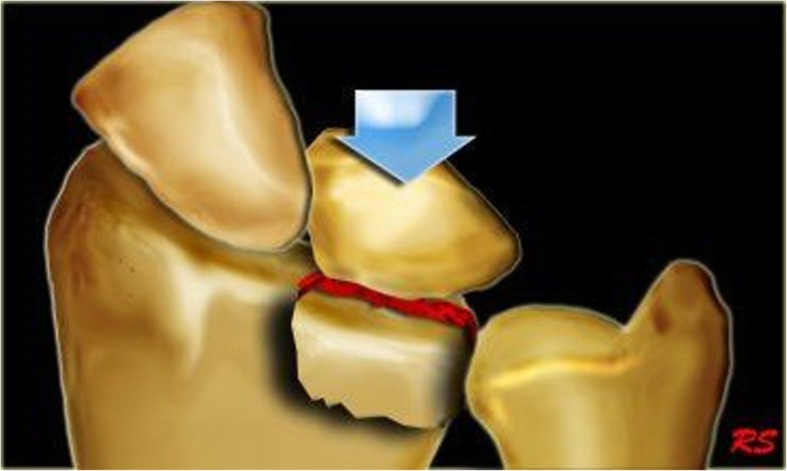
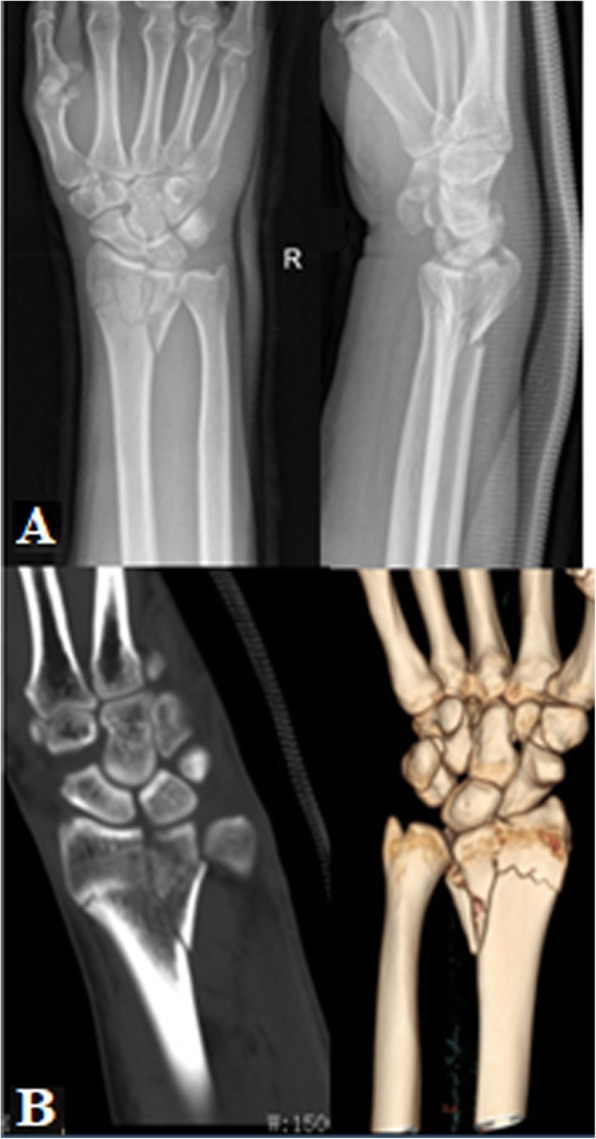
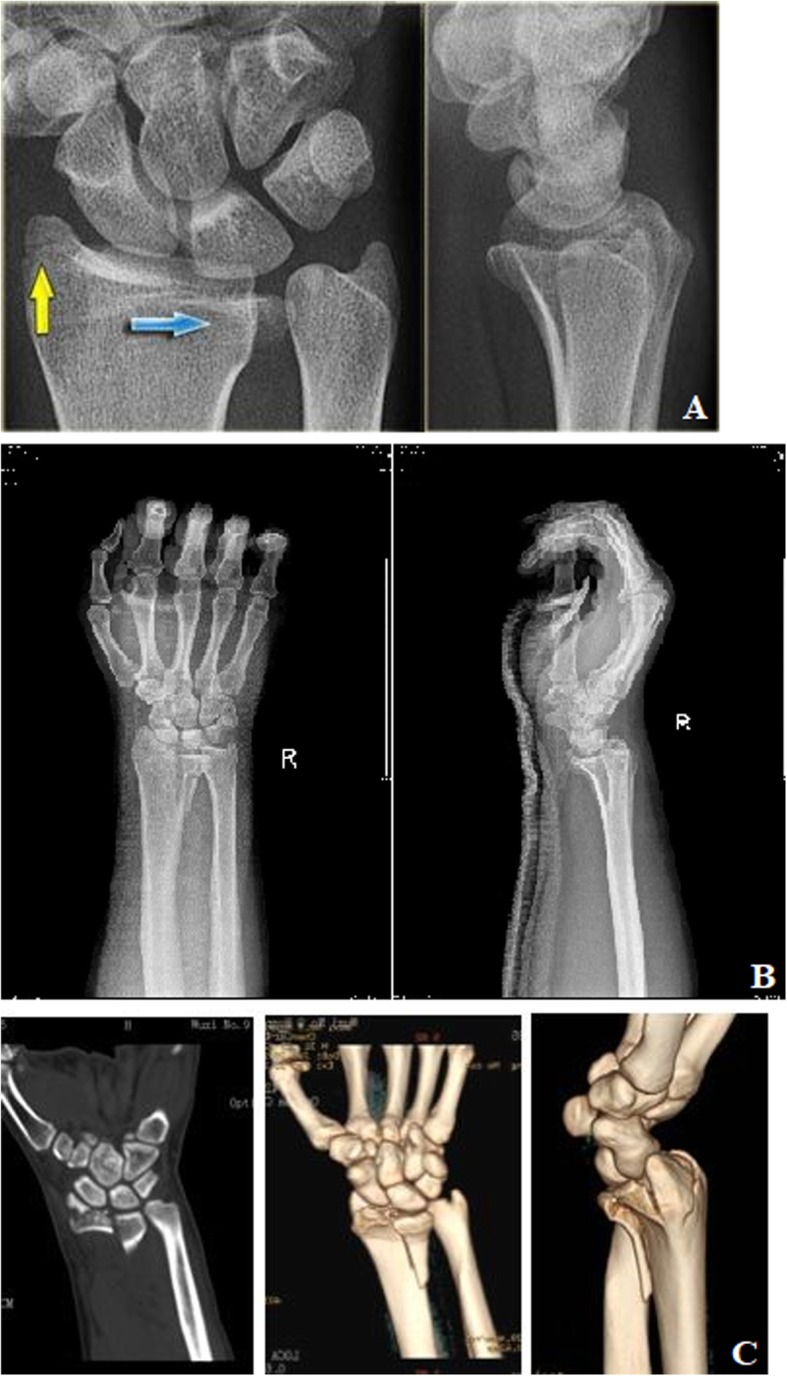
The aim of this study is to investigate the morphological characteristics of distal radius die-punch fracture (DRDPF) with different types, based on the three-column theory.
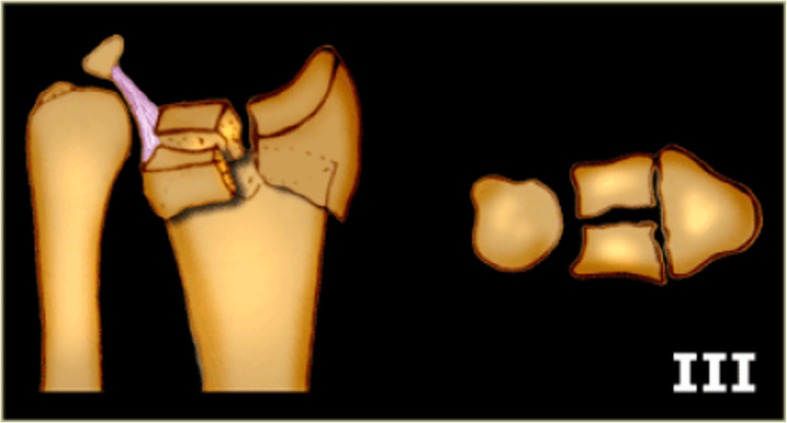
The imaging data of 560 patients diagnosed with DRDPF were reviewed and divided into single-column, double-column, or three-column DRDPF according to the three-column theory, and the types, case distribution of DRDPF, and inter- and intra-agreement of classification were further analyzed.
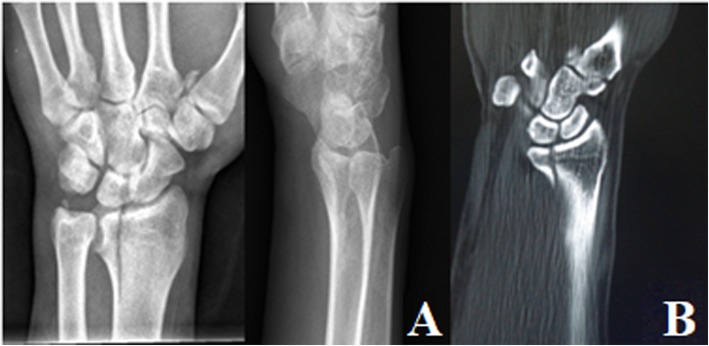
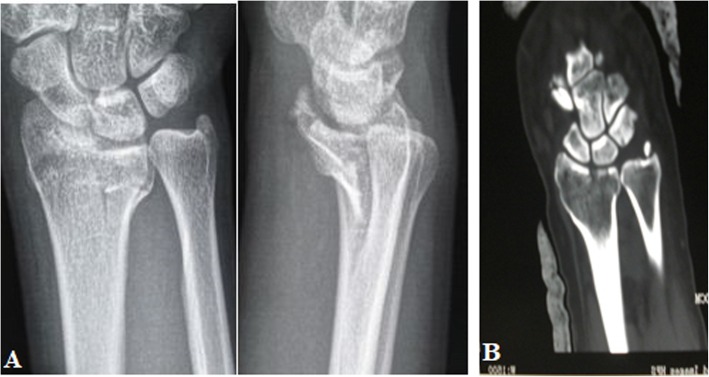
There were 65 cases of single-column DRDPF, 406 cases of double-column DRDPF, and 89 cases of three-column DRDPF. Among the single-column DRDPF, there were three cases of volar, 13 cases of dorsal, 14 cases of split, and 35 cases of collapse type fractures. Among the radius column fracture, there were 130 cases of metaphseal,155 cases of articular surface, and 210 cases of combined type. The inter-observer Kappa coefficient was 0.877-0.937, and the intra-observer kappa was 0.916-0.959, showing high agreement. At the 12th month's follow-up, according to the Gartland-Werley score system for the functionary recovery of the wrist and hand, 519 cases (92.68%) of the patients ranked excellent or good, and 41 cases (7.32%) ranked fair. All the cases were fair results, and the intermediate column of the distal radius was collapse type fractures, showing significant difference between the collapse type and other types (χ2 = 23.460, P = 0.000). The excellent and good rate in the single-, double-, and three-column DRDPFs were 93.85%, 92.16%, and 91.01%, respectively (χ2 = 0.018, P = 0.991).
Due to the difference of the nature and energy of the forces, the position of wrist, and the bone quality of the patients at the moment of the injury, the loading forces transmitted to the intermediate column of the distal radius could result in different types of DRDPF. The classification method in this study included all types of DRDPF, indicating the mechanism, affected sites, and the morphological characteristics of DRDPF with high consistency, which hopefully could provide insight into the treatment and prognosis of DRDPF patients.
本研究旨在基于三柱理论探讨不同类型的桡骨远端冲顶骨折(DRDPF)的形态学特征。
回顾分析了 560 例 DRDPF 患者的影像学资料,根据三柱理论将其分为单柱型、双柱型或三柱型 DRDPF,进一步分析 DRDPF 的类型、病例分布及分类的组间和组内一致性。
单柱型 DRDPF 65 例,双柱型 DRDPF 406 例,三柱型 DRDPF 89 例。单柱型 DRDPF 中,掌侧 3 例,背侧 13 例,劈裂型 14 例,塌陷型 35 例;桡骨柱骨折中,干骺端 130 例,关节面 155 例,混合型 210 例。组间 Kappa 系数为 0.8770.937,组内 Kappa 系数为 0.9160.959,一致性高。12 个月随访时,根据腕关节和手部功能恢复的 Gartland-Werley 评分系统,519 例(92.68%)患者的评分优秀或良好,41 例(7.32%)为一般。所有病例均为一般结果,桡骨远端中柱为塌陷型骨折,塌陷型与其他类型比较差异有统计学意义(χ2=23.460,P=0.000)。单柱、双柱和三柱 DRDPF 的优良率分别为 93.85%、92.16%和 91.01%(χ2=0.018,P=0.991)。
由于受力性质和能量、腕关节位置及受伤时患者骨质量的不同,传递至桡骨远端中柱的载荷力可导致不同类型的 DRDPF。本研究的分类方法包含了所有类型的 DRDPF,表明 DRDPF 的机制、受累部位和形态学特征具有高度一致性,有望为 DRDPF 患者的治疗和预后提供深入了解。