Departamento de Ginecologia e Obstetricia, Faculdade de Ciencias Medicas, Universidade Estadual de Campinas, Campinas, SP, BR.
Universidade Federal de Pernambuco, Pernambuco, PE, BR.
Clinics (Sao Paulo). 2019 Nov 25;74:e1403. doi: 10.6061/clinics/2019/e1403. eCollection 2019.
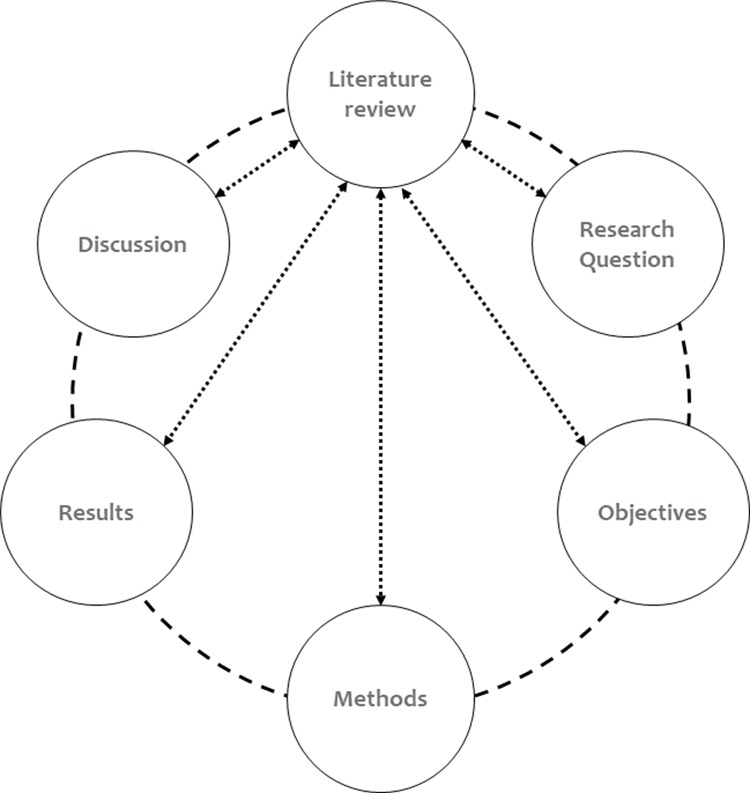
A sophisticated literature review (LR) can result in a robust dissertation/thesis by scrutinizing the main problem examined by the academic study; anticipating research hypotheses, methods and results; and maintaining the interest of the audience in how the dissertation/thesis will provide solutions for the current gaps in a particular field. Unfortunately, little guidance is available on elaborating LRs, and writing an LR chapter is not a linear process. An LR translates students' abilities in information literacy, the language domain, and critical writing. Students in postgraduate programs should be systematically trained in these skills. Therefore, this paper discusses the purposes of LRs in dissertations and theses. Second, the paper considers five steps for developing a review: defining the main topic, searching the literature, analyzing the results, writing the review and reflecting on the writing. Ultimately, this study proposes a twelve-item LR checklist. By clearly stating the desired achievements, this checklist allows Masters and Ph.D. students to continuously assess their own progress in elaborating an LR. Institutions aiming to strengthen students' necessary skills in critical academic writing should also use this tool.
一篇精心撰写的文献综述(LR)可以通过仔细审查学术研究中检查的主要问题、预测研究假设、方法和结果,并保持读者对论文将如何为特定领域当前的空白提供解决方案的兴趣,从而促成一篇扎实的学位论文。不幸的是,目前几乎没有关于撰写 LR 的指导,而且撰写 LR 章节并不是一个线性的过程。LR 可以反映学生在信息素养、语言领域和批判性写作方面的能力。研究生课程的学生应该系统地接受这些技能的培训。因此,本文讨论了 LR 在学位论文中的目的。其次,本文考虑了发展综述的五个步骤:定义主要主题、搜索文献、分析结果、撰写综述和反思写作。最终,本研究提出了一个十二项的 LR 清单。通过明确说明预期的成果,这个清单可以让硕士和博士研究生不断评估自己在撰写 LR 方面的进展。旨在加强学生批判性学术写作必要技能的机构也应该使用这个工具。