Division of Cardiology, Department of Medicine, Emory University School of Medicine, 101 Woodruff Circle, 308 WMB, Atlanta, GA, 30322, USA.
Division of Neuroscience, Hospital Sírio-Libanês, São Paulo, SP, Brazil.
J Neuroinflammation. 2019 Nov 28;16(1):241. doi: 10.1186/s12974-019-1575-4.
Sepsis-associated encephalopathy (SAE), a diffuse cerebral dysfunction in the absence of direct CNS infection, is associated with increased rates of mortality and morbidity in patients with sepsis. Increased cytokine production and disruption of the blood-brain barrier (BBB) are implicated in the pathogenesis of SAE. The induction of pro-inflammatory mediators is driven, in part, by activation of NF-κΒ. Lipopolysaccharide (LPS), an endotoxin produced by gram-negative bacteria, potently activates NF-κΒ and its downstream targets, including cyclooxygenase-2 (Cox-2). Cox-2 catalyzes prostaglandin synthesis and in the brain prostaglandin, E2 is capable of inducing endothelial permeability. Depletion of polymerase δ-interacting protein 2 (Poldip2) has previously been reported to attenuate BBB disruption, possibly via regulation of NF-κΒ, in response to ischemic stroke. Here we investigated Poldip2 as a novel regulator of NF-κΒ/cyclooxygenase-2 signaling in an LPS model of SAE.
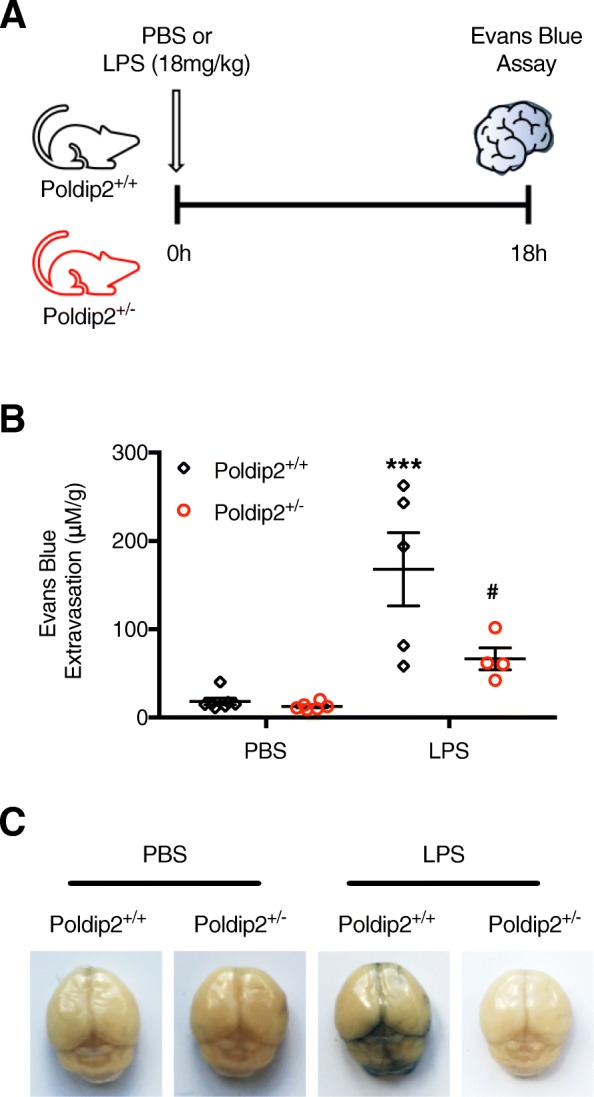
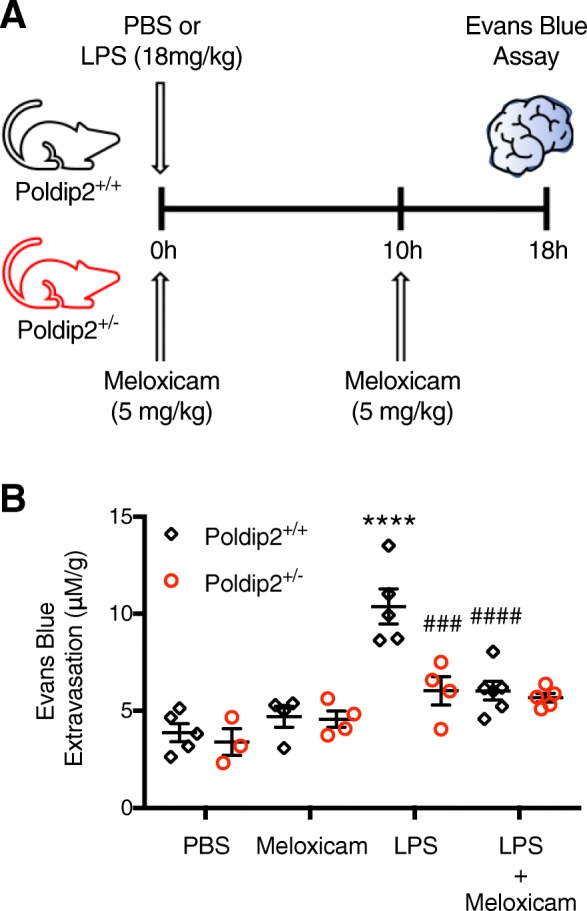
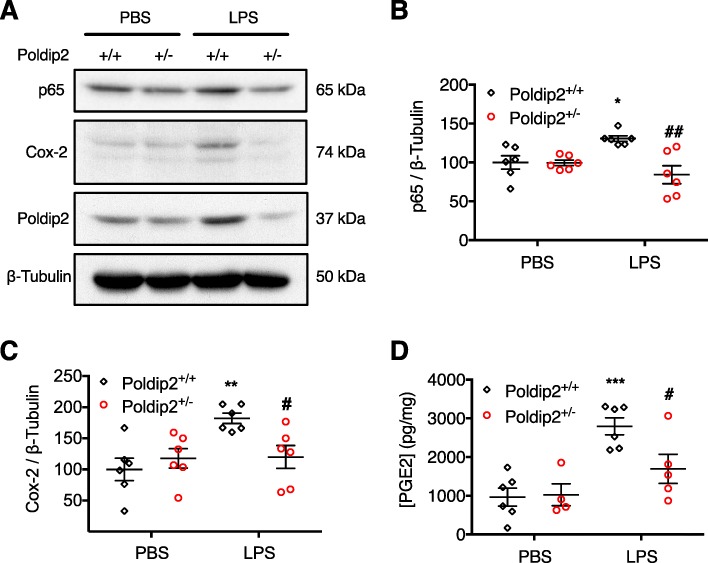
Intraperitoneal injections of LPS (18 mg/kg) were used to induce BBB disruption in Poldip2 and Poldip2 mice. Changes in cerebral vascular permeability and the effect of meloxicam, a selective Cox-2 inhibitor, were assessed by Evans blue dye extravasation. Cerebral cortices of Poldip2 and Poldip2 mice were further evaluated by immunoblotting and ELISA. To investigate the role of endothelial Poldip2, immunofluorescence microscopy and immunoblotting were performed to study the effect of siPoldip2 on LPS-mediated NF-κΒ subunit p65 translocation and Cox-2 induction in rat brain microvascular endothelial cells. Finally, FITC-dextran transwell assay was used to assess the effect of siPoldip2 on LPS-induced endothelial permeability.
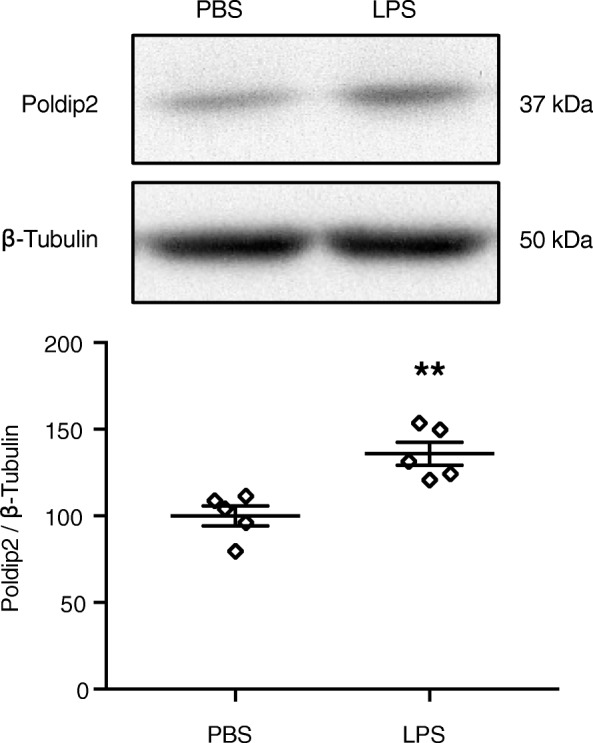
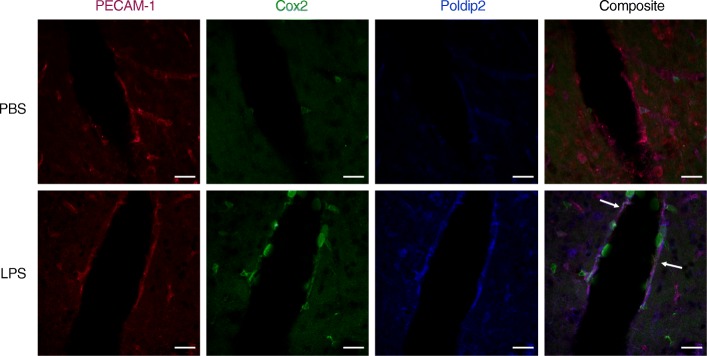
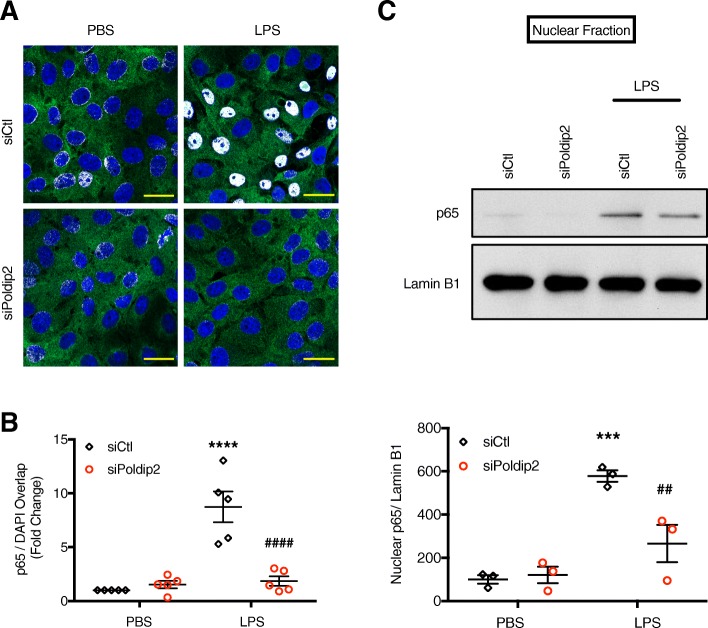
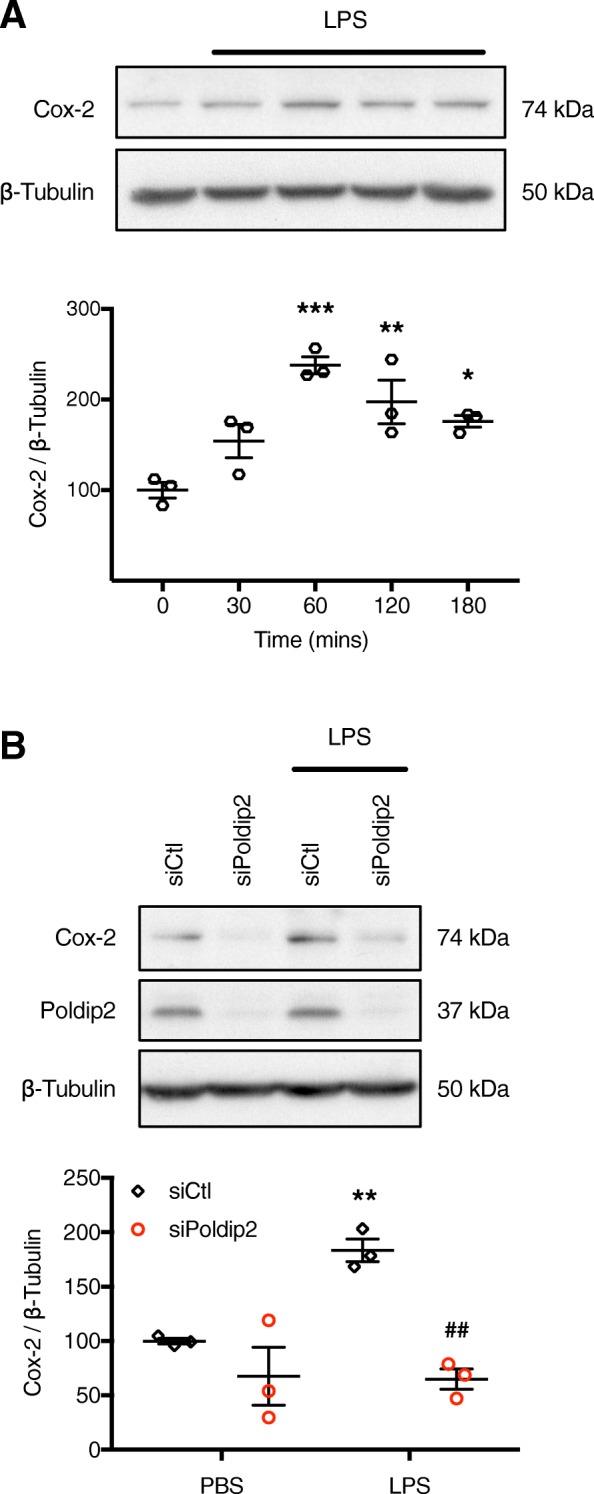
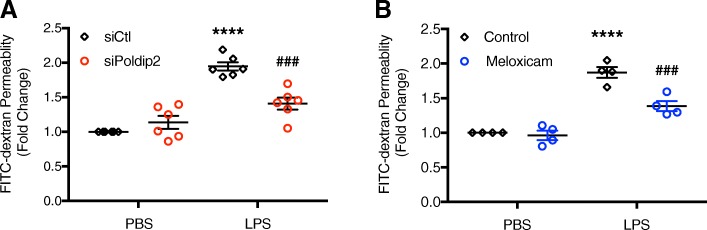
Heterozygous deletion of Poldip2 conferred protection against LPS-induced BBB permeability. Alterations in Poldip2 BBB integrity were preceded by induction of Poldip2, p65, and Cox-2, which was not observed in Poldip2 mice. Consistent with these findings, prostaglandin E2 levels were significantly elevated in Poldip2 cerebral cortices compared to Poldip2 cortices. Treatment with meloxicam attenuated LPS-induced BBB permeability in Poldip2 mice, while having no significant effect in Poldip2 mice. Moreover, silencing of Poldip2 in vitro blocked LPS-induced p65 nuclear translocation, Cox-2 expression, and endothelial permeability.
These data suggest Poldip2 mediates LPS-induced BBB disruption by regulating NF-κΒ subunit p65 activation and Cox-2 and prostaglandin E2 induction. Consequently, targeted inhibition of Poldip2 may provide clinical benefit in the prevention of sepsis-induced BBB disruption.
脓毒症相关性脑病(SAE)是一种在没有中枢神经系统直接感染的情况下发生的弥漫性脑功能障碍,与脓毒症患者的死亡率和发病率增加有关。细胞因子的产生增加和血脑屏障(BBB)的破坏被认为是 SAE 的发病机制。NF-κB 的激活部分驱动了促炎介质的诱导。脂多糖(LPS)是革兰氏阴性菌产生的内毒素,能强烈激活 NF-κB 及其下游靶标,包括环氧化酶-2(Cox-2)。Cox-2 催化前列腺素合成,在脑中,前列腺素 E2 能够诱导内皮通透性。先前的研究表明,聚合酶 δ 相互作用蛋白 2(Poldip2)的耗竭可通过调节 NF-κB 来减轻 BBB 破坏,这可能是对缺血性中风的反应。在这里,我们研究了 Poldip2 作为 LPS 诱导的 SAE 中 NF-κB/环氧化酶-2 信号的新型调节剂。
腹腔注射 LPS(18mg/kg)诱导 Poldip2 和 Poldip2 小鼠的 BBB 破坏。通过 Evans 蓝染料渗出评估脑血管通透性的变化和选择性 Cox-2 抑制剂美洛昔康的作用。进一步通过免疫印迹和 ELISA 评估 Poldip2 和 Poldip2 小鼠的大脑皮质。为了研究内皮细胞 Poldip2 的作用,通过免疫荧光显微镜和免疫印迹研究了 siPoldip2 对 LPS 介导的 NF-κB 亚基 p65 易位和 Cox-2 在大鼠脑微血管内皮细胞中的诱导作用。最后,使用 FITC-葡聚糖 Transwell 测定法评估了 siPoldip2 对 LPS 诱导的内皮通透性的影响。
杂合子缺失 Poldip2 可防止 LPS 诱导的 BBB 通透性增加。Poldip2 BBB 完整性的改变先于 Poldip2、p65 和 Cox-2 的诱导,而在 Poldip2 小鼠中未观察到。与这些发现一致的是,与 Poldip2 皮质相比,Poldip2 皮质中的前列腺素 E2 水平显著升高。在 Poldip2 小鼠中,美洛昔康治疗可减轻 LPS 诱导的 BBB 通透性,而在 Poldip2 小鼠中则没有明显作用。此外,体外沉默 Poldip2 可阻断 LPS 诱导的 p65 核易位、Cox-2 表达和内皮通透性。
这些数据表明,Poldip2 通过调节 NF-κB 亚基 p65 激活和 Cox-2 和前列腺素 E2 的诱导来介导 LPS 诱导的 BBB 破坏。因此,靶向抑制 Poldip2 可能为预防脓毒症诱导的 BBB 破坏提供临床益处。