Department of Lifestyle Medicine, College of Environmental and Bioresource Sciences, Jeonbuk National University, Iksan 54596, Korea.
No. 35, Science St., Department of Botany, Dagon University, Dagon Myothit Township (East), Yangon 11451, Myanmar.
Molecules. 2019 Nov 27;24(23):4336. doi: 10.3390/molecules24234336.
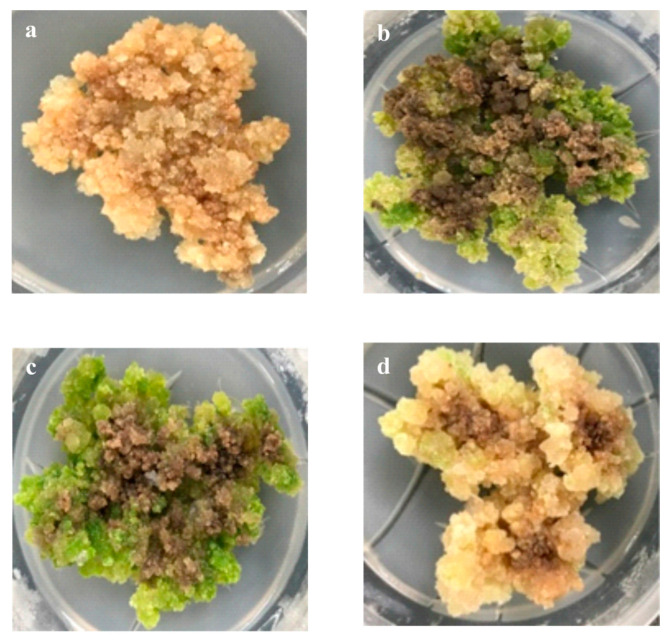
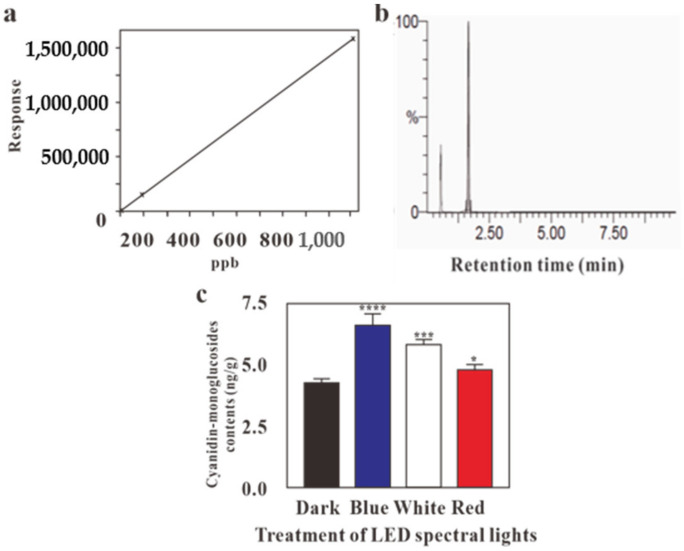
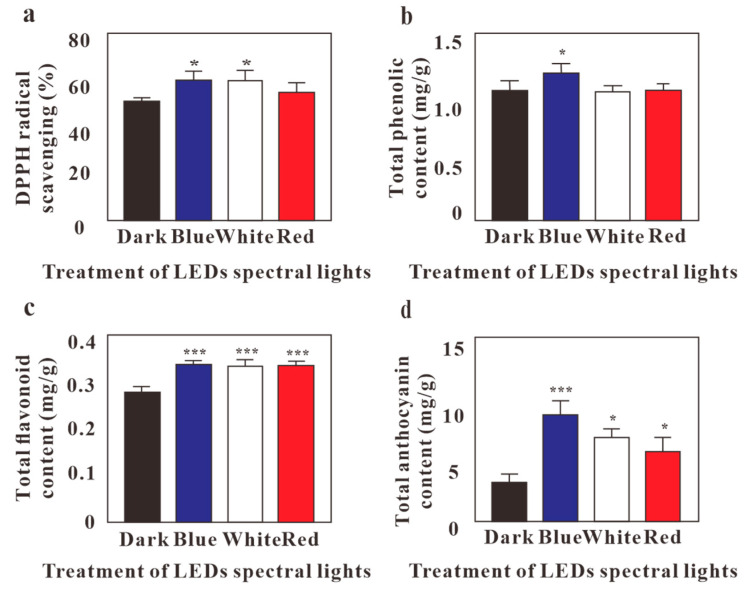
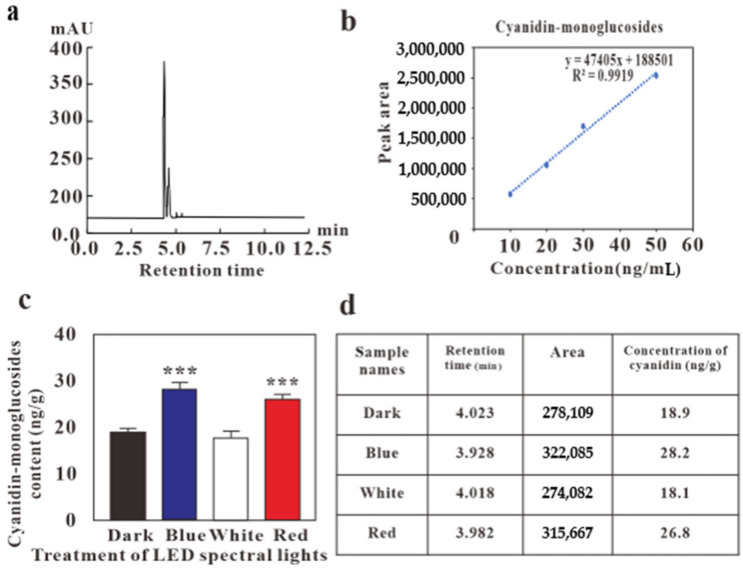
Conventional fluorescent lamps that are used in tissue culture are costly light sources, exhibiting excessive wavelength emission-bandwidth that must be replaced by alternative, less costly, and much lower power-consuming energy sources. The use of Light-Emitting Diodes (LEDs) is the best option due to their potential role as elicitors of secondary metabolite production in many plant models. is widely used for treating various diseases. Here, leaf explants were cultivated in MS medium that was supplemented with 0.5 mg/L of naphthaleneacetic acid (NAA) and 2.0 mg/L of benzylaminopurine (BAP) for 30 days under white, blue, and red LEDs. Secondary metabolites were analyzed by High Performance Liquid Chromatography (HPLC) and Liquid Chromatography-Mass Spectrometry (LC-MS). Blue LEDs elicited the highest antioxidant activity, total flavonoid, and phenolic content. Furthermore, the content of cyanidin-monoglucosides significantly increased under blue light.
传统的用于组织培养的荧光灯是昂贵的光源,其发射的波长带宽过大,必须用更便宜、功耗更低的替代光源来代替。发光二极管 (LED) 的使用是最佳选择,因为它们在许多植物模型中作为次生代谢产物产生的激发子具有潜在的作用。 在治疗各种疾病方面得到了广泛应用。在这里,叶片外植体在 MS 培养基中培养,培养基中添加 0.5 mg/L 的萘乙酸 (NAA) 和 2.0 mg/L 的苄氨基嘌呤 (BAP),在白光、蓝光和红光 LED 下培养 30 天。通过高效液相色谱法 (HPLC) 和液相色谱-质谱法 (LC-MS) 分析次生代谢产物。蓝光激发的抗氧化活性、总黄酮和酚类含量最高。此外,在蓝光下,飞燕草素-葡萄糖苷的含量显著增加。