Unidad de Hepatología Experimental, CIBERehd, Instituto de Investigación Sanitaria La Fe, Hospital Universitari i Politècnic La Fe, 46026, Valencia, Spain.
Unidad de Biomarcadores y Medicina de Precisión and Unidad Analítica, Instituto de Investigación Sanitaria La Fe, Hospital Universitari i Politècnic La Fe, 46026, Valencia, Spain.
Sci Rep. 2019 Nov 29;9(1):17978. doi: 10.1038/s41598-019-54357-x.
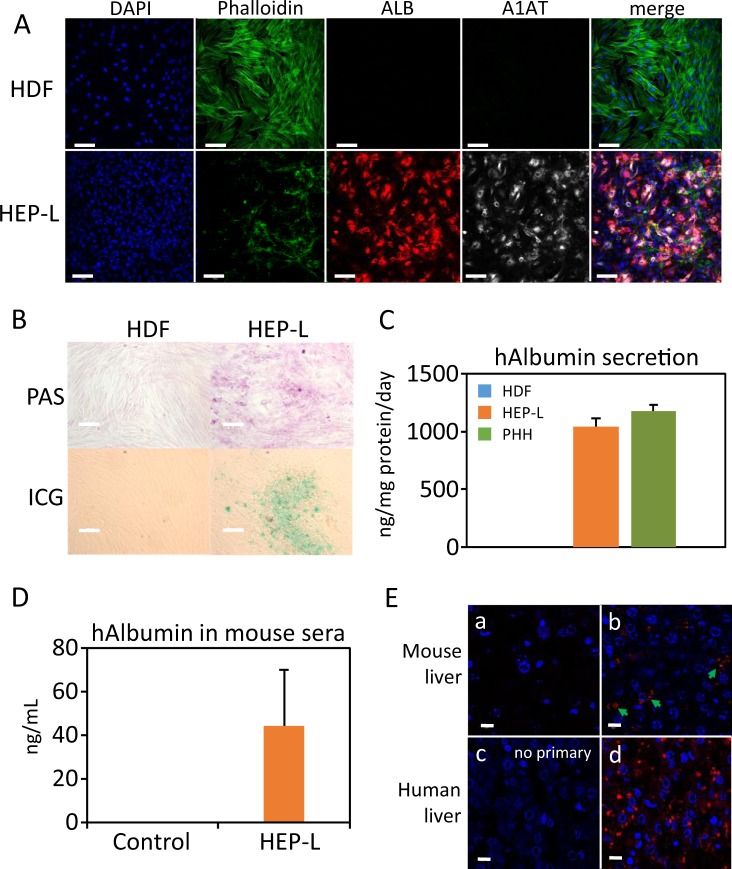
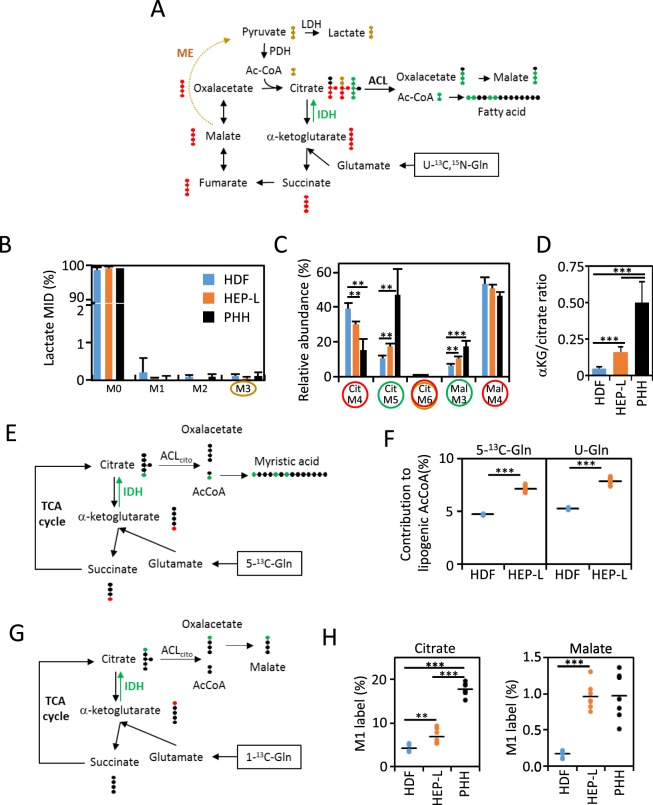
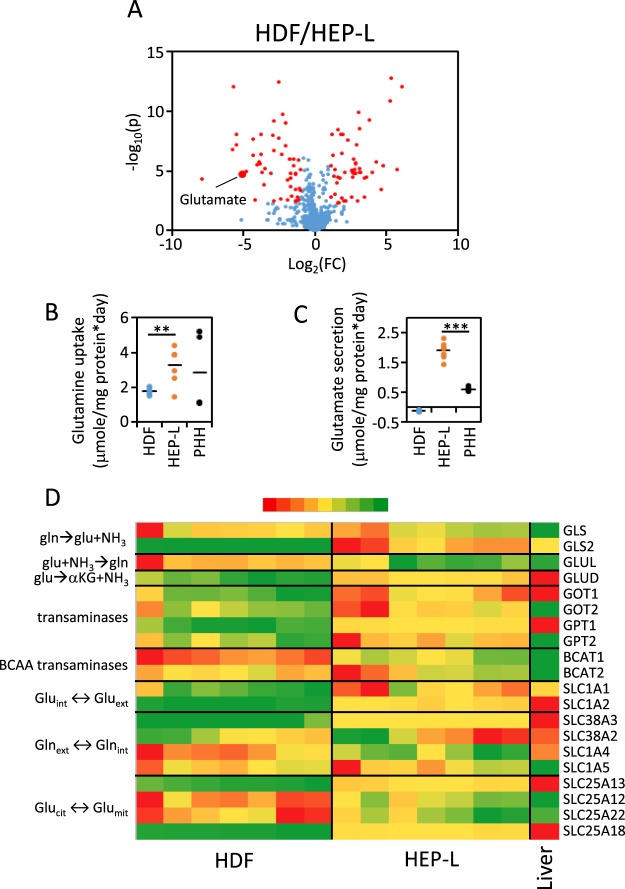
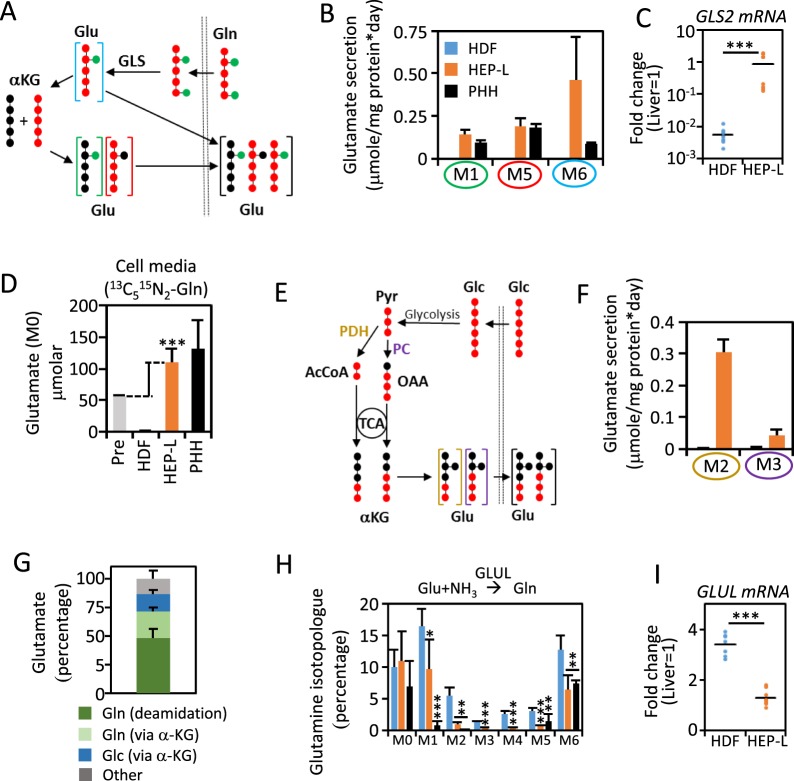
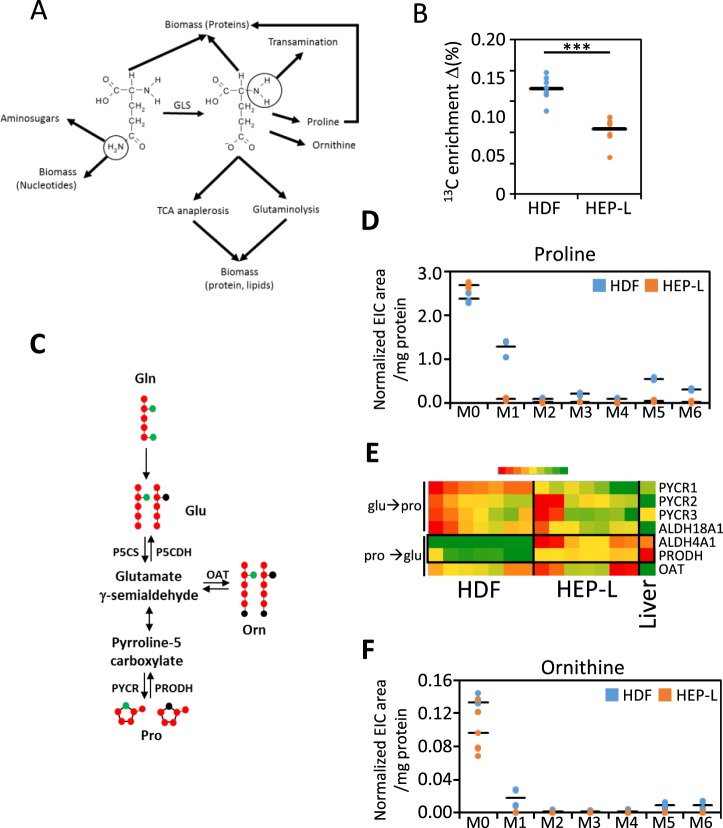
Human dermal fibroblasts can be reprogrammed into hepatocyte-like (HEP-L) cells by the expression of a set of transcription factors. Yet, the metabolic rewiring suffered by reprogrammed fibroblasts remains largely unknown. Here we report, using stable isotope-resolved metabolic analysis in combination with metabolomic-lipidomic approaches that HEP-L cells mirrors glutamine/glutamate metabolism in primary cultured human hepatocytes that is very different from parental human fibroblasts. HEP-L cells diverge glutamine from multiple metabolic pathways into deamidation and glutamate secretion, just like periportal hepatocytes do. Exceptionally, glutamine contribution to lipogenic acetyl-CoA through reductive carboxylation is increased in HEP-L cells, recapitulating that of primary cultured human hepatocytes. These changes can be explained by transcriptomic rearrangements of genes involved in glutamine/glutamate metabolism. Although metabolic changes in HEP-L cells are in line with reprogramming towards the hepatocyte lineage, our conclusions are limited by the fact that HEP-L cells generated do not display a complete mature phenotype. Nevertheless, our findings are the first to characterize metabolic adaptation in HEP-L cells that could ultimately be targeted to improve fibroblasts direct reprogramming to HEP-L cells.
人真皮成纤维细胞可以通过一组转录因子的表达被重编程为肝样细胞(HEP-L)。然而,重编程成纤维细胞所经历的代谢重排在很大程度上仍是未知的。在这里,我们使用稳定同位素解析代谢分析结合代谢组学-脂质组学方法报告,HEP-L 细胞反映了原代培养的人肝细胞中的谷氨酰胺/谷氨酸代谢,这与亲本人成纤维细胞非常不同。HEP-L 细胞将谷氨酰胺从多种代谢途径中分离出来,进行脱酰胺和谷氨酸分泌,就像门脉周围的肝细胞一样。特别地,HEP-L 细胞中通过还原羧化作用将谷氨酰胺贡献给产脂乙酰辅酶 A 的比例增加,再现了原代培养的人肝细胞中的情况。这些变化可以通过参与谷氨酰胺/谷氨酸代谢的基因的转录组重排来解释。尽管 HEP-L 细胞中的代谢变化与向肝细胞谱系的重编程一致,但我们的结论受到限制,因为生成的 HEP-L 细胞不显示完全成熟的表型。然而,我们的发现首次描述了 HEP-L 细胞中的代谢适应,这最终可能成为改进成纤维细胞直接重编程为 HEP-L 细胞的目标。